









Main Facts: The Intersection of Tax Season and Consumer Credit Health
As the Internal Revenue Service (IRS) processes millions of tax returns annually, a significant portion of American households receives what is often their largest single lump-sum payment of the year. According to IRS data, the average tax refund typically hovers around $3,000—a figure that represents a critical liquidity event for many consumers. While the immediate temptation may be to allocate these funds toward discretionary spending or luxury purchases, financial experts and credit analysts suggest a more pragmatic approach: leveraging the refund as a high-impact tool for credit repair and long-term financial stability.
Credit health is not merely a vanity metric; it is the gatekeeper to affordable housing, lower insurance premiums, and favorable interest rates on auto loans and mortgages. For individuals with credit scores in the "fair" or "poor" range, a $3,000 influx can be transformative. By strategically addressing the two most influential factors in credit scoring—payment history and credit utilization—taxpayers can potentially see double-digit improvements in their credit scores within a few billing cycles.
The process of using a tax refund for credit building requires more than just making payments; it requires a surgical understanding of how credit bureaus calculate risk. This report explores the chronological steps, statistical underpinnings, and expert-recommended strategies for converting a tax refund into a more robust credit profile.
Chronology: A Step-by-Step Strategic Roadmap for Refund Allocation
Maximizing the impact of a tax refund on a credit report requires a phased approach. Throwing money at debt without a plan can lead to "leakage," where funds are exhausted without achieving the maximum possible score increase.
Phase 1: The Audit and Assessment (Pre-Refund)
Before the check arrives, consumers are advised to pull their credit reports from the three major bureaus—Equifax, Experian, and TransUnion—via AnnualCreditReport.com. This allows for the identification of "low-hanging fruit," such as small past-due balances that can be settled immediately, or high-utilization cards that are dragging down the overall score.
Phase 2: The Liquidity Reserve (Immediate Receipt)
Upon receipt of the refund, the first priority is not debt, but protection. Financial advisors recommend carving out a portion of the refund—typically $500 to $1,000—to establish or replenish an emergency fund. This creates a buffer that prevents the consumer from relying on high-interest credit cards when future unexpected expenses arise, thereby stopping the cycle of debt.

Phase 3: Addressing Delinquencies (Days 1-15)
The most damaging items on a credit report are active late payments and accounts in collections. Within the first two weeks of receiving a refund, the focus shifts to "bringing accounts current." This involves paying the minimum amount required to move an account from "30-days late" back to "current" status.
Phase 4: Strategic Utilization Reduction (Days 15-30)
Once accounts are current, the remaining funds are deployed to reduce revolving credit balances. This phase focuses on the "utilization ratio," aiming to bring individual and aggregate balances below the 30% threshold.
Supporting Data: The Mechanics of the FICO® Score
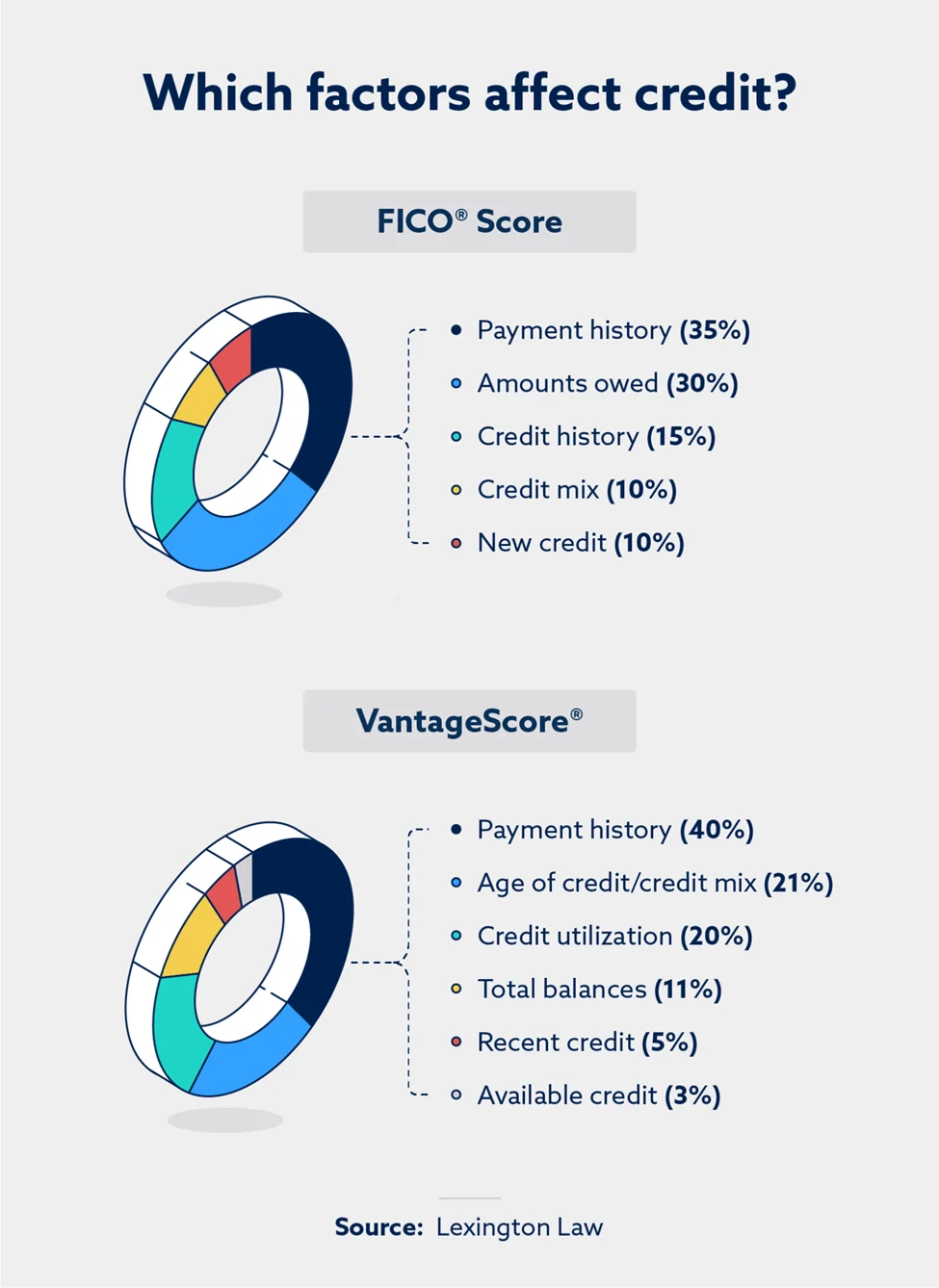
To understand why a tax refund is such an effective credit repair tool, one must look at the mathematical composition of the FICO® Score, which is used by 90% of top lenders.
- Payment History (35%): This is the most significant category. A tax refund can be used to pay off "charge-offs" or settle collection accounts. While paying a collection doesn’t always remove the mark, many newer scoring models (like FICO 9 and VantageScore 3.0/4.0) ignore zero-balance collection accounts.
- Amounts Owed / Credit Utilization (30%): This category measures how much of your credit limit you are using. For example, if a consumer has a credit card with a $5,000 limit and a $4,500 balance, their utilization is 90%. Using $3,000 of a tax refund to pay that balance down to $1,500 drops the utilization to 30%, which can trigger a rapid and significant score increase.
- Length of Credit History (15%): This data point underscores a common mistake: closing accounts after paying them off. Keeping an account open—even with a zero balance—preserves the average age of the accounts, which supports the score.
Data from the Federal Reserve suggests that consumers who carry high-interest revolving debt pay thousands of dollars extra in interest annually. A $3,000 refund applied to a card with a 24% APR doesn’t just improve a credit score; it effectively "earns" the consumer $720 in avoided interest over the following year.
Official Responses: Expert Insights and Industry Best Practices
Financial institutions and credit counseling organizations emphasize that a tax refund is a "reset button," but only if coupled with behavioral changes.
The "Pay for Delete" Perspective:
Some consumer advocates suggest negotiating with collection agencies to "pay for delete"—an agreement where the agency removes the negative mark in exchange for full or partial payment. However, the official stance from credit bureaus is that they discourage this practice, as it can undermine the integrity of the credit report. Lenders prefer to see a "Paid Collection" rather than a disappearance, though the impact on the score varies by model.

The Banking Industry View:
Lenders often view tax season as a period of "re-entry" for subprime borrowers. "We see a noticeable uptick in account reinstatements and settlement offers during February and March," says a representative from a leading national credit card issuer. "From a risk management perspective, a consumer who uses their refund to settle old debts demonstrates a proactive shift in financial responsibility, which may eventually lead to higher credit limit approvals or better terms."
Lexington Law and Legal Advocacy:
Credit repair experts, such as those at Lexington Law, note that the refund should also be used to facilitate the "challenge" process. Ensuring that credit reports are accurate is a legal right under the Fair Credit Reporting Act (FCRA). If a consumer uses their refund to pay off a debt, they should meticulously document the transaction to ensure the credit bureaus update the status correctly.
Implications: The Long-Term Economic Ripple Effect
The strategic use of a tax refund to build credit has implications that extend far beyond the immediate tax year. It is a move that shifts a household from a "defensive" financial posture to an "offensive" one.
1. The Cost of Borrowing
A score increase of just 50 points can move a consumer from "Subprime" to "Near-Prime." On a $30,000 auto loan, this shift could result in an interest rate drop from 18% to 8%, saving the consumer over $8,000 in interest over the life of the loan. In this context, a $3,000 tax refund used for credit repair yields a nearly 300% return on investment.
2. Psychological Impact and Financial Momentum
Debt is a significant source of psychological stress. The "Snowball Method"—paying off the smallest balances first using the refund—provides immediate "wins" that can motivate a consumer to maintain their new financial habits. This psychological shift is often the catalyst for long-term wealth building.
3. Avoiding the "Windfall Trap"
The primary danger of the tax refund is the "windfall trap"—the tendency to treat the money as "found" income rather than earned wages. When consumers use their refund for a down payment on a new luxury item (like a television or a vacation) while carrying high-interest debt, they are essentially financing those luxuries at their credit card’s APR. By prioritizing credit repair, the consumer ensures that they will have more disposable income in the future due to lower monthly debt obligations.

4. Future-Proofing via the Emergency Fund
Perhaps the most profound implication is the creation of a "Financial Firewall." By allocating a portion of the refund to a high-yield savings account, the consumer breaks the dependency on credit cards for emergencies. This is the cornerstone of credit maintenance; it ensures that even if a "curveball" occurs—such as a car repair or medical bill—the newly repaired credit score remains protected.
Conclusion: The Strategic Mandate
In summary, the arrival of a tax refund presents a unique window of opportunity for credit restoration. By focusing on high-utilization balances, catching up on delinquent accounts, and resisting the urge to close paid-off accounts, consumers can leverage this annual windfall to significantly alter their financial trajectory.
As the credit landscape becomes increasingly automated and data-driven, the importance of a clean, high-scoring credit report cannot be overstated. A tax refund is more than a check; it is a strategic asset. When deployed with precision, it serves as the foundation for a more secure and prosperous financial future.