







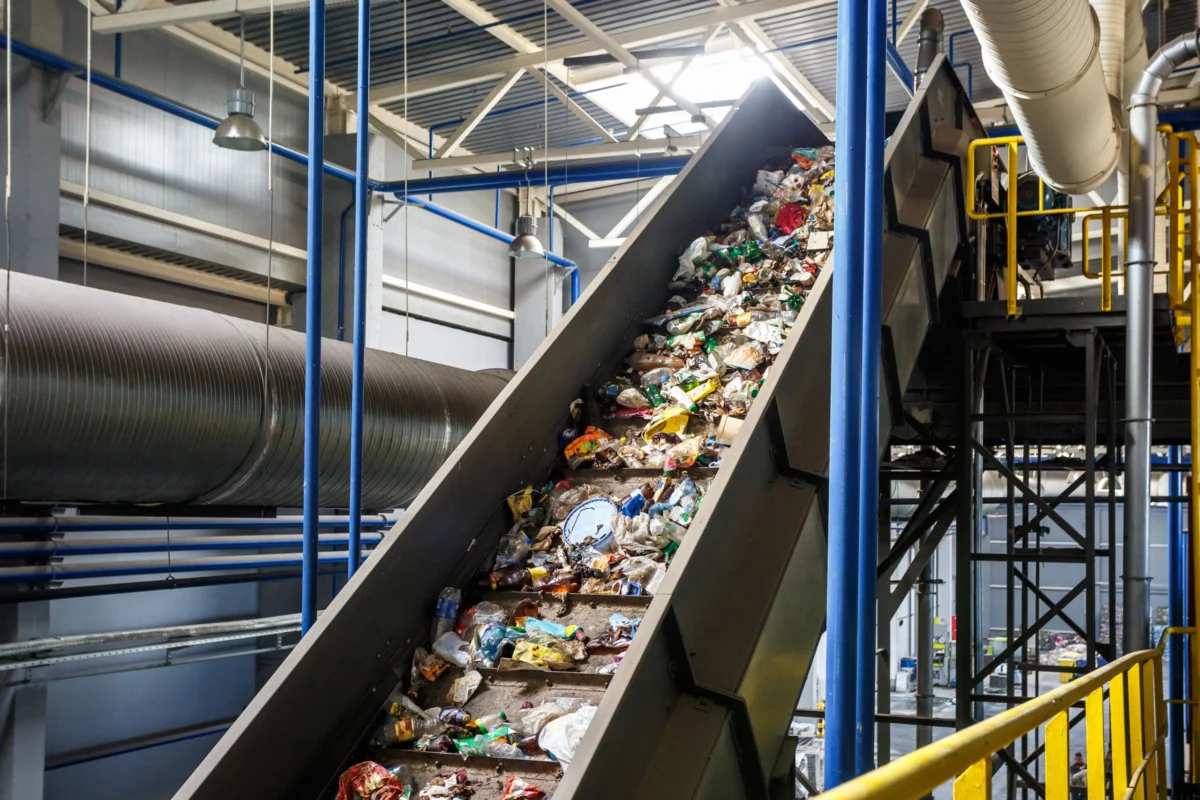
Oregon’s implementation of its Extended Producer Responsibility (EPR) policy, anchored by the 2021 Plastic Pollution and Recycling Modernization Act (PPRMA), represents one of the most ambitious legislative attempts in the United States to transition toward a circular economy. By shifting the financial burden of waste management from local municipalities to the producers of packaging and paper products, the state aimed to incentivize sustainable design and increase recycling efficiency. However, as the program reaches its critical implementation phase, it is increasingly viewed as a cautionary tale: a labyrinthine, opaque, and potentially unconstitutional framework that risks causing more economic and environmental harm than it resolves.
Main Facts: A New Burden on Production
At its core, the PPRMA mandates that companies responsible for putting packaging and paper products into the Oregon market must take financial and operational responsibility for the end-of-life management of those materials. To achieve this, the state-approved the Circular Action Alliance (CAA) as the sole Producer Responsibility Organization (PRO). The CAA is a non-governmental entity composed of representatives from major producers, tasked with collecting fees, setting recycling targets, and managing the collection infrastructure.
The scale of this operation is immense. Beginning in 2025, manufacturers and distributors were required to pay fees based on the specific material composition and recyclability of their packaging. These are not merely administrative levies; they are granular, multi-tiered taxes. The CAA manages a fee schedule covering 60 distinct material types—from paper and glass to rigid plastic foam—with rates ranging from a modest $0.05 per pound for paper to a significant $1.38 per pound for hard-to-recycle plastic cushioning. The organization expects to collect approximately $190 million in its first year, a figure projected to climb to $300 million by the third year.
While the program includes exemptions for small producers with under $5 million in annual revenue or minimal material throughput, the vast majority of consumer-facing businesses are now forced into a complex compliance regime that mandates, among other things, strict adherence to Diversity, Equity, and Inclusion (DEI) standards within the waste management supply chain.
A Chronology of Implementation
The road to the PPRMA was paved with high expectations, but the execution has been marked by shifting goalposts and legal friction:
- August 2021: Oregon lawmakers pass the Plastic Pollution and Recycling Modernization Act, positioning the state as the nation’s pioneer in comprehensive EPR packaging frameworks.
- 2023: The Circular Action Alliance (CAA) is formally approved as Oregon’s sole PRO. The CAA quickly establishes its footprint, becoming the designated entity for similar programs in states like California, Colorado, and Washington.
- 2024: The CAA finalizes the initial EPR program requirements. Throughout this period, the rules remain fluid, with the Department of Environmental Quality (DEQ) and the CAA engaging in ongoing debates—most notably regarding whether common items like garbage bags should be classified as “packaging,” a distinction that impacts statewide recycling goals by thousands of tons.
- 2025: Implementation begins. The requirement for producers to join the PRO and remit fees takes effect.
- July 2025: The National Association of Wholesaler-Distributors (NAW) files a federal lawsuit challenging the constitutionality of the program. A federal court grants a preliminary injunction, citing "serious questions" regarding the law’s structure and legality. A trial is expected to shed light on whether the state’s delegation of taxing power to a private entity is permissible.
Supporting Data and the "Budget-Backward" Problem
The most significant criticism of the current EPR model is its lack of economic transparency. In a standard excise tax model, rates are typically set based on the social cost of a product or the external environmental impact of its waste. However, the CAA’s methodology operates in reverse.
The CAA must meet statutory revenue targets to fund the state-mandated infrastructure. Consequently, the organization begins with a "State Budget"—a fixed target for what the system costs to run—and then calculates rates to ensure that target is met. This "budget-backward" approach divorces the tax from market reality. Because the methodology for calculating these rates is deemed "proprietary and confidential" under Oregon Administrative Rules, producers and the public have no visibility into how these fees are derived.
The resulting 400-page Program Plan is a testament to the system’s complexity. When the state mandates that the PRO must cover the cost of everything from roll carts to marketing, it creates a perverse incentive for the PRO to inflate costs. Without competitive pressure, the system becomes a mechanism for shifting costs to competitors rather than an instrument of environmental efficiency.

Official Responses and Regulatory Friction
The relationship between the DEQ and the CAA has been characterized by a struggle to define the boundaries of the law. The conflict over garbage bag classification is illustrative: by including these items as "packaging," the state increases the weight of material that must be diverted from landfills to meet a 25 percent recycling goal by 2028. For producers, this means higher fees for products that were previously outside the scope of the legislation.
State officials argue that these measures are necessary to modernize a failing recycling system. Yet, the irony is not lost on observers. Since 2003, Oregon has required state agencies to use recycled products whenever economically feasible. However, state buildings rarely use 100 percent recycled materials simply because the cost is prohibitive. The PPRMA acknowledges this economic reality by requiring the PRO to reimburse local governments for the cost of expensive post-consumer recycled materials, yet no such financial buffer is provided to private consumers or small businesses, who ultimately absorb the cost through higher prices at the checkout counter.
Implications: The High Cost of Centralization
The long-term implications of Oregon’s EPR model are concerning for both the economy and the environment. By design, Oregon statutes instruct municipalities to "displace competition with a system of regulated collection service." By enabling local monopolies and franchisee collusion, the state has effectively shielded the recycling industry from market forces.
When a system is disconnected from rational pricing, inefficiency is inevitable. History shows that top-down mandates often result in "leakage"—whereby recycling rates fail to improve because the processes mandated are more carbon-intensive or cost-prohibitive than the waste they aim to prevent. If the goal is a circular economy, the focus should be on building efficient end-markets where recycled materials are valuable commodities, not on creating a tax-funded bureaucracy that relies on confidential fee structures to sustain itself.
The federal lawsuit currently pending provides an opportunity for judicial review of these policies. If the courts find that the delegation of taxing authority to the CAA is unconstitutional, it may force a necessary pivot toward simpler, more transparent mechanisms—such as a federal raw plastic excise tax—which could achieve the same environmental outcomes without the crushing administrative burden currently plaguing the Oregon model.
Conclusion: Toward Meaningful Reform
Oregon’s experiment highlights a fundamental truth: environmental policy cannot succeed if it ignores economic efficiency. The current EPR structure creates a "cartelization" of recycling, where large players set the rules, smaller competitors are disadvantaged, and consumers pay the price for systemic opacity.
To achieve a true circular economy, policymakers must shift their focus. Transparency should be the baseline, not the exception. Fees should reflect the actual social and environmental costs of materials, and recycling systems should be incentivized to compete on the basis of efficiency rather than being propped up by monopolistic, state-mandated contracts. As other states look to Oregon’s experience as a template, the lesson is clear: until the "hidden" costs of these programs are brought into the light, EPR policies will continue to function more as a tax on commerce than a solution for the planet.