





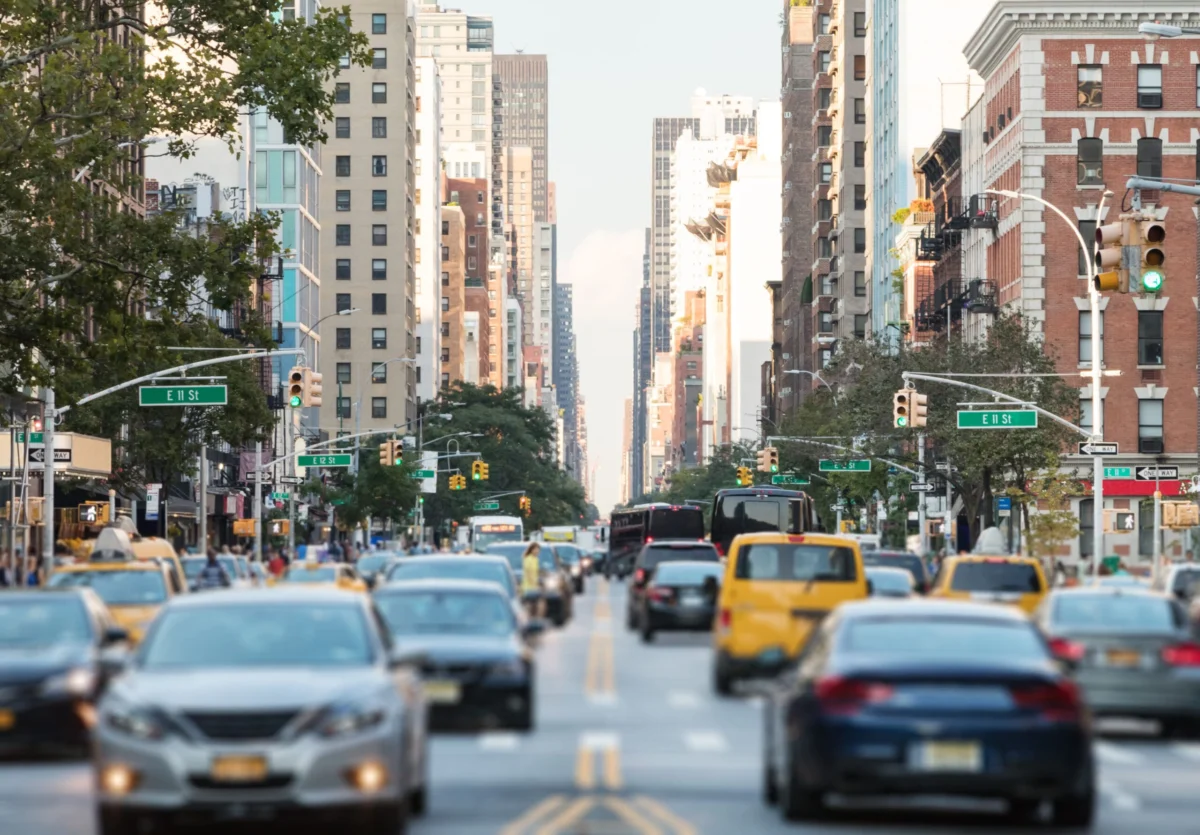
In the landscape of American urban planning, few issues have proven as intractable as traffic congestion. For decades, New York City served as the quintessential case study for gridlock, with 2024 data from INRIX crowning the metropolis as the most congested city in the United States. Drivers in the city were losing an average of 102 hours annually to stagnant traffic—a figure that underscored a deepening infrastructure crisis.
However, 2025 marked a paradigm shift. Following the implementation of a Congestion Relief Zone (CRZ) tolling program, the narrative surrounding New York’s streets has begun to change. By marrying modern electronic tolling technology with classic economic principles, the city has initiated a real-world experiment that is now being closely watched by urban centers from Los Angeles to Washington, D.C.
The Vicious Cycle: Why NYC Needed a Change
By 2024, New York City was trapped in a self-perpetuating cycle of decline. The Metropolitan Transportation Authority (MTA), the backbone of the region’s transit system, was grappling with an $8.3 billion deficit. As the MTA faced budgetary pressures, service quality fluctuated, prompting frustrated commuters to abandon the subway and rails in favor of personal vehicles.
This migration to the roads exacerbated the very congestion that slowed buses and discouraged ridership further. The economic inefficiency of this cycle was stark: traffic delays impose massive, often unpriced, costs on society. While individual drivers bear the cost of their own time, they do not account for the "marginal congestion" they impose on every other driver on the road. Without a mechanism to capture these externalities, the city’s arteries remained clogged, pollution levels climbed, and the transit system lacked the necessary capital for modernization.
A Chronology of Implementation: From Proposal to Toll
The road to congestion pricing was neither short nor smooth. Inspired by successful models in global cities like London, Singapore, and Milan, New York City officials spent years drafting a plan to reclaim the streets of Lower and Midtown Manhattan.
- Pre-2025: Years of legislative debate and public debate culminated in the design of a sophisticated, non-disruptive tolling system.
- January 2025: The Congestion Relief Zone (CRZ) program officially went live. The system utilized over 1,400 license plate scanners and E-ZPass technology, ensuring that enforcement remained automated and traffic flow remained fluid.
- Early 2025: The program faced immediate scrutiny. By February, federal tensions peaked when Secretary of Transportation Sean Duffy attempted to withdraw federal approval and funding.
- Mid-2025: The program survived a significant legal challenge, with courts rejecting the federal government’s attempt to halt the initiative. While the case currently awaits review by the 2nd Circuit Court of Appeals, the tolling system remains operational and, by all metrics, effective.
The Economics of the Toll: User Fees and Pigouvian Taxes
To understand why this policy works, one must view it through the lens of economic theory. The MTA’s program functions as both a user fee and a Pigouvian tax—a tool designed to correct market inefficiencies.
As a user fee, the toll generates revenue to cover the wear and tear caused by vehicles on public infrastructure. It ensures that those who benefit from the availability of city streets contribute to their maintenance. As a Pigouvian tax, it serves a more sophisticated purpose: it forces drivers to internalize the external costs they impose on others, such as increased travel times for ambulances and delivery vehicles, and the environmental damage caused by exhaust emissions.
The fee structure was carefully calibrated to minimize economic disruption:
- Peak vs. Off-Peak: To encourage off-hour travel, the program offers a 75 percent discount during off-peak hours. The peak period spans 5 a.m. to 9 p.m. on weekdays and 9 a.m. to 9 p.m. on weekends.
- Variable Pricing: Heavy trucks and sightseeing buses bear the highest burden at $21.60 per entrance, reflecting their outsized impact on road space and infrastructure wear. Motorcycles pay $4.50, while taxis and rideshare vehicles are assessed smaller, per-trip fees ($0.75 and $1.50, respectively) to ensure the service remains accessible to the average citizen.
Supporting Data: Measuring the Success of 2025
The MTA’s first evaluation report provides compelling evidence that the policy is achieving its primary objectives. Comparing data from 2024 to 2025, the results are significant:
- Reduced Volume: Vehicle entries into the Congestion Relief Zone dropped by 11 percent.
- Increased Transit Usage: Public transit ridership saw a 9 percent increase, suggesting a successful shift in commuter behavior.
- Improved Flow: Average vehicle speeds within the CRZ increased by 4.6 percent. More impressively, speeds on crossings into Manhattan improved by 23 percent.
- Public Health Outcomes: Reduced congestion led to an estimated 5–6 percent improvement in Emergency Medical Service (EMS) response times. In a city where "time is tissue," shaving 60 to 70 seconds off an emergency response can be the difference between life and death.
Beyond transit and traffic metrics, the fiscal impact has been substantial. The program has generated an average monthly revenue of $55 million, which has enabled the bonding of $15 billion toward the MTA’s long-term capital improvement plan.
Official Responses and Legal Hurdles
The reception of the program has been a mixture of acclaim from urban planners and fierce pushback from political stakeholders. The ongoing lawsuit brought by Secretary of Transportation Sean Duffy remains the most significant threat to the program’s continuity. The federal argument rests on the claim that the tolling scheme violates specific federal transportation restrictions—a contention that the MTA and city officials have successfully rebuffed in lower courts.
Despite the legal cloud, the program has gained momentum as a model for other cities. Both Los Angeles and Washington, D.C., have commissioned studies to determine if similar frameworks could alleviate their own growing traffic woes.
Implications for the Future of American Cities
While New York City’s experiment is a success, experts caution against assuming it is a "plug-and-play" solution for every American municipality. New York is an outlier in several critical ways:
- Density and Transit: It possesses the nation’s largest, most interconnected mass transit system.
- Job Concentration: The density of jobs in Lower and Midtown Manhattan creates a unique demand for central access that few other cities can match.
In many other American cities, the post-pandemic "work-from-home" reality has left downtown business districts struggling to maintain foot traffic. Implementing a tolling system in a city with declining commercial occupancy could potentially accelerate business flight rather than solving traffic issues.
Furthermore, the social equity implications of congestion pricing remain a topic of intense debate. Critics argue that such fees disproportionately affect lower-income workers who cannot shift their hours or switch to public transit. To mitigate this, future implementations will need to consider subsidies or exemptions for essential workers and low-income residents to ensure that the policy does not become a regressive financial burden.
Conclusion: A Vital Data Point
New York City’s 2025 congestion pricing program stands as a landmark in American public policy. It has demonstrated that when a city is willing to embrace market-based mechanisms, it can successfully reallocate road space, improve transit ridership, and secure sustainable funding for critical infrastructure.
While the legal battle in the 2nd Circuit Court of Appeals continues, the data is already clear: the policy has made the city more mobile and the transit system more solvent. As other cities continue to study the NYC model, the primary takeaway is that congestion is not an immutable law of nature, but a solvable management problem. Whether other cities will find the political will and the unique urban density required to follow suit remains the next great question in the evolution of American urban life.