








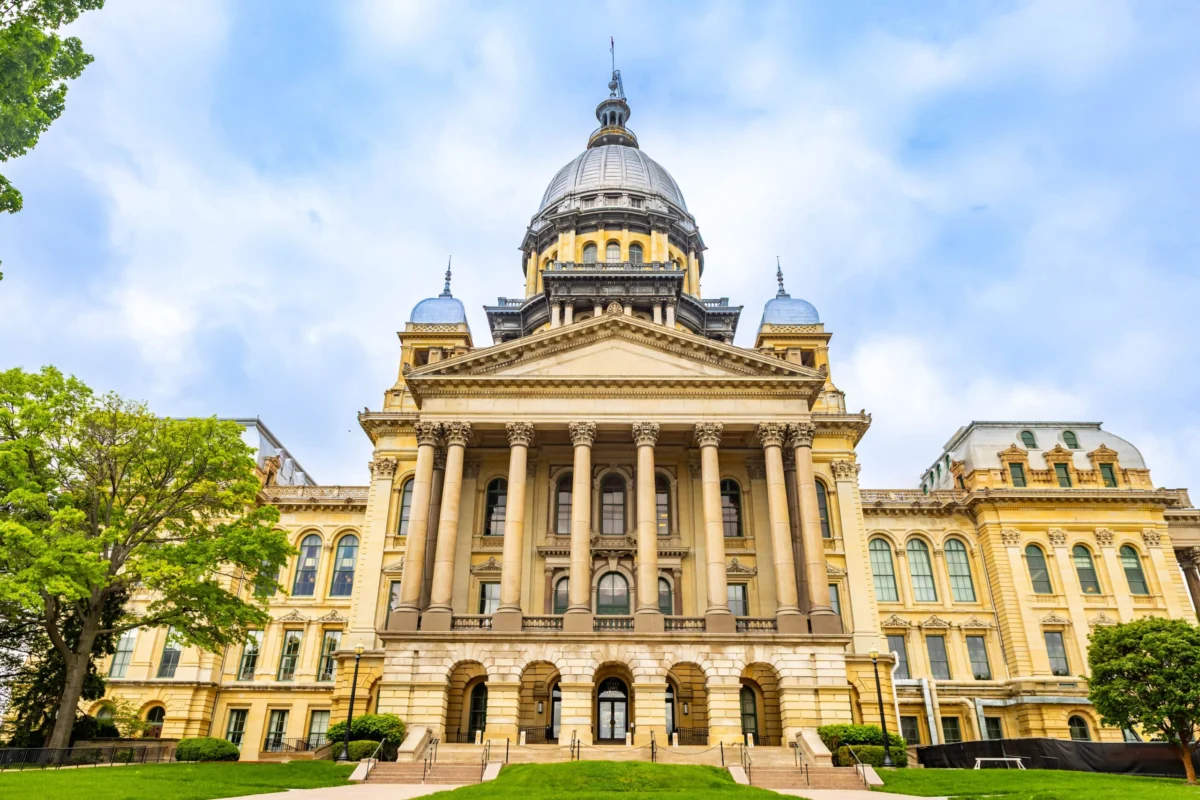
For thirty-seven years, the State of Illinois has been operating under a fiscal shadow. The state’s system for taxing alcohol is not merely outdated; it is a sprawling, contradictory mess of statutes, administrative rules, and enforcement practices that have effectively been operating in defiance of the Illinois Constitution since 1988. Now, rather than seizing the opportunity to modernize a broken system, state regulators are pushing a proposal that risks repeating the exact constitutional blunders that led to the collapse of the previous tax regime.
The Disconnect: Statutes vs. Reality
To understand the current crisis, one must first recognize the chasm between the law and the ledger. In Illinois, there are three competing versions of truth regarding alcohol taxation. First, there are the tax rates explicitly defined in the Liquor Control Act. Second, there are the rates codified in the Illinois Administrative Code. Third, there are the "real" rates—the figures the Department of Revenue actually collects from retailers and distributors.
These three layers rarely align. The state is now attempting to reconcile this discrepancy by amending the Administrative Code to mirror the Liquor Control Act. While the intent—to bring administrative policy into harmony with state law—is ostensibly sound, the content of the proposed changes is deeply problematic. By doubling down on a production-based classification system, the state is effectively proposing to reinstate a tax structure that is structurally identical to one the Illinois Supreme Court deemed unconstitutional nearly four decades ago.
A Chronology of Constitutional Conflict
The roots of this systemic failure trace back to the landmark 1988 ruling in Federated Distributors v. Johnson. At that time, the state attempted to apply a tax of $2.00 per gallon to low-alcohol beverages that contained added spirits, while simultaneously taxing traditional wine coolers at a mere $0.23 per gallon.
The Illinois Supreme Court did not mince words. In its ruling, the Court highlighted the "Uniformity Clause" of the Illinois Constitution, which mandates that in any law classifying subjects for taxation, the classes must be reasonable, and the objects within those classes must be taxed uniformly. The Court ruled that the state’s "method-of-production" approach—which favored certain beverages based on how they were made rather than their actual alcoholic content—failed the "real and substantial differences" test.
The court made it clear: the legislature had a constitutional duty to create a rational, uniform system. Instead, the legislature entered a state of prolonged inaction. Rather than passing new, constitutional statutes, the Department of Revenue simply continued to collect taxes based on a patchwork of administrative pretenses. For 37 years, this "pretend" system has served as the basis for state revenue, creating a legal gray area that has left taxpayers and businesses in a perpetual state of uncertainty.
The Proposed "Solution": A Step Backwards
The Illinois Register’s 2026 proposal seeks to close the gap between code and statute by codifying a rigid, tiered structure:
- Beer: $0.231 per gallon (regardless of ABV).
- Wine/Cider (>7% ABV): $1.39 per gallon.
- Spirits: $8.55 per gallon.
While this brings the administrative code in line with the statutes, it does nothing to address the constitutional infirmity of the statutes themselves. Under the proposed rules, the definition of "spirit" would be expanded to include any beverage with added alcohol, including modern "ready-to-drink" (RTD) cocktails.
The absurdity of this approach becomes apparent when applied to non-traditional products. Under the current proposal, alcohol-infused ice cream or whipped cream—provided they exceed 0.5% ABV—would be taxed as hard liquor. This represents a tax burden for these products that is more than 1,000 times higher than the tax applied to a high-alcohol-content beer. By focusing on the process of production rather than the substance of the alcohol, the state is ignoring the "real and substantial difference" requirement mandated by the Supreme Court.
Supporting Data: The Case for Neutrality
The current system is not only unconstitutional; it is fundamentally non-neutral. It creates perverse incentives that distort the market. Currently, a gallon of pure alcohol is taxed at wildly different rates depending on its delivery vehicle. A consumer purchasing alcohol in the form of spirits faces a tax burden roughly 4.35 times higher than if they purchased the same amount of alcohol in the form of beer.
This discrepancy has created an environment where the Department of Revenue is constantly forced to issue letter rulings to clarify which category a new product falls into. For instance, in 2018, the Department initially ruled that certain beer products should be taxed as wine due to their alcohol content, only to reverse that decision months later. Such flip-flopping creates an unpredictable tax environment that stifles innovation and complicates compliance for small businesses, craft brewers, and distillers who are constantly forced to guess which regulatory box their products occupy.
Implications for Public Policy and Temperance
The stated purpose of the Liquor Control Act is to promote temperance. However, the current tax structure is a poor instrument for this goal. Because the tax is tied to the category of alcohol rather than the potency, it fails to target the harm-causing element: the ethanol itself.
When the current system was designed, the industry was simpler. Beer was consistently low-alcohol, wine was moderate, and spirits were high-proof. Today, that hierarchy has collapsed. We now see high-gravity beers, low-alcohol spirits, and RTD beverages that defy traditional classification. The state’s rigid adherence to outdated definitions means that the tax system is increasingly irrelevant to the actual alcohol consumption habits of Illinoisans.
If the goal is to discourage excessive consumption, the current system is failing. By taxing a low-alcohol spirit-based drink at the same rate as a high-proof bourbon, the state is ignoring the very concept of "moderation." A truly principled tax system would be indifferent to the "method of production" and instead focus on the volume of alcohol.
The Path Forward: Embracing an ABV-Based Tax
There is a straightforward, constitutional, and modern alternative to the state’s current proposal: the Alcohol by Volume (ABV) tax.
An ABV-based tax would levy a flat, neutral fee based on the actual ethanol content of the product. Whether the alcohol is derived from fermented grain (beer), fermented fruit (wine), or distilled spirits, the tax would be identical for a single "standard drink" (0.6 ounces of pure alcohol).
The advantages of an ABV tax are manifold:
- Constitutional Compliance: Because every unit of alcohol is taxed equally, the "uniformity" requirement is satisfied by default. There is no need to create complex, arbitrary, and easily challenged definitions of what constitutes a "spirit" versus a "wine."
- Market Neutrality: It removes the state’s role as an arbiter of which production methods are "better" or "worse," allowing the market to innovate without tax-induced distortion.
- Efficiency: It eliminates the need for the Department of Revenue to issue frequent, contradictory letter rulings. Businesses would no longer need to navigate a maze of definitions to determine their tax liability.
- Public Health: By directly taxing the amount of alcohol, the state creates a clear, price-based incentive for consumers to choose lower-alcohol products, which is a more effective mechanism for promoting temperance than the current categorical system.
Conclusion: A Call for Principled Reform
Illinois is currently at a crossroads. It can choose to codify its 37-year-old failure, essentially inviting new litigation and maintaining an arbitrary, unconstitutional tax regime. Or, it can use the current administrative update as a catalyst for genuine reform.
Continuing to rely on the "method-of-production" model is an exercise in administrative stubbornness. It is a system that penalizes innovation, confuses businesses, and ignores the constitutional mandates set forth by the state’s highest court. The citizens of Illinois deserve a tax system that is transparent, predictable, and fair. By adopting an ABV-based tax, Illinois could transform its alcohol tax policy from a source of legal liability into a model of modern, principled governance. It is time for the legislature to finally address the problem it has ignored for nearly four decades.