








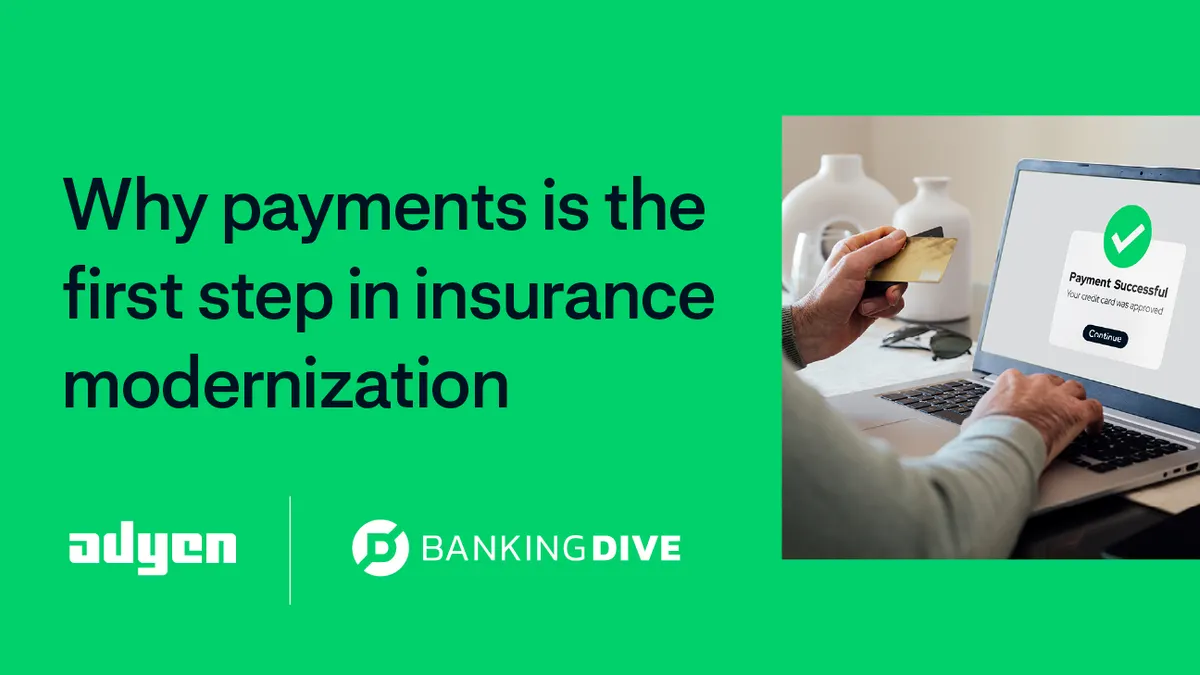
The insurance industry, a cornerstone of global financial stability, currently finds itself at a crossroads. While the front-end experience of purchasing a policy has become increasingly digital and streamlined, the back-end infrastructure—specifically the rails upon which money moves—remains stubbornly tethered to the past. According to industry leaders and fintech innovators like Adyen, the modernization of payment systems is no longer a luxury or a secondary IT project; it is the "connective tissue" that determines the success or failure of broader digital transformation efforts.
As insurance carriers grapple with rising operational costs, evolving consumer expectations, and the threat of nimble "insurtech" startups, the message is clear: the first step in modernization is fixing how money enters and leaves the building.
Main Facts: The Payment Gap in Modern Insurance
For decades, the insurance sector has prioritized actuarial precision and risk management over the user experience of financial transactions. This has resulted in a fragmented ecosystem where policyholders can sign up for coverage via a smartphone app in minutes but must wait days or even weeks to receive a claims payout via a paper check.
The Fragmented Ecosystem
Most legacy insurers operate on a "patchwork" of systems. Premium collections are often handled by one department using antiquated ACH (Automated Clearing House) processes, while claims disbursements are managed by another, often relying on physical mail. This fragmentation creates "data silos," where the insurer lacks a holistic view of the customer’s financial relationship with the brand.
Payments as a Competitive Differentiator
In the current market, payments are the primary touchpoint between an insurer and its customers. Outside of the initial purchase, the only times a customer interacts with their provider are when they pay a premium or file a claim. If these experiences are friction-heavy—requiring manual entry, long waiting periods, or limited payment options—customer loyalty erodes. Modern payment infrastructure allows for "Unified Commerce," where every transaction is tracked, analyzed, and optimized in real-time.
![[Podcast] Payments: The connective tissue of insurance](https://imgproxy.divecdn.com/36aObmLPvZJrFdvPm7JIHZn7zVaKdaopCeVs_PMHS1Q/g:ce/rs:fit:770:435/Z3M6Ly9kaXZlc2l0ZS1zdG9yYWdlL2RpdmVpbWFnZS9hZHllbi1wb2RjYXN0LTEzNDZ4NzI5LnBuZw==.webp)
The Operational Burden
Manual payment processing is a significant drain on resources. The administrative cost of cutting, mailing, and reconciling a physical check is estimated to be significantly higher than digital alternatives. Furthermore, legacy systems are prone to errors and fraud, which further inflates the "Combined Ratio"—the measure of an insurer’s profitability.
Chronology: The Evolution of Insurance Payments
To understand the current urgency, one must look at the slow evolution of financial technology within the insurance sector over the last half-century.
The Era of Paper and Mainframes (1970s – 1990s)
During this period, insurance was a paper-heavy industry. Payments were almost exclusively made via check or money order. The "back office" consisted of massive mainframes that processed batches of data overnight. Real-time interaction was non-existent. While this system was slow, it was the industry standard, and consumer expectations were aligned with the speed of the postal service.
The Rise of ACH and Basic Portals (2000s – 2010s)
The introduction of the internet brought the first wave of "digital" payments. Insurers began offering online portals where customers could set up recurring ACH transfers. While this reduced the volume of physical checks for premiums, it did little to modernize the claims process. The technology was still "batch-processed," meaning it took 3 to 5 business days for funds to clear.
The "Amazon Effect" and the Fintech Explosion (2015 – 2020)
As consumers became accustomed to the instant gratification of e-commerce and peer-to-peer (P2P) payment apps like Venmo and CashApp, the "patience gap" began to widen. Insurtech startups began to emerge, promising "instant" payouts. Traditional carriers responded by layering new software on top of old systems—a "lipstick on a pig" approach that often led to technical debt and integration nightmares.
![[Podcast] Payments: The connective tissue of insurance](https://d12v9rtnomnebu.cloudfront.net/logo/printer_friendly/bankingdive.jpg)
The Current Mandate: Infrastructure Overhaul (2021 – Present)
The COVID-19 pandemic acted as an accelerant, forcing insurers to realize that physical offices and paper-based processes were a liability. Today, the focus has shifted from "digital interfaces" to "digital infrastructure." Companies are now looking to partners like Adyen to replace legacy rails with modern, API-driven payment platforms that support global transactions, multiple currencies, and instant payouts.
Supporting Data: The Cost of Stagnation
The push for modernization is backed by compelling economic and behavioral data.
- Consumer Expectations: A recent study by PYMNTS indicated that over 60% of consumers would prefer to receive insurance payouts via instant digital methods rather than checks. Furthermore, 1 in 4 consumers stated they would switch insurance providers for the sake of faster claims processing.
- The Cost Factor: Industry analysts estimate that processing a paper check can cost an organization between $1.00 and $5.00 when accounting for labor, postage, and materials. In contrast, digital payouts can cost a fraction of that, often less than $0.25 per transaction. For a carrier processing millions of claims annually, the savings are astronomical.
- Retention and Lifetime Value: According to data from Bain & Company, customers who have a positive claims experience are twice as likely to renew their policy. Conversely, a delayed or confusing payment process is the leading cause of "churn" (customer loss) in the insurance industry.
- Fraud Prevention: Modern payment platforms utilize machine learning and AI to detect fraudulent patterns in real-time. Legacy systems, which rely on post-transaction reconciliation, often identify fraud only after the money has left the account.
Official Responses and Expert Perspectives
Industry leaders emphasize that the transition to modern payments is not just a technical upgrade, but a strategic pivot.
The Adyen Perspective:
As a leader in the payment space, Adyen argues that insurance companies must view payments as an integrated part of their product offering. By using a single platform for both pay-ins (premiums) and pay-outs (claims), insurers can achieve a "closed-loop" system. This provides a 360-degree view of the customer, allowing for better risk assessment and more personalized service.
Industry Analysts:
Financial analysts from firms like Gartner and Forrester have noted that "Technical Debt" is the greatest hurdle for legacy insurers. They suggest that the "Modular" approach—where insurers plug into third-party payment APIs—is the most efficient way to bypass the limitations of 30-year-old mainframe systems.
![[Podcast] Payments: The connective tissue of insurance](https://imgproxy.divecdn.com/BrDAx1m6sASr2GatQTdLLdEPsMRYyKyutwxl8v5rYXA/g:ce/rs:fill:1200:675:1/Z3M6Ly9kaXZlc2l0ZS1zdG9yYWdlL2RpdmVpbWFnZS9hZHllbi1wb2RjYXN0LTEzNDZ4NzI5LnBuZw==.webp)
Regulatory Bodies:
Regulators in both the US and the EU are increasingly focused on "Operational Resilience." There is a growing expectation that financial institutions, including insurers, must have robust, secure, and fast payment systems to protect consumers during times of crisis (e.g., natural disasters where immediate liquidity is vital for policyholders).
Implications: The Future of the Insurance Landscape
The successful integration of modern payment systems will fundamentally change how insurance products are designed and delivered.
1. The Rise of Parametric Insurance
Parametric insurance is a type of insurance that pays out a pre-defined amount based on a specific trigger (e.g., a hurricane reaching a certain wind speed or a flight being delayed by two hours). This model is only possible with real-time payment infrastructure. When the trigger is met, the system automatically initiates a payout without the need for a claims adjuster or a manual request. This "frictionless" insurance is the future of the industry.
2. Embedded Insurance
As payments become more seamless, insurance will increasingly be "embedded" into other transactions. When you buy a high-end bicycle or book a vacation, insurance can be offered and paid for at the point of sale through the same payment gateway. This requires the insurer’s payment system to be highly compatible with various third-party e-commerce platforms.
3. Financial Inclusion
Modern payment rails allow insurers to reach the "unbanked" or "underbanked" populations. By supporting digital wallets, prepaid cards, and local payment methods, insurers can expand their market share in developing regions and among younger demographics who do not use traditional banking.
![[Podcast] Payments: The connective tissue of insurance](https://d12v9rtnomnebu.cloudfront.net/paychek/logo-adyen-rgb-green.png)
4. Data as a Strategic Asset
When payments are modernized, every transaction becomes a data point. Insurers can use this data to understand spending habits, predict churn, and even offer "premium holidays" or loyalty rewards automatically. The payment rail becomes a source of business intelligence rather than just a cost center.
Conclusion
The insurance industry is often criticized for being slow to change, but the current shift in payment technology suggests a new era of agility. By recognizing that payments are the "connective tissue" of the business, insurers are finally addressing the root cause of their digital lag.
Modernizing the payment experience is no longer just about convenience; it is about survival. In an era where the speed of money defines the speed of business, those who continue to rely on the "check in the mail" will find themselves increasingly irrelevant in a digital-first world. The transition from legacy systems to unified, API-driven payment platforms is the essential first step toward a more efficient, customer-centric, and profitable future for the insurance industry.