









The Strategic Imperative: Global Payroll’s Transformation in an Era of Complexity

London, UK – Global hiring, once primarily a logistical hurdle, has fundamentally reshaped its role within multinational enterprises. For decades, expanding internationally often meant establishing a new local office, engaging local accountants, adding another payroll vendor, and hoping that financial reporting would align by quarter’s end. This piecemeal approach, however, has become increasingly untenable in…


Read More

The Critical Imperative: Why International Health Insurance is Your Most Important Travel Document

For many, the planning phase of an international trip is consumed by the excitement of itinerary building: scouting the best boutique hotels, identifying must-visit landmarks, and researching local culinary hotspots. Yet, amidst the flurry of booking flights and packing gear, one fundamental layer of protection is frequently overlooked until it is too late: international health…

Read More

Scaling Success: The Strategic Imperative of B2B Sales Services for Modern Enterprises

In the hyper-competitive landscape of modern B2B commerce, the divide between stagnant organizations and high-growth market leaders is increasingly defined by the sophistication of their sales infrastructure. As businesses grapple with shrinking attention spans and more complex procurement cycles, the reliance on "gut feeling" and traditional cold calling is no longer sufficient. Today, revenue growth…

Read More

Global Payroll in 2026: Beyond Logistics – A Strategic Imperative for International Business

MAIN FACTS Global hiring, once a relatively straightforward logistical exercise involving localized offices and bespoke vendor arrangements, has undergone a profound transformation. What was historically viewed as an administrative function, primarily concerned with accurate salary calculation and timely disbursement, has evolved into a complex, strategic imperative for any enterprise operating across borders. By 2026, companies…

Read More

The Strategic Imperative: Mastering Customer Satisfaction in a Competitive Landscape

In the modern digital economy, data is the new currency, and customer feedback is the gold standard of business intelligence. As markets become increasingly saturated, the difference between a thriving enterprise and a stagnant one often hinges on a single factor: the ability to accurately gauge and act upon customer satisfaction. Implementing the right survey…

Read More

The Gen Z Imperative: Navigating the Future of Retail in a Digital-First World

The retail landscape is undergoing a seismic shift, driven by a generation that views shopping not merely as a transaction, but as a digital extension of their personal identity. Generation Z—those born between the mid-1990s and early 2010s—now wields significant purchasing power, estimated in the hundreds of billions of dollars. For businesses, the mandate is…

Read More

The Digital Banking Imperative: Navigating the Great Decoupling of Traditional Finance

The global banking sector is currently navigating its most significant inflection point since the introduction of online banking in the late 1990s. As legacy institutions grapple with the weight of technical debt and the rapid ascent of agile fintech competitors, the industry is witnessing a "Great Decoupling." Customers are no longer tethered to their local…

Read More

The Automation Imperative: Transforming Business Operations Through Intelligent Workflow Design

In the modern digital economy, time is the most finite resource a business owner possesses. As organizations scale, the weight of administrative overhead—repetitive data entry, manual scheduling, and redundant communication—often stifles innovation. The solution lies in the strategic adoption of automation. By transitioning from manual labor to intelligent, automated systems, companies are not merely saving…

Read More

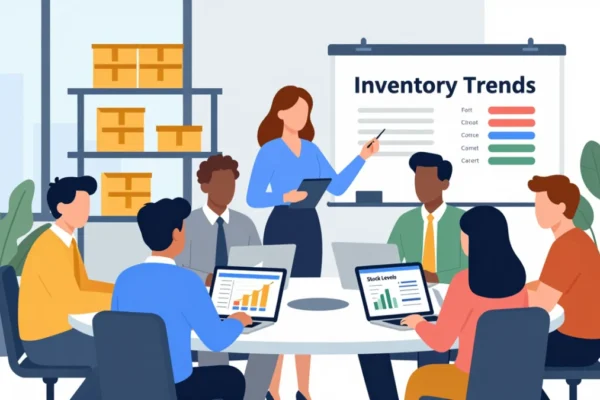
Mastering the Supply Chain: The Strategic Imperative of Inventory Control Systems

In the modern business landscape, inventory is more than just stock on a shelf; it is liquid capital tied up in physical assets. For small-to-medium enterprises (SMEs) and large corporations alike, the difference between stagnation and scalable growth often lies in the sophistication of their inventory control systems. As supply chains grow increasingly complex and…

Read More