








After years characterized by stagnant economic growth and a climate of fiscal uncertainty, Chile stands at a pivotal juncture. The nation, long heralded as a beacon of economic stability in Latin America, is currently embroiled in a high-stakes legislative debate that could redefine its developmental trajectory for the next generation. At the center of this discourse is the tax reform bill proposed by the administration of President José Antonio Kast—a comprehensive legislative package explicitly engineered to sharpen the country’s competitive edge, incentivize foreign direct investment (FDI), and reignite national productivity.
As the bill moves from the House of Representatives to the Senate, the Tax Foundation is set to host a landmark virtual discussion on June 22nd. Featuring Sean Bray, the Tax Foundation’s Vice President of Global Tax Policy, and Chilean Finance Minister Jorge Quiroz, the event promises to pull back the curtain on the mechanics and the long-term vision of this reform.
The Pillars of Reform: Main Facts and Policy Shifts
The Kast administration’s tax reform is not merely a revenue-adjustment exercise; it is a structural pivot intended to reverse the trend of sluggish economic performance. The centerpiece of the proposal is a deliberate reduction in the corporate income tax rate. Currently sitting at 27 percent, the government proposes a phased descent to 23 percent by 2029. This four-percentage-point cut is designed to signal to global capital markets that Chile is pivoting back toward a pro-growth, investor-friendly regulatory environment.
Beyond the headline rate, the legislation reintroduces a "tax stability regime" for large-scale investments. This mechanism provides institutional guarantees to investors, ensuring that the tax framework governing a project remains predictable over a set period, thereby mitigating the risks associated with volatile political cycles. By lowering the barrier to entry and providing long-term fiscal certainty, the administration aims to counteract the "wait-and-see" approach that has hampered private capital deployment in recent years.
A Historical Chronology: From Prosperity to Policy Stagnation
To understand the urgency of the current bill, one must look at the historical context of Chile’s economic policy. For decades, Chile utilized a tax system that was highly integrated, favoring investment and capital formation. This approach was largely credited with the "Chilean Miracle," a period of sustained poverty reduction and economic expansion.
However, the last decade saw a marked shift in priorities. Increasing social pressures and a series of legislative adjustments led to a more fragmented and complex tax code. The resulting complexity, combined with higher corporate burdens, coincided with a cooling of the commodities super-cycle, leaving the Chilean economy in a state of malaise.
The Recent Timeline:
- 2014–2022: A series of tax reforms increased the administrative burden and the total tax take on corporations, leading to declining investment-to-GDP ratios.
- Late 2025: President Kast assumes office, campaigning on a platform of "Restoring the Chilean Engine."
- Early 2026: The Ministry of Finance, under Minister Jorge Quiroz, initiates consultations with industry leaders and global economic analysts.
- May 2026: The tax reform bill is formally introduced to the House of Representatives, emphasizing competitiveness as the primary driver.
- June 2026: The bill passes the lower house, triggering intense debate regarding the trade-offs between social spending and capital attraction.
- June 22, 2026: Scheduled policy dialogue between Sean Bray and Minister Jorge Quiroz to address the international implications of the reform.
Supporting Data: Why the Reform Matters Now
The economic rationale for the reform is supported by a growing body of data indicating that Chile’s previous tax policies had reached a point of diminishing returns. According to OECD benchmarking, high corporate tax rates in small, open economies like Chile often lead to capital flight, as firms prioritize jurisdictions with more favorable tax-to-GDP efficiency ratios.
Recent data from the Central Bank of Chile suggests that fixed capital investment has remained stagnant at roughly 20-22% of GDP, significantly below the levels required to sustain the 3-4% annual growth rates the country experienced at its peak. Furthermore, the global geoeconomic landscape—marked by the rise of nearshoring and the global competition for lithium and green energy components—means that Chile is no longer just competing with its neighbors; it is competing with jurisdictions worldwide that are actively cutting corporate taxes to attract high-value manufacturing.
The proposed reduction to 23% is specifically targeted to bring Chile back into the "competitive middle" of the OECD, where the average corporate tax rate has trended downward as nations seek to encourage domestic investment over profit-shifting.
Official Responses and Stakeholder Perspectives
The government’s stance is firm: the reform is an existential necessity. Minister Jorge Quiroz has argued in various public forums that "Chile cannot afford to be an outlier in a global race for investment." From the perspective of the Ministry of Finance, the reform is not a sacrifice of public revenue but a long-term investment in the tax base. By growing the economy, the administration argues, the state will eventually collect more total tax revenue through increased corporate profitability and higher employment levels than it would by maintaining high, stifling rates.
However, the bill is not without its detractors. Critics within the opposition have voiced concerns regarding the potential impact on public services, questioning whether the reduction in corporate taxes will truly translate into domestic investment or if it will simply increase shareholder dividends. The Senate debate is expected to center on these points, with unions and social advocacy groups demanding safeguards to ensure that the "pro-growth" agenda does not come at the cost of social equity.
Implications for the Global Economy
The success or failure of this tax reform will have ripples far beyond Chile’s borders. As one of the most stable and open economies in Latin America, Chile serves as a bellwether for the region. If the Kast administration succeeds in passing this legislation, it could spark a "competitiveness competition" across the continent, prompting other nations to re-evaluate their fiscal structures to attract the same pools of international capital.
Conversely, if the bill is heavily diluted or defeated, it may signal that Chile’s era of liberal economic policy has permanently ceded ground to a more interventionist model. This would likely result in a cooling of FDI interest, as investors look for more predictable environments in North America or Asia.
The Upcoming Policy Dialogue
The upcoming virtual event featuring Sean Bray and Minister Jorge Quiroz is a critical opportunity for observers to gain insight into the nuanced strategy behind these reforms. By bridging the gap between tax policy theory and the practical realities of governance, the discussion will explore how Chile intends to navigate the tensions between global capital requirements and local political demands.
Dr. Quiroz is expected to address the "geoeconomic landscape," likely touching on how Chile’s mineral wealth—specifically its role in the global transition to renewable energy—makes a competitive tax environment even more vital. If Chile can marry its abundant resources with a modernized, pro-growth tax regime, the country is well-positioned to become a premier destination for the green technology supply chain.
Conclusion: A Nation at the Turning Point
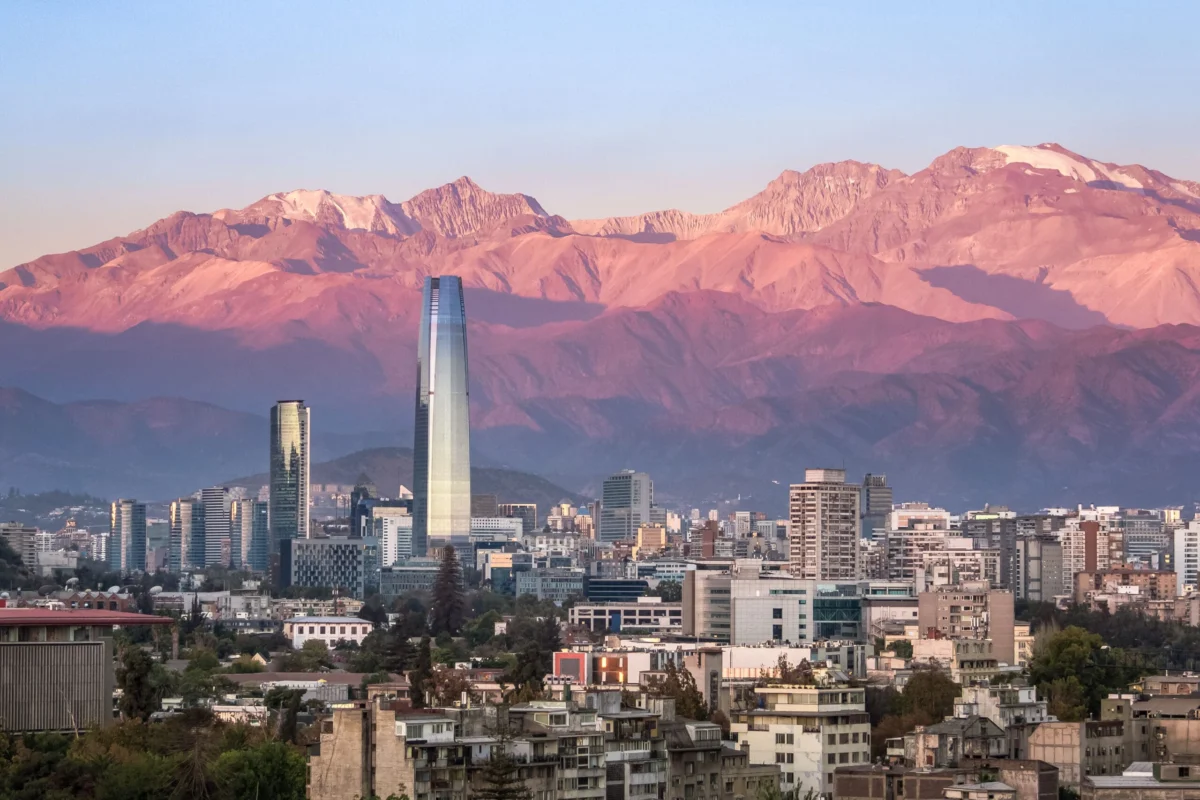
The debate over the Kast administration’s tax reform is a microcosm of the larger struggle faced by many emerging market economies: how to fund the needs of a modern, democratic society without stifling the economic engine that makes that funding possible. As the Senate prepares to take up the bill, all eyes are on Santiago.
For those interested in the intricacies of fiscal policy, the interplay of domestic politics, and the broader trends of global competitiveness, the June 22nd event provides a necessary forum. As space is limited, interested parties are encouraged to register through the Tax Foundation’s portal to participate in what is sure to be a defining conversation for the future of Chile’s economy.
The question remains: will Chile successfully pivot to recapture its status as a growth leader, or will the weight of its current policy inertia prove too heavy to overcome? The answer, as articulated by the administration, begins with these reforms.