








As the calendar turns toward July 1, 2026, the architects of North American commerce are facing a high-stakes deadline that could fundamentally alter the economic trajectory of the United States, Canada, and Mexico. This date marks the inaugural "sunset review" of the United States-Mexico-Canada Agreement (USMCA), the landmark pact that replaced the North American Free Trade Agreement (NAFTA) in 2020. With President Trump signaling a profound skepticism toward renewing the deal in its current form, the stability of the $1.8 trillion trade relationship between these three nations is under unprecedented scrutiny.
The Vital Stakes of the USMCA
The USMCA was designed to modernize the trade landscape of the 21st century. While NAFTA served as the foundation for continental integration by reducing tariffs to zero on the vast majority of goods, the USMCA addressed the digital frontier. It established critical protocols for e-commerce, protected intellectual property, and ensured the free flow of data across borders—prohibiting discriminatory practices like forced localization of computing facilities.
Beyond the digital realm, the agreement introduced significant regulatory shifts. It tightened rules-of-origin (ROOs) requirements for the automotive sector, demanding higher percentages of regional content to qualify for duty-free status. It also mandated that Mexico elevate its labor standards and collective bargaining rights. According to projections from the U.S. International Trade Commission (USITC), these measures were expected to boost long-run GDP by 0.35 percent and generate approximately 176,000 new American jobs.
However, the agreement was not without its critics. Economists have noted that the more restrictive ROOs—intended to spur domestic manufacturing—have ironically increased production costs for auto parts, potentially dampening the competitive edge of North American vehicles. Despite these frictions, the sheer volume of trade underscores the pact’s necessity. In 2024 alone, Canada and Mexico combined accounted for over $1.8 trillion in cross-border commerce, serving as the lifeblood for the American manufacturing, agricultural, and energy sectors.
A Chronology of Escalation: Tariffs and Legal Battles
The current environment of uncertainty did not emerge in a vacuum. It is the result of a series of executive actions that have defined the last eighteen months of trade policy.
- February 2025: Invoking the International Emergency Economic Powers Act (IEEPA), President Trump announced a 25 percent tariff on most imports from Canada and Mexico.
- March 2025: The tariffs officially took effect, though a 30-day exemption for USMCA-compliant goods was granted, later extended indefinitely.
- July 2025: The administration proposed raising tariffs to 35 percent for Canada and 30 percent for Mexico. The Canadian hike was implemented; the Mexican increase was postponed.
- February 2026: In a significant legal blow to the administration, the Supreme Court struck down the IEEPA-based tariffs.
- March 2026: The administration pivoted, implementing a 10 percent "Section 122" tariff, which continues to exempt USMCA-compliant goods.
This volatility has forced businesses to pivot rapidly. Between June and July 2025, as tariff threats loomed, USMCA-compliant imports from Mexico surged by 83 percent, and those from Canada by 62 percent. The share of imports classified as USMCA-compliant climbed from 44 percent in 2024 to a peak of 89 percent in October 2025. This indicates that the USMCA is not merely a treaty; it has become a necessary regulatory shield that allows American importers to navigate a hostile tariff landscape.
The Mechanics of the 2026 Review
The USMCA includes a "sunset" provision requiring the parties to confirm their intent to continue the agreement every six years. If the three nations cannot reach a consensus for a clean extension by the July 1, 2026, deadline, the agreement does not automatically vanish; rather, it triggers a series of annual reviews. Should these subsequent negotiations fail to produce an agreement, the pact would ultimately expire in 2036.
The current administration has made its grievances public. Key points of contention include the persistent trade deficit with the northern and southern neighbors, concerns regarding Chinese goods being transshipped through Mexico to bypass U.S. trade enforcement, and restricted access for U.S. dairy producers into the Canadian market. Meanwhile, Mexico has signaled a desire to relax certain ROOs, while the United States is actively lobbying to tighten them further to encourage additional domestic production.
Economic Implications: The Cost of Protectionism
The potential abandonment or renegotiation of the USMCA poses a tangible threat to the American wallet. Modeling from the Tax Foundation demonstrates that if the current exemptions for USMCA goods were removed, the consequences would be severe.
If the USMCA-compliant goods—currently shielded from the Section 122 tariff—were suddenly subjected to new duties, the economic impact would be significant. The model estimates that ending these exemptions would:
- Reduce long-run GDP by an additional 0.1 percent.
- Result in the loss of approximately 95,000 jobs.
- Impose a $466 billion tax increase on the economy from 2027 through 2036.
For the average American household, this would translate into an additional $300 tax burden in 2027 alone. These figures are in addition to the existing costs of current tariffs, which have already reduced long-run GDP by 0.3 percent and cost households roughly $700 this year.
Official Stances and Industry Perspectives
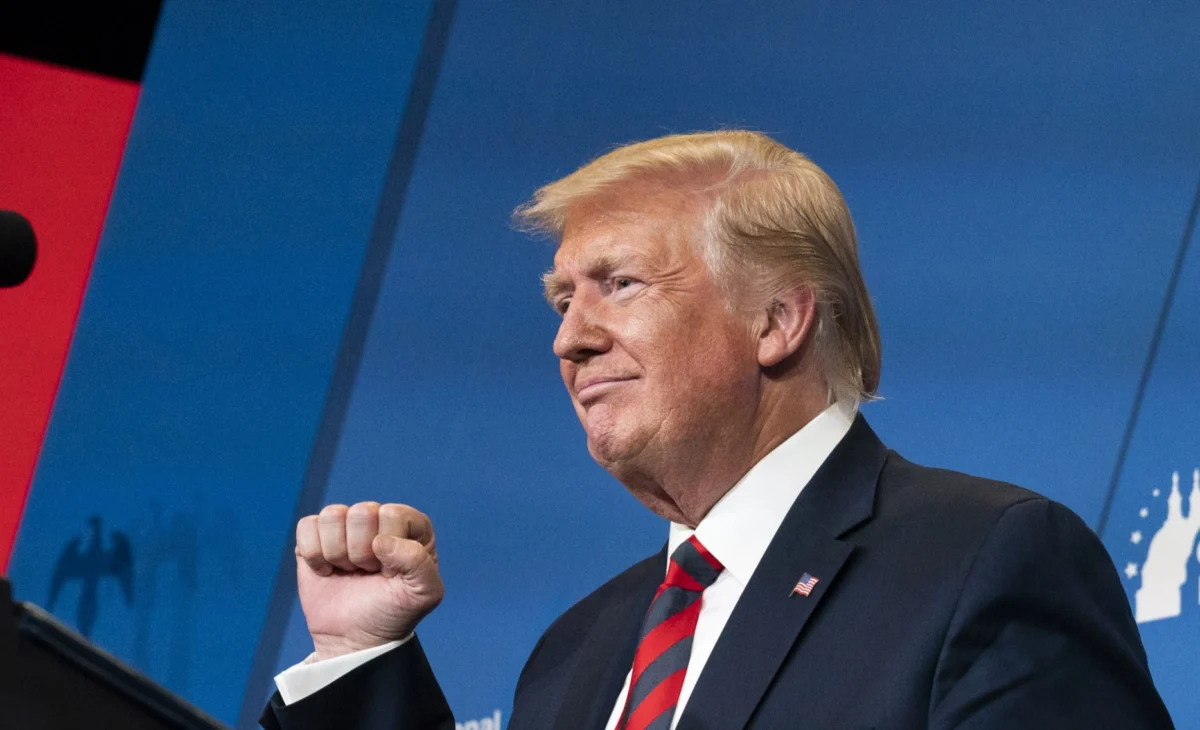
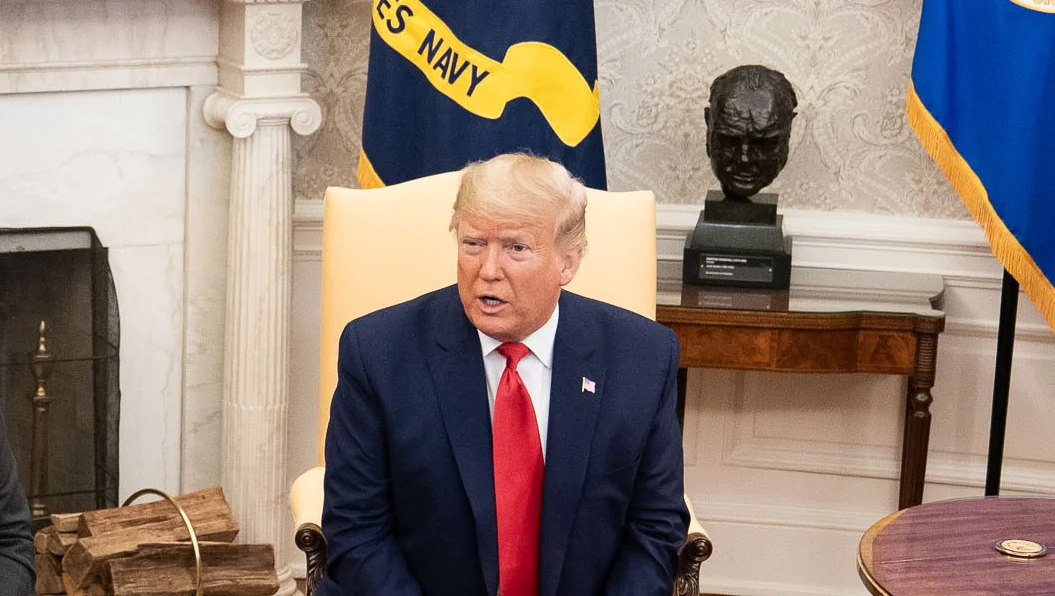
The administration’s rhetoric has remained consistently aggressive. President Trump has publicly flirted with the idea of terminating the agreement entirely, claiming he would "rather not have" it if he cannot secure more favorable terms. This posture has left industry leaders, particularly in the automotive and agricultural sectors, in a state of high anxiety.
Trade associations and economists argue that the focus should be on stability rather than disruption. With nearly 2 million U.S. jobs directly supported by trade with Canada and Mexico, the "cost" of the agreement—often cited by the administration as a trade deficit—is eclipsed by the value of integrated supply chains.
"The USMCA is not a static document," says one trade analyst. "It is a living architecture. To dismantle it during a period of global economic volatility would be akin to removing the foundation of a house while the storm is still raging."
Conclusion: The Path Forward
As July 1 approaches, the probability of a "clean" extension appears low. Instead, the most likely outcomes involve a messy series of annual reviews, a transition toward bilateral deals that could fracture the North American bloc, or a period of intense, high-stakes negotiation aimed at securing new concessions.
The danger of this path is the compounding of policy uncertainty. Businesses, which rely on the predictability of tariff-free movement for raw materials and finished goods, are increasingly hesitant to invest in long-term infrastructure when the legal status of the trade agreement is in doubt.
Policymakers face a binary choice: prioritize the short-term political theater of protectionism or preserve the economic engine that has defined North American prosperity for the last half-decade. If history serves as a guide, the abandonment of such a massive trade framework will lead not to a renaissance of domestic industry, but to a shrinking of the U.S. economy, higher costs for consumers, and a loss of competitive positioning on the global stage. As the 2026 deadline looms, the question is not whether the USMCA is perfect, but whether the American economy can afford the cost of its absence.