









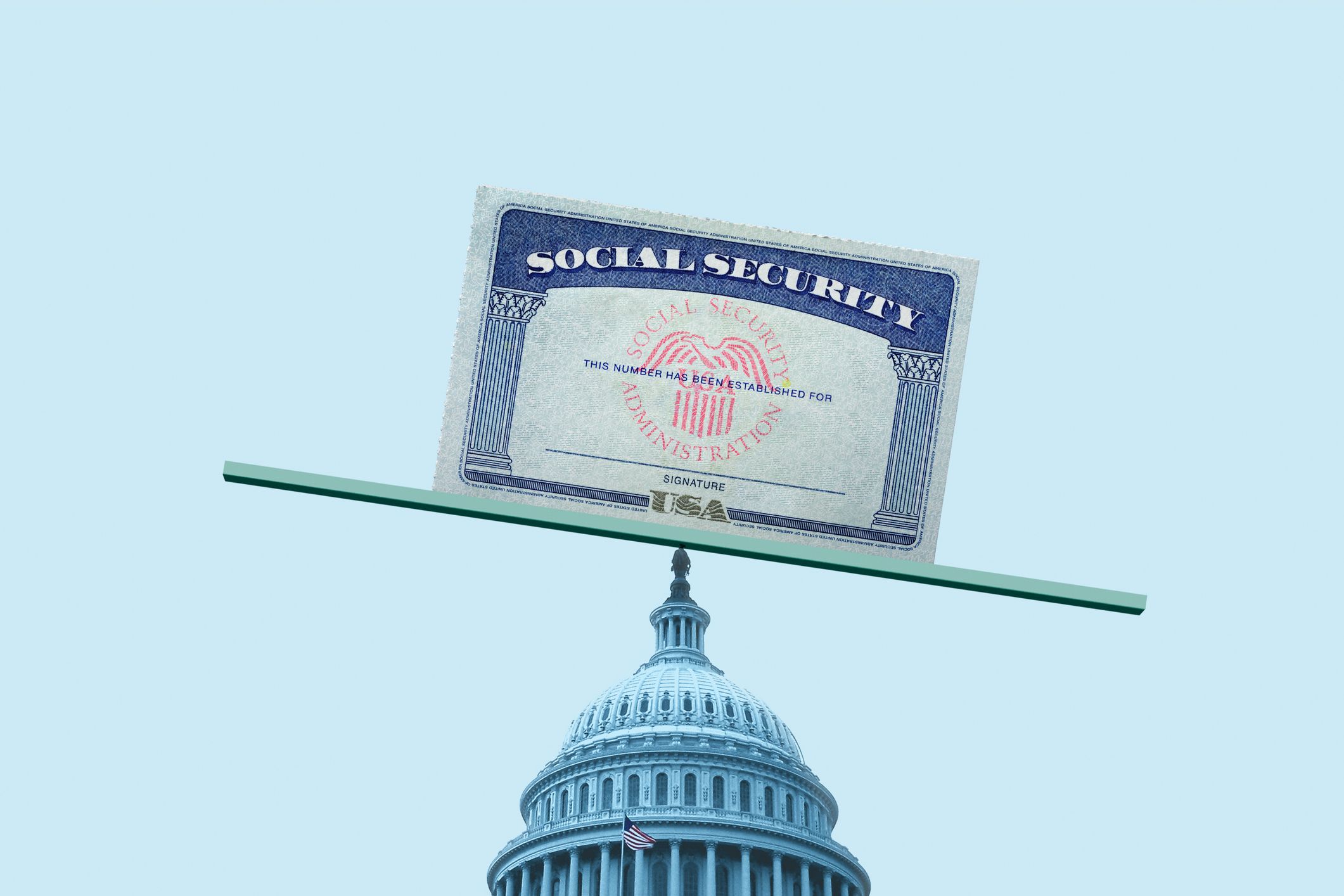
For nearly a century, Social Security has served as the bedrock of American retirement, a social contract designed to insulate the elderly, the disabled, and the bereaved from the volatility of the labor market. However, as the program approaches a projected funding shortfall by late 2032, the long-standing debate over its future has moved from theoretical policy discussions to active legislative implementation. The launch of “Trump Accounts”—federally seeded, privately held investment vehicles—marks a pivot in how the United States approaches the concept of a guaranteed safety net.
The Looming Insolvency: A Structural Crisis
The Social Security Administration (SSA) faces a demographic reality that has been decades in the making: the ratio of workers to beneficiaries is shrinking. As the last of the Baby Boomer generation enters retirement, the number of individuals drawing from the system is rapidly outpacing the number of younger workers paying into it via payroll taxes.
Current projections from the Social Security Board of Trustees indicate that if Congress fails to enact structural reforms, the program will reach a point of insolvency by 2032. Contrary to popular belief, this does not mean the program will vanish entirely; rather, it triggers a statutory requirement to reduce benefit payments to roughly 78 cents on the dollar. For the millions of Americans who rely on these monthly checks—particularly the lowest 20% of earners for whom Social Security accounts for nearly 80% of total income—a 22% reduction in benefits would represent a seismic shift in their quality of life.
Chronology of the Shift: From Cradle to Capital
The concept of "personal accounts" is not new. In 2005, the Bush administration attempted a similar pivot toward privatization, which ultimately stalled due to the "transition problem"—the massive, trillion-dollar cost of funding existing retirees while simultaneously diverting payroll taxes into private accounts for younger workers.
The current administration has opted for a different strategy: building a parallel system from the ground up, starting with children.
- 2025: The Trump tax bill is signed into law, establishing the legislative framework for Trump Accounts. Initially marketed as child savings vehicles for education and housing, the program’s scope is quietly broadened.
- May 2026: During the Milken Institute Global Conference, Senator Ted Cruz (R-Texas) describes these accounts as a "dirty little secret," explicitly identifying them as the foundation for a future privatized Social Security system.
- July 4, 2026: The Trump Account program officially launches, with the Treasury Department depositing $1,000 into the accounts of eligible children.
- Late 2026: The IRS issues guidance regarding "safe harbor" contributions, allowing family members to contribute up to $5,000 annually without triggering gift tax reporting, effectively encouraging the rapid accumulation of private assets.
The "Dirty Little Secret": Privatization by Design
Senator Cruz’s assertion that Trump Accounts are "Social Security personal accounts" reflects a long-term strategy of "cradle-to-grave" investment. By seeding accounts for newborns, the administration aims to demonstrate the power of compound interest to a generation of young Americans.
"Babies grow up," Cruz argued at the Milken Institute. He posited that with consistent contributions, a child could theoretically accumulate $170,000 by age 18 and over $700,000 by age 35. The argument suggests that by the time these children reach retirement age, their reliance on the traditional, state-managed Social Security system will be—or should be—obsolete.
However, critics, including members of the Senate, argue that this strategy fundamentally undermines the collective nature of Social Security. By shifting the burden of retirement security from a collective social insurance model to an individual investment model, the government potentially exposes citizens to the whims of market volatility—a risk that the traditional, fixed-income structure of Social Security was specifically built to avoid.
Data and Disparity: The Risk of Market Exposure
The transition to private accounts introduces significant variables that do not exist under the current system. Under the current Social Security model, benefits are inflation-adjusted and guaranteed by the federal government. Under a privatized model, as envisioned by proponents of the Trump Account structure, the value of a retiree’s "nest egg" is tied to market performance.
Economic analyses from the Center on Budget and Policy Priorities (CBPP) and the Center for American Progress (CAP) have consistently highlighted the "transition cost" dilemma. If current workers divert their payroll taxes into private accounts, the government loses the immediate revenue required to pay current retirees. This creates a multi-trillion-dollar funding gap that would necessitate either deep cuts to current benefits or a massive increase in federal borrowing.
Furthermore, the tax implications are starkly different:
| Feature | Social Security | Trump Account |
|---|---|---|
| Taxable Amount | 50%–85% of benefits | Up to 100% of distributions |
| Basis Rules | N/A | Fully taxable growth/matches |
| Access | Age 62 (reduced) | Age 18 (qualified expenses) |
| Mandatory Distributions | None | Required (RMDs) starting at 73-75 |
As shown in the table above, the tax treatment of these new accounts is more akin to a traditional IRA than to social insurance. While this may offer flexibility for wealth-building in early life, it introduces the risk of tax erosion during the distribution phase of retirement.
Official Responses and Political Friction
The political response to the launch of these accounts has been sharply polarized. Supporters view the initiative as a necessary modernization of the American safety net, arguing that it empowers families to build generational wealth that can be passed down to heirs—something Social Security, which is a life-annuity system, does not provide.
Conversely, opponents, including Senator Elizabeth Warren, have characterized the downsizing of the Social Security Administration—including office closures and staff reductions—as a deliberate attempt to "gut" the program to make the transition to privatization appear more palatable. The administration’s supporters describe these cuts as "efficiency measures," but critics maintain that the degradation of the SSA’s service capabilities is a precursor to an eventual move toward full privatization.
In response to the growing public concern, Treasury officials and administration spokespeople have clarified that Trump Accounts are intended to "supplement" rather than "replace" Social Security. However, the explicit rhetoric from primary architects like Senator Cruz continues to fuel the perception that the ultimate goal is the phasing out of the traditional program in favor of individual, market-based retirement accounts.
Implications for the Future
The implications of this shift are profound, particularly for Gen Xers, who are currently staring down the barrel of the 2032 insolvency deadline. For this cohort, the shift toward private accounts may come too late to build the necessary capital to replace lost Social Security benefits, leaving many in a state of financial precarity.
History shows that fiscal crises can act as powerful catalysts for radical legislative change. The 1983 overhaul of Social Security was achieved through bipartisan compromise only when the trust funds were months away from exhaustion. Today, the introduction of Trump Accounts may be a similar maneuver—a preemptive move to offer an alternative before the 2032 deadline forces a more painful conversation.
As the program evolves, the American public must reconcile two competing visions of retirement: one based on a collective, government-guaranteed safety net, and another based on individual ownership and market participation. Whether the Trump Account initiative succeeds in creating a new paradigm or remains a supplemental tool will depend on market performance, future legislative adjustments, and the political will to address the looming 2032 funding shortfall.
For now, the policy landscape remains in flux, and millions of Americans are left to navigate a retirement planning environment that is rapidly moving away from the predictability of the past and toward the uncertainty of the future.