








Every day, thousands of Americans are greeted by digital advertisements offering a seductive financial promise: "Refinance your federal student loans today and save thousands in interest." For those drowning in high-interest debt, the prospect of a lower monthly payment and a faster path to freedom seems like an obvious win. However, the decision to refinance federal student loans is one of the most consequential financial maneuvers a borrower can make. It is not merely a change in billing—it is a permanent severance of your relationship with the federal government’s safety net.
Before you sign on the dotted line, it is essential to understand that when you refinance a federal loan, you are effectively converting it into a private debt obligation. In doing so, you permanently relinquish your access to the suite of protections provided by the Department of Education, including income-driven repayment (IDR) plans, federal deferment, and the promise of public service loan forgiveness.
The Evolution of Student Debt: A Chronology of Choice
To understand why refinancing has become such a hot-button issue, one must look at the historical context of the student loan landscape.
- The Pre-2010 Era: Before the shift toward direct federal lending, many borrowers held loans through private entities that were subsidized by the government.
- The Expansion of Protections: Over the last two decades, federal legislation introduced robust safety nets, such as the Public Service Loan Forgiveness (PSLF) program and various Income-Driven Repayment (IDR) plans, designed to prevent borrowers from becoming permanently insolvent due to academic debt.
- The Rise of Private Refinancing: As interest rates fluctuated, a secondary market emerged. Private lenders began aggressively targeting high-earning graduates (specifically those in medicine, law, and engineering), offering lower rates to "cherry-pick" the most creditworthy borrowers away from federal programs.
- The Modern Decision Matrix: Today, the decision to refinance has become a complex calculation. With the introduction of new federal programs like the SAVE plan and evolving forgiveness criteria, the "math" of whether to leave the federal system has become more opaque than ever.
The "Point of No Return": Why Federal Protections Matter
When you hold a federal student loan, you are not just holding a debt; you are holding an insurance policy. Federal loans come with "embedded options" that private lenders simply cannot replicate.
Income-Driven Repayment (IDR) Plans
These plans cap your monthly payments as a percentage of your discretionary income. If you lose your job or suffer a reduction in hours, your payments can theoretically drop to $0. Once you refinance, you are locked into the specific payment terms dictated by your private lender’s contract. There is no "hardship" clause that lowers your payment based on your income.
Forgiveness Programs
Programs like PSLF are arguably the most valuable assets in the federal student loan ecosystem. For teachers, nurses, government employees, and non-profit workers, federal loans offer a pathway to total balance cancellation after 10 years of service. Once a loan is refinanced into the private market, that eligibility is evaporated instantly and irreversibly.
5 Critical Indicators: Should You Take the Leap?
Determining whether you are a prime candidate for refinancing requires a cold, hard look at your financial life. Travis Hornsby, founder of Student Loan Planner®, suggests that the ideal candidate for refinancing usually works in the private sector, maintains a robust emergency fund, and carries a total federal debt load that is less than 1.5 times their annual income.

If you meet these criteria, here are the five signals that indicate you are ready to move into the private sector:
1. You Have No Intentions of Pursuing Forgiveness
If your career path is firmly rooted in the private sector—and you have no desire to switch to public service—the "forgiveness" aspect of federal loans may be irrelevant to you. If you are certain that you will pay off your debt in full, and you are not looking for the safety net of an IDR plan, you are a primary candidate for a lower interest rate.
2. Your Employment is Highly Stable
Refinancing is a gamble on your own future earnings. Because private lenders lack the flexible deferment and forbearance options of federal loans, you must be confident in your job security. If you are in a volatile industry or are currently in a "job-hopping" phase, the risk of a layoff without federal protections could be catastrophic.
3. Your Credit Score is Exemplary
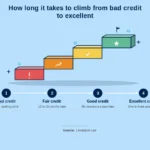
Private lenders function based on risk assessment. Unlike federal loans, which are granted regardless of credit history, private refinancing requires a credit check. A score of 700 or higher is generally considered the "sweet spot" for securing the most competitive interest rates. Before applying, ensure your credit utilization is low and that your history is free of recent delinquencies.
4. Your Monthly Payments Are Already Manageable
It is a common misconception that refinancing is a solution for those who cannot afford their payments. In reality, if you are struggling to make your current payments, you likely won’t qualify for the best rates from private lenders. You should be able to comfortably afford the Standard 10-year Repayment Plan before considering a private refinance.
5. The Interest Savings Are Substantial
The goal of refinancing is to reduce the amount of money you waste on interest. Generally, if you cannot lower your interest rate by at least 1% to 2%, the "hassle" and the loss of federal protections may not be worth the minimal savings. Use online calculators to model your total interest cost over the life of the loan to ensure the savings are significant enough to warrant the move.
Implications for the Future: The Hidden Costs of Private Debt
While the immediate gratification of a lower interest rate is appealing, the implications of moving to private debt are long-term.

The Loss of Death and Disability Discharge:
One of the most under-discussed features of federal student loans is the automatic discharge in the event of total and permanent disability or death. Many private lenders have begun to include similar clauses, but they are not federally mandated. When you refinance, you are relying on the contractual fine print of a private company, which may be far less forgiving than the federal standard.
The "Locked-In" Effect:
Once you refinance, you cannot "reverse" the process. You cannot turn a private loan back into a federal loan. If the economy takes a downturn or if you decide to pivot to a career in public service later in life, your previous federal debt is permanently out of reach for future federal relief efforts.
Professional Perspectives and Expert Advice
Financial experts often emphasize that refinancing is a "wealth-builder" strategy for those who have already achieved financial stability. It is not a "debt-relief" strategy for those in crisis.
"The decision should be based on a math-first approach," says Hornsby. "Look at the total cost of ownership. If you can save thousands by refinancing and you have the liquidity to handle a potential job loss, then it makes sense. If you are leaning on the federal safety net to make ends meet, you are essentially trading your financial security for a small monthly discount."
Conclusion: How to Proceed Wisely
If you have analyzed your situation and determined that you are indeed a strong candidate for refinancing, the next step is a methodical search.
- Comparison Shopping: Never accept the first offer. Use reputable comparison sites to pull quotes from multiple lenders simultaneously.
- Check for Fees: Look for origination fees or prepayment penalties. The best refinancing options are those that have no fees and allow you to pay off the loan early without penalty.
- Evaluate Cash-Back Bonuses: Many lenders offer sign-up bonuses. While these shouldn’t be the deciding factor, they can be a nice incentive to offset the costs of the transition.
Ultimately, refinancing is a powerful tool, but like any tool, it must be used with precision. If you are not entirely sure, the safest route is to maintain your federal status until your financial situation becomes more predictable. For many, the peace of mind provided by the federal safety net is worth more than a few percentage points of interest.
If you remain uncertain about your specific situation, take the time to run a comprehensive audit of your loans. There are many digital tools and quizzes available that can help you map out your specific repayment journey, comparing the long-term cost of federal programs against the immediate benefits of private market refinancing. Don’t let the marketing ads dictate your financial future—run the numbers, understand the risks, and make the decision that fits your life.