







The landscape of American higher education financing has undergone a seismic shift. Following the enactment of the One Big Beautiful Bill Act—legislation passed by congressional Republicans and signed by President Trump last year—the U.S. Department of Education has begun implementing a series of reforms that fundamentally alter how federal student loans are managed, repaid, and forgiven.
For millions of borrowers, these changes represent more than just bureaucratic updates; they are a total restructuring of the federal debt contract. With the key regulatory deadlines having passed on July 1, 2026, the era of accessible, flexible income-driven repayment (IDR) is effectively closing for those who take on new debt. As borrowers navigate the sunsetting of legacy plans and the introduction of more restrictive alternatives, the financial stakes have never been higher.
Chronology of Reform: A Timeline of Change
To understand the current crisis, one must look at the timeline that led to the present regulatory environment.
- Pre-2026: Borrowers enjoyed a wide array of repayment options, including the Pay As You Earn (PAYE), Income-Contingent Repayment (ICR), and the popular Saving on a Valuable Education (SAVE) Plan. These programs were designed to peg monthly payments to discretionary income, offering a safety net for those in low-to-moderate-income professions.
- July 1, 2026: The primary enforcement date for the One Big Beautiful Bill Act. On this day, the Department of Education initiated the phase-out of several legacy repayment plans. Critically, this date marked the "point of no return" for anyone taking out new federal student loans or consolidating existing ones.
- The Two-Year Transition (2026–2028): The Department of Education has set a two-year window to fully sunset the PAYE and ICR plans. During this period, the department is forcing existing borrowers out of the SAVE plan, creating a period of significant administrative volatility.
- Post-July 1, 2028: By this date, the legacy IDR ecosystem will be largely dismantled, leaving the Repayment Assistance Plan (RAP) and the Tiered Standard Plan as the primary pillars of federal loan repayment.
The New Reality: Repayment Plan Limitations
The most jarring aspect of the recent reforms is the "all-or-nothing" nature of the new rules. The Department of Education has clarified that if a borrower takes out any new federal student loan on or after July 1, 2026, their entire federal student loan portfolio—including loans taken out years prior—is subject to the new, more restrictive repayment rules.
The Death of Flexibility
Borrowers who trigger this provision lose access to all legacy repayment plans, including the Income-Based Repayment (IBR) plan and PAYE. Their choices are narrowed to two options:
- The Repayment Assistance Plan (RAP): While income-based, the RAP requires a 30-year payment term before a borrower can qualify for loan forgiveness. This is a massive increase over previous plans that offered forgiveness in as little as 20 years.
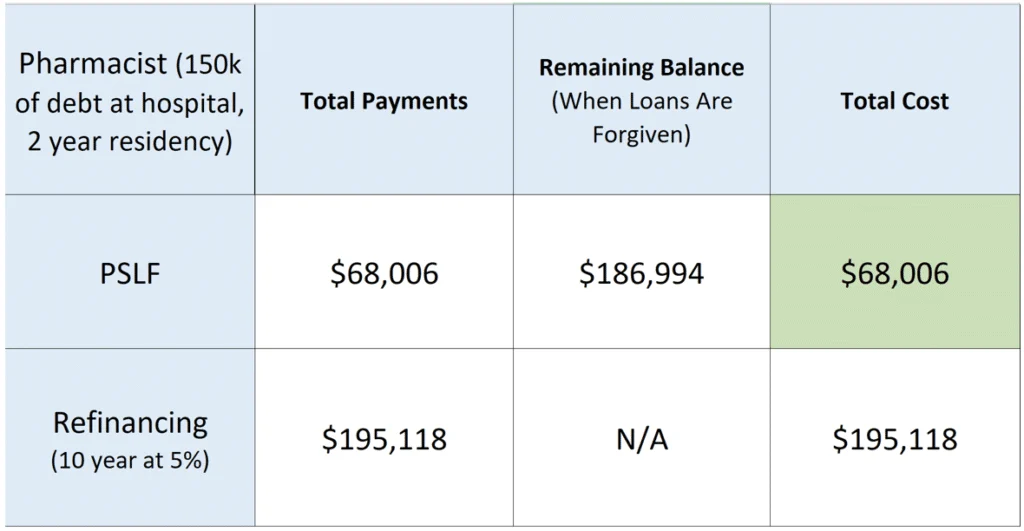
- The Tiered Standard Plan: This is a non-income-driven option. Most significantly, the Education Department has explicitly confirmed that the Tiered Standard Plan is not a qualifying repayment plan for Public Service Loan Forgiveness (PSLF). For teachers, nurses, and government employees who relied on PSLF to manage high debt-to-income ratios, this is a devastating development.
The Parent PLUS Predicament
Perhaps the most vulnerable group under the new legislation are parents who have taken out Parent PLUS loans. Historically, these loans were viewed as a bridge to education, but they now represent a significant financial liability.
The National Consumer Law Center (NCLC) has issued dire warnings regarding these loans. Parents who did not consolidate their Parent PLUS loans through the federal Direct Consolidation Loan program before the July 1, 2026, deadline are now permanently barred from enrolling those loans in any income-driven repayment plan.
For those who did manage to consolidate before the deadline, the rules remain precarious. If a parent takes out any new federal loan—or even consolidates their existing debt after the deadline—they effectively forfeit their access to IDR and PSLF for their entire balance. This creates a "debt trap," where parents are incentivized to avoid any further engagement with the federal loan system, even if they require additional funding to complete their child’s education.
Supporting Data: Borrowing Limits and Economic Impact
The One Big Beautiful Bill Act does not stop at repayment plans; it imposes strict aggregate borrowing caps, a measure designed to curb the growth of the federal student loan portfolio.
Reduced Capacity for Advanced Degrees
The caps specifically target graduate students and families utilizing Parent PLUS loans:
- Graduate Students: The annual limit for unsubsidized loans is now $20,500. Furthermore, the aggregate limit has been slashed to $100,000 for those who have not previously been professional students.
- Professional Students: The aggregate loan limit is now capped at $200,000.
- Parent PLUS: Loans are now limited to $20,000 per child, per year, with a total aggregate lifetime limit of $65,000 per child.
Financial analysts warn that these caps will likely force many prospective students into the private lending market. Unlike federal loans, private loans typically lack the protection of income-driven repayment, have variable interest rates that can fluctuate based on market conditions, and offer zero access to federal forgiveness programs.
Official Responses and Administrative Friction
The Department of Education has maintained that these changes are necessary to stabilize the federal balance sheet. In their official guidance, they emphasize that the transition is intended to streamline a formerly "dizzying" array of plans. However, the implementation has been fraught with challenges.
Borrowers have reported widespread technical issues with the online application portal, errors by loan servicers in calculating payments, and significant delays in processing consolidation requests. The NCLC and other advocacy groups have criticized the department for the speed of these changes, arguing that the lack of clear, timely communication has left millions of borrowers in a state of financial limbo.
"Existing borrowers who took out all of their loans before July 1 will keep most of their existing repayment options—for now," the NCLC noted. However, they caution that the transition is not a "soft landing." The forced exit from the SAVE plan has caused monthly payment spikes for many, leading to increased delinquency rates across the board.
Implications: A Shifting Educational Strategy
The implications of these changes are profound. For the next generation of students, the "cost of attendance" now includes a higher degree of personal financial risk.
- The Rise of Private Debt: As federal caps tighten, the reliance on private lenders is expected to grow. This could lead to a two-tier system where only those with significant family wealth can afford elite graduate or professional programs, while others are priced out or forced to take on high-interest private debt.
- Public Service Decline: Because the new Tiered Standard Plan does not qualify for PSLF, there is a legitimate concern that public sector fields—specifically those that require advanced degrees—will see a decline in applicants. Why pursue a career in public service if the debt-relief mechanism that made it affordable no longer exists?
- Educational Attrition: Many students are now choosing to forgo advanced degrees entirely. The economic calculation of "investment versus return" has changed. When a degree no longer offers the protection of manageable, income-linked repayment, the risk of default becomes too high for many working-class families.
Conclusion: Navigating the New Landscape
The One Big Beautiful Bill Act has fundamentally redefined the relationship between the federal government and student loan borrowers. For those currently in the system, the priority must be a careful audit of their loan status. Borrowers must determine whether they are "grandfathered" into legacy plans or if their recent actions—such as consolidating or taking out new loans—have triggered the restrictive new mandates.
As the sunsetting of the PAYE and ICR plans continues through 2028, the window for strategic planning is rapidly closing. Prospective students and parents must weigh the new, lower borrowing limits against the reality of private financing. In this new era, the mantra for every borrower must be extreme caution: before signing for a new loan or consolidating old debt, one must understand that the decision is, for all intents and purposes, irrevocable. The safety nets that once defined the federal student loan program are fading, and in their place is a system that demands a more disciplined, and perhaps more skeptical, approach to the financing of higher education.