








By PYMNTS | July 10, 2026
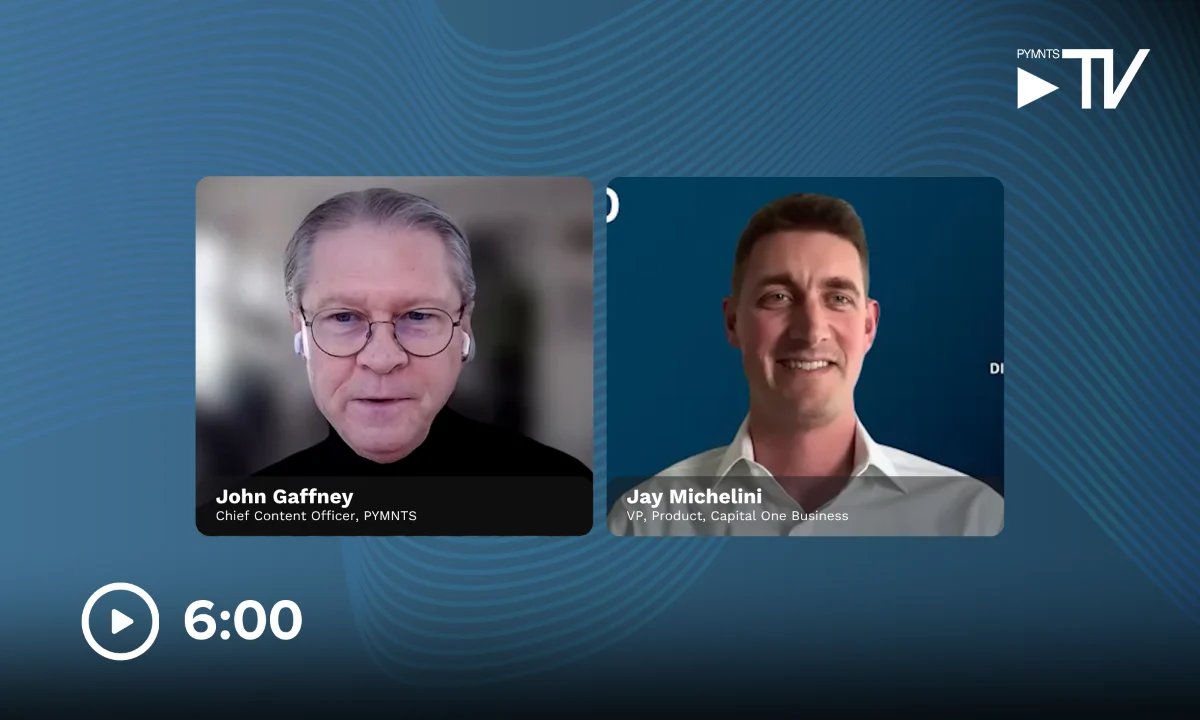
In the high-stakes world of financial services, the word "transformation" is often synonymous with digital migration, cloud adoption, or the implementation of AI-driven analytics. However, according to Jay Michelini, vice president of product at Capital One Business, the most expensive and frequent failures in the financial sector do not stem from faulty algorithms or buggy software—they stem from a breakdown in the organizational human architecture.
As financial institutions navigate a landscape defined by rapid-fire technological shifts and evolving customer expectations, the ability to manage change has become a core competency. In a recent interview, Michelini argued that successful change management is not a top-down mandate delivered via PowerPoint; it is a collaborative, human-centric process that must be initiated long before a single line of code reaches production.
The Strategic Imperative: Leading with the "Why"
For many organizations, change management is treated as an afterthought—a communication plan triggered only when a project is ready for launch. Michelini contends that this is fundamentally flawed. True transformation requires that employees understand the "why" behind the shift before they are asked to alter their daily workflows.
"You’ve got to lead with the ‘why,’" Michelini emphasized. In the FinTech space, where the operating environment is characterized by constant, compounding pressure from new market entrants and shifting regulatory demands, leaders must frame change as a permanent state of affairs rather than an isolated, temporary headache. When change is presented as a constant—an inherent part of the business model—the resistance often associated with it begins to dissipate.
However, the "why" cannot be delivered solely through executive pronouncements. Michelini advocates for a decentralized approach to leadership, identifying internal "champions"—employees at various levels who are genuinely invested in an initiative—to bridge the gap between abstract strategy and practical application. These individuals possess a level of credibility that formal corporate communications often lack, acting as translators who can explain the tangible value of product modernization or new payment capabilities to their peers.
Chronology of Effective Change: A Proactive Roadmap
To understand why so many digital initiatives stall, one must look at the traditional timeline of corporate projects. Often, a project follows a rigid, sequential path: ideation by leadership, development by engineers, and eventual "hand-offs" to operational, legal, and compliance teams. By the time these latter groups are involved, the architecture is often set in stone, and changes become prohibitively expensive.
Phase 1: Pre-Emptive Collaboration
Michelini suggests reversing this chronology. Cross-functional partners should be brought into the decision-making process at the outset. By including operations, risk, and compliance experts in the early design phases, organizations avoid the "checkpoint" mentality that often leads to bottlenecks. When these stakeholders are co-creators rather than gatekeepers, the project lifecycle becomes more fluid and less prone to late-stage friction.
Phase 2: Direct Engagement
Leaders must move away from the "dashboard-only" style of management. Michelini highlights his own experience spending time with sales teams to gain firsthand insights into the customer experience. This is not merely a gesture of transparency; it is a strategic necessity. By witnessing how front-line employees interact with customers, product leaders can identify nuances that metrics simply cannot capture. This allows for an iterative course of travel, where leaders maintain conviction in their direction while remaining agile enough to adjust based on real-world feedback.
Phase 3: Measuring the "Feel" of Progress
As projects mature, the focus typically shifts to milestones. Michelini urges a pivot in how we measure success during this phase. Instead of asking, "Where are we on the schedule?" managers should ask, "How do you feel about how progress is going?" This simple, empathetic shift in framing reveals critical data points: burnout, organizational bottlenecks, and hidden obstacles that are not reflected in a project management tool.
Supporting Data: The Cost of Disengagement
While industry reports often quantify the cost of failed digital transformations in terms of wasted capital expenditure, the hidden costs are frequently human. Data from the broader FinTech sector suggests that teams working in silos are 40% more likely to miss delivery targets due to "information asymmetry"—a state where one department is working toward a goal that another department is actively undermining or ignoring.
Furthermore, companies that prioritize "internal evangelism" (the use of employee champions) report significantly higher rates of adoption for new software platforms. The logic is straightforward: when an employee sees a trusted colleague utilizing a new tool to solve a problem they share, they are statistically more likely to adopt that tool themselves.
Michelini’s approach addresses these inefficiencies by advocating for:
- Early Integration: Reducing the number of "handoffs" by 30-50% through integrated, cross-functional teams.
- Operational Intelligence: Identifying obstacles early through qualitative check-ins rather than waiting for quantitative performance drops.
- Reduced Friction: Lowering the reliance on excessive overtime by identifying and removing systemic blockers before they trigger a morale crisis.
Official Perspective: The "Missionary vs. Mercenary" Paradigm
Michelini’s philosophy on leadership is perhaps best summarized by his distinction between "missionaries" and "mercenaries." A mercenary works for the milestone; a missionary works for the mission.
"I think about creating missionaries, not mercenaries," Michelini said. "It’s very important to empower the teams to outthink you."
This perspective requires a radical level of humility from leadership. It acknowledges that in a complex, fast-moving financial landscape, no single executive has all the answers. By fostering a culture where teams are encouraged to challenge the status quo, leaders can create a more resilient organization. This is not about relinquishing control; it is about creating a framework where the best ideas—regardless of their origin—can surface and be implemented.
Implications: The Future of FinTech Organizational Design
The implications for financial institutions are clear. The era of the "siloed expert" is fading. The institutions that will thrive in the coming decade are those that treat organizational design as a product in its own right.
1. From Checkpoints to Co-Creation
The traditional model of sequential departmental reviews is being replaced by parallel processing. Organizations that successfully integrate legal, compliance, and product teams from day one are seeing faster time-to-market and lower regulatory risk.
2. The Rise of Empathy-Driven Metrics
Managers who prioritize the "how are you feeling" metric are finding they have higher retention rates and more accurate project forecasting. In an industry where talent wars are fierce, fostering a culture of psychological safety is a competitive advantage.
3. The End of the "Top-Down" Era
As Michelini noted, "I don’t have all the answers." This admission is becoming a hallmark of modern leadership in FinTech. The complexity of modern banking—balancing AI integration, cybersecurity, and regulatory compliance—is too vast for any single leader to master. Consequently, the role of the leader is shifting from "decision-maker" to "architect of environment."
Conclusion
Transformation in the financial sector is, at its core, a test of institutional character. It is easy to buy the latest technology, but it is difficult to build the culture required to maximize its utility. By leading with a clear "why," fostering deep cross-functional collaboration, and prioritizing the morale and feedback of the teams on the ground, leaders like Jay Michelini are proving that the most sustainable competitive advantage is not a proprietary algorithm, but a workforce that is empowered to solve problems collectively.
As the industry continues to evolve, the distinction between those who succeed and those who falter will be determined by who can better bridge the gap between the boardroom and the front line. The message from Capital One Business is clear: change is the only constant, and the only way to manage it is to make it a shared mission rather than a management mandate.