









By Financial News Desk
As the annual tax filing season reaches its zenith, millions of Americans are poised to receive what is often their largest single influx of liquidity all year: the federal tax refund. While the immediate temptation for many is to view this windfall as "found money" destined for discretionary spending or luxury upgrades, financial experts and credit analysts are increasingly framing the refund as a strategic tool for systemic credit repair.
In an era defined by fluctuating interest rates and record-high consumer debt, the average tax refund—estimated to hover around $3,000—represents more than just a check; it is a high-leverage instrument capable of fundamentally altering a consumer’s credit profile. This report explores the mechanics of credit scoring, the strategic deployment of capital, and the long-term economic implications of utilizing tax refunds to fortify financial health.
The Strategic Windfall: Why the Refund Matters
For the average American household, a $3,000 injection of cash is a significant "liquidity event." Unlike monthly wages, which are typically earmarked for recurring expenses like housing, utilities, and groceries, the tax refund exists outside the standard budget. This "lump-sum" nature allows consumers to address financial hurdles that are insurmountable on a month-to-month basis.
Credit repair is rarely a matter of a single action; rather, it is a process of optimization. When a consumer receives a refund, they are essentially handed the capital necessary to influence the two most critical components of their credit score: payment history and credit utilization. Together, these two factors account for a staggering 65% of a FICO® score. By applying a refund toward these areas, a consumer can potentially see significant score improvements within one to two billing cycles.
Supporting Data: The Anatomy of a Credit Score
To understand why a tax refund is so effective for credit building, one must look at the quantitative data behind credit scoring models. FICO®, the industry standard, breaks down scores into five distinct categories:

- Payment History (35%): The most significant factor. Even one 30-day late payment can cause a score to plummet by 60 to 100 points.
- Amounts Owed / Credit Utilization (30%): This measures how much of your available credit limit you are using. Experts generally recommend keeping this ratio below 30%, though those with the highest scores often stay below 10%.
- Length of Credit History (15%): The age of your oldest and newest accounts.
- Credit Mix (10%): The variety of accounts, such as mortgages, auto loans, and credit cards.
- New Credit (10%): The frequency of hard inquiries and recently opened accounts.
Data suggests that for a consumer with $10,000 in total credit limits and $6,000 in balances, a $3,000 tax refund applied to that debt would instantly drop their utilization from 60% to 30%. This shift alone can trigger a substantial increase in creditworthiness, often resulting in lower interest rates on future loans and insurance premiums.
Chronology of a Credit Turnaround: A Step-by-Step Strategy
For those looking to maximize the impact of their refund, financial advisors suggest a chronological approach to debt management.
Phase I: Triage and Payment History
The first priority is the "Payment History" category. If a consumer has accounts that are currently past due, the refund should be used immediately to bring those accounts current.
- The Logic: A "current" status prevents the account from moving into "charge-off" territory or being sent to a third-party collection agency. While the refund cannot erase the record of the late payment, it halts the ongoing damage and restarts the clock on positive payment behavior.
Phase II: The Utilization Optimization
Once all accounts are current, the focus shifts to "Amounts Owed." This is where the refund can be most transformative.
- The Strategy: Consumers should target revolving credit—specifically credit cards—rather than installment loans like car payments. Reducing a credit card balance directly lowers the utilization ratio, whereas paying down an installment loan has a negligible effect on this specific metric.
- The "Targeted Strike": If a consumer has multiple cards, they should prioritize paying down the card that is closest to its limit (the "maxed-out" card), as individual card utilization is factored into the score alongside aggregate utilization.
Phase III: The Protective Barrier (Emergency Funding)
The final step in the chronology isn’t about paying a creditor; it’s about paying oneself. A portion of the refund should be diverted into a high-yield savings account to serve as an emergency fund.
- The Goal: Financial instability is the primary driver of credit damage. By establishing a $500 to $1,000 "buffer," a consumer ensures that the next unexpected car repair or medical bill doesn’t result in a missed credit card payment or a new high-interest debt.
Official Responses and Expert Perspectives
Industry leaders in the credit repair space, including analysts from firms like Lexington Law, emphasize that capital is only one part of the equation. Accurate reporting is equally vital.

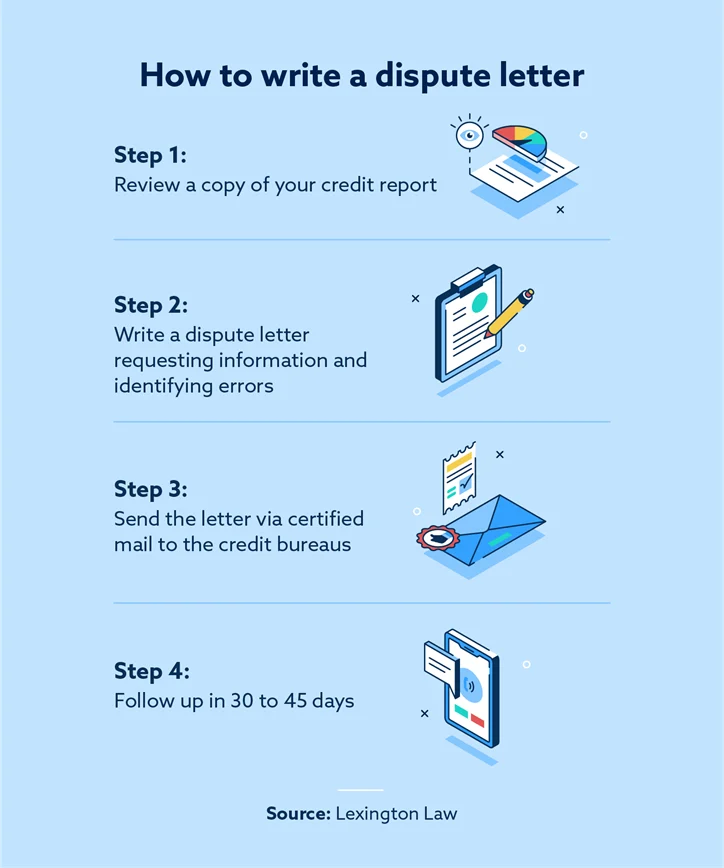
"Your tax refund is a powerful tool for debt reduction, but it works best when paired with an accurate credit report," says a spokesperson for the industry. "Many consumers use their refunds to pay off debts that may be inaccurately reported or contain errors. The healthiest financial future starts with ensuring that the information being used to calculate your score is 100% correct."
Experts also warn against the "Snowball vs. Avalanche" debate when it comes to refunds. While the "Avalanche" method (paying the highest interest rate first) is mathematically superior for saving money on interest, the "Snowball" method (paying the smallest balance first) can sometimes provide a faster boost to the credit score by completely eliminating a balance and improving the "accounts with balances" metric.
The Pitfalls: Common Mistakes That Negate Progress
Despite the potential for growth, many consumers inadvertently sabotage their credit repair efforts during tax season. Journalistic investigation into consumer habits reveals three recurring pitfalls:
1. The "Open-and-Close" Fallacy
A common misconception is that once a credit card is paid off with a refund, it should be closed to "avoid temptation." This is often a mistake. Closing an account reduces the total available credit limit, which can cause the utilization ratio on other cards to spike. Furthermore, it can shorten the average age of the consumer’s credit history. Experts advise keeping the account open but physically "retiring" the card to a secure location.
2. The Lifestyle Creep Trap
The phenomenon of "lifestyle creep" occurs when a consumer uses their refund to pay down a credit card, only to immediately use that newly available credit for a large purchase. This creates a cycle of debt that leaves the consumer in a worse position, as they have now spent both their refund and their credit.
3. Ignoring Liquidity for Debt
While paying off debt is noble, draining 100% of a refund into creditors while having zero dollars in a savings account is a risky maneuver. If a financial emergency occurs the following month, the consumer will be forced to rely on credit again, potentially at higher interest rates, undoing the progress made by the refund.

Economic Implications: The Ripple Effect of Better Credit
The implications of using a tax refund for credit building extend far beyond a simple three-digit number. At the macroeconomic level, a population with higher credit scores is more resilient.
For the individual, the transition from a "subprime" score (below 670) to a "prime" score (above 720) can result in savings of tens of thousands of dollars over the life of a mortgage or auto loan. In the current economic climate, where the Federal Reserve has maintained elevated interest rates to combat inflation, the "spread" between subprime and prime interest rates has widened. This makes credit repair more valuable today than it was five years ago.
Furthermore, improved credit scores can affect employment opportunities and housing options, as many employers and landlords use credit checks as a proxy for responsibility and risk.
The Bottom Line: Conscious Choice Over Impulse
The arrival of a tax refund represents a rare moment of financial agency for the American consumer. It is a crossroads where one can choose between immediate gratification and long-term stability.
By treating the refund as a strategic investment in one’s credit profile—addressing past-due accounts, optimizing utilization, and establishing an emergency buffer—consumers can transform a one-time check into a permanent upgrade in their financial mobility. As tax season concludes, the most successful filers will be those who recognize that their refund isn’t just a reward for the past year’s work, but a foundation for the years to come.
Editorial Disclosure: This report is intended for informational purposes and does not constitute legal, financial, or credit advice. Consumers are encouraged to consult with certified financial planners or credit professionals regarding their specific situations. Accuracy in credit reporting is a right protected by the Fair Credit Reporting Act (FCRA), and consumers should regularly monitor their reports for discrepancies.