








The landscape of federal student loan repayment has shifted dramatically. With the effective dismantling of the Saving on a Valuable Education (SAVE) plan due to ongoing legal challenges, millions of borrowers—particularly those pursuing Public Service Loan Forgiveness (PSLF)—are facing a period of uncertainty. As the U.S. Department of Education pivots to alternative Income-Driven Repayment (IDR) plans, many are left wondering: Is the dream of debt forgiveness still attainable, and at what cost?
While the demise of the SAVE plan is a significant development, financial experts suggest that for the vast majority of PSLF participants, the situation is far from catastrophic. Understanding the nuanced impact of this transition is essential for any borrower aiming to maintain their trajectory toward tax-free loan forgiveness.
Chronology of the SAVE Plan’s Legal Challenges
To understand the current environment, one must look at the legal timeline that led to the plan’s suspension. Introduced by the Biden-Harris administration as the most generous repayment plan in history, the SAVE plan was designed to lower monthly payments and prevent interest from ballooning.
However, almost immediately upon its rollout, the plan faced intense litigation from several state attorneys general. The core of the legal argument centered on the executive branch’s authority to enact such sweeping changes to student loan policy without explicit congressional approval. Throughout 2024, various court injunctions were issued, oscillating between allowing the plan to continue and halting its implementation.
As of late 2024, the legal gridlock has rendered the SAVE plan largely inaccessible. The Department of Education has been forced to transition affected borrowers into alternative plans, primarily the Income-Based Repayment (IBR) and the Repayment Assistance Plan (RAP). This transition has created administrative friction, with many borrowers reporting confusion regarding their new payment obligations.
The Impact on PSLF: Who is Affected?
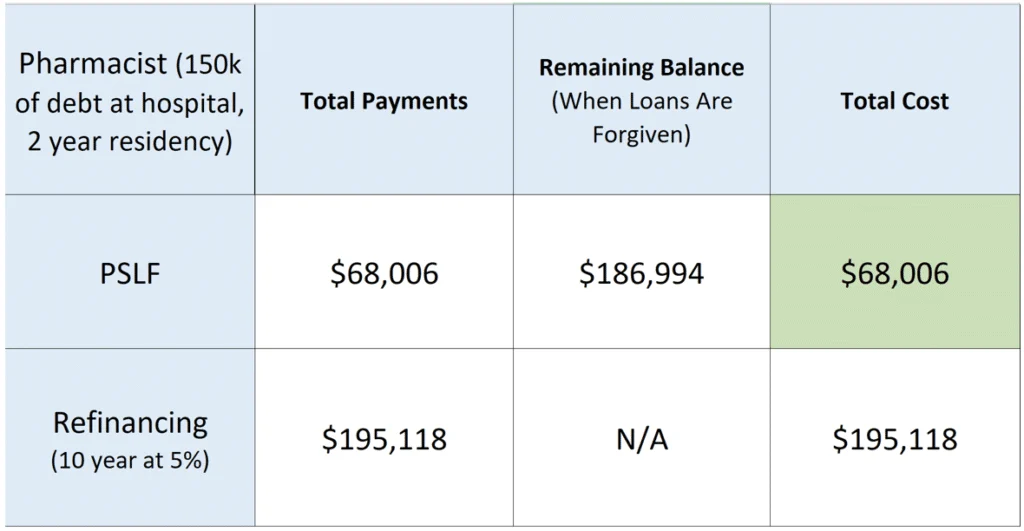
The Public Service Loan Forgiveness (PSLF) program requires borrowers to make 120 qualifying payments while working for a qualifying nonprofit or government employer. Because the monthly payment amount is determined by one’s IDR plan, any change to these plans directly alters the cost of the path to forgiveness.
The Low-Income and High-Income Resilience
Surprisingly, data indicates that the end of SAVE is not a "one-size-fits-all" disaster.
- Low Earners: For a single borrower earning $50,000 annually, the shift from SAVE to alternatives like RAP represents a modest increase. While the jump from $59 to $167 per month is objectively higher, the total annual burden remains relatively manageable for most individuals.
- High Earners: High-income professionals, such as physicians earning $400,000 annually, see an even smaller relative impact. For this demographic, the difference in payments often amounts to less than 1% of their annual income.
The "Middle-Class" Vulnerability
The true victims of the SAVE repeal are middle-income earners with dependents. Under the SAVE plan, the discretionary income formula was exceptionally favorable to families, providing a deduction equal to 225% of the federal poverty line.
Conversely, plans like RAP offer a significantly less generous deduction—often limited to a flat $50 per dependent per month. For a pharmacist earning $120,000 with four children, this shift is substantial. Under SAVE, their monthly payment might have been $294; under RAP, that figure could surge to $800. This represents a $6,072 annual increase, or a 5% hit to their total income—a significant blow to a household budget.
Supporting Data: A Comparative Analysis
To better understand the financial strain, consider the following comparisons based on current projections for three different borrower profiles.
| Borrower Profile | Plan | Monthly Payment | Annualized Cost |
|---|---|---|---|
| Single, $50k Income | New IBR | $217 | $2,604 |
| SAVE | $59 | $708 | |
| RAP | $167 | $2,004 | |
| Married Physician, $400k | New IBR | $3,134 | $37,608 |
| SAVE | $3,040 | $36,480 | |
| RAP | $3,333 | $39,996 | |
| Pharmacist, $120k, 4 Kids | New IBR | $446 | $5,352 |
| SAVE | $294 | $3,528 | |
| RAP | $800 | $9,600 |
Data Note: Calculations assume filing status adjustments and typical family size exemptions.
The data confirms that the "middle-class penalty" is real. As the government transitions borrowers into RAP, those with children face the most significant volatility in their monthly cash flow.
Official Responses and Administrative Guidance
The U.S. Department of Education has urged borrowers to remain calm, emphasizing that while the SAVE plan is currently tied up in the courts, the underlying structure of the PSLF program remains intact. The department has initiated a series of "forbearance" periods for many borrowers during this transition, ensuring that individuals are not penalized for administrative delays.
However, the Department has been clear: borrowers must take an active role. If a borrower does not recertify their income or select a new plan, they risk being placed in a default repayment status that does not qualify for PSLF. The official stance is that borrowers should log into their StudentAid.gov accounts regularly to monitor their status and confirm which repayment plan currently applies to their loans.
Implications for PSLF Buyback
One of the most critical, yet under-discussed, aspects of the SAVE repeal is its impact on "PSLF Buyback." This mechanism allows borrowers to "buy back" months that were previously ineligible for credit toward their 120-payment requirement—typically months spent in deferment or forbearance—by paying what they would have paid under an IDR plan.
The loss of SAVE means that borrowers can no longer use the SAVE formula to calculate these buyback costs. Because the buyback cost is based on what the monthly payment would have been, those in the middle-income bracket will now face significantly higher buyback costs than they previously anticipated. For those relying on buyback to reach their 120-month threshold, this could necessitate a total recalculation of their financial strategy.
Strategic Recommendations for Borrowers
While the removal of SAVE is a setback, it is not the end of the road for public service workers. Here is how borrowers should pivot:
1. Evaluate Your "Best" Alternative
Do not automatically accept the plan your servicer assigns to you. Compare the New IBR and RAP plans carefully. Depending on your total debt-to-income ratio, one may be significantly more affordable than the other.
2. Optimize for Your Family Size
If you are a middle-income earner with children, you must be hyper-vigilant. Ensure your tax filings and income certifications are accurate, as these are the primary variables that dictate your payment under the remaining plans.
3. Seek Professional Guidance
Student loan policy is currently in a state of flux. With the potential for further court rulings, policy reversals, and administrative updates, it is highly advisable to seek expert counsel. A qualified financial planner can help you navigate the "loopholes" of the law to ensure you are paying the absolute minimum required while still accruing your PSLF credits.
4. Stay Proactive, Not Reactive
The worst thing a borrower can do is ignore their student loan account. Set a calendar reminder to check your status every three months. Ensure your employer certifications are up to date. If you receive a notification about a change in your monthly payment, verify the math immediately.
Conclusion
The end of the SAVE plan is undoubtedly a disruption, but it is not a reason to abandon your PSLF goals. By understanding the specific impact on your income bracket and family structure, you can adjust your strategy to maintain your progress toward debt forgiveness. While the path may be slightly more expensive for some, the ultimate prize—the discharge of your remaining balance—remains a viable and powerful financial tool for those committed to public service.
Stay informed, remain strategic, and do not hesitate to leverage the resources available to ensure your financial future remains secure.