









By Gabrielle Saulsbery | Sept. 9, 2026
In a landmark move that signals the rapid maturation of the stablecoin economy, Circle Internet Group, the issuer of the USDC stablecoin, announced on Tuesday that it has entered into a definitive agreement to acquire Singapore-based cross-border payments infrastructure firm Tazapay. The all-stock deal, valued at $400 million, represents a strategic pivot for Circle as it seeks to weave blockchain-based digital assets into the fabric of traditional global finance.
The acquisition is more than a simple expansion; it is a calculated effort to solidify Circle’s position as the primary settlement layer for the internet economy. By absorbing Tazapay’s extensive network of banking relationships and localized payment rails, Circle is positioning itself to bypass the inefficiencies of the legacy SWIFT system, offering instead a high-speed, compliant, and cost-effective alternative for international trade.
The Strategic Rationale: Merging Infrastructure at Scale
The acquisition of Tazapay brings substantial immediate value to Circle’s balance sheet and operational capacity. According to regulatory filings, the deal grants Circle access to over $25 billion in annualized payment volume. More importantly, it secures a footprint across more than 100 global markets, supported by a network of over 60 banking and fintech partners.
Circle CEO Jeremy Allaire has been vocal about the "deep alignment" between the two firms, noting that their partnership—which began last year when Circle served as the lead investor in Tazapay’s Series B funding round—has provided a blueprint for this deeper integration.
"Stablecoin settlement is becoming core infrastructure in the global economy," Allaire stated in a press release. "Combining USDC with Tazapay’s world-class banking relationships, local payout rails, and institutional customer base will accelerate worldwide USDC adoption."
For Circle, the objective is clear: to eliminate the friction points that currently plague cross-border B2B payments. By leveraging Tazapay’s existing regulatory licenses and regional connectivity, Circle can deploy USDC not just as a store of value, but as a functional medium of exchange in emerging markets where fiat settlement is often slow, expensive, and opaque.
Chronology: A Path Toward Consolidation
The path to this $400 million acquisition was not overnight. It is the culmination of a multi-year effort by Circle to build, buy, and partner its way into the center of the global financial system.
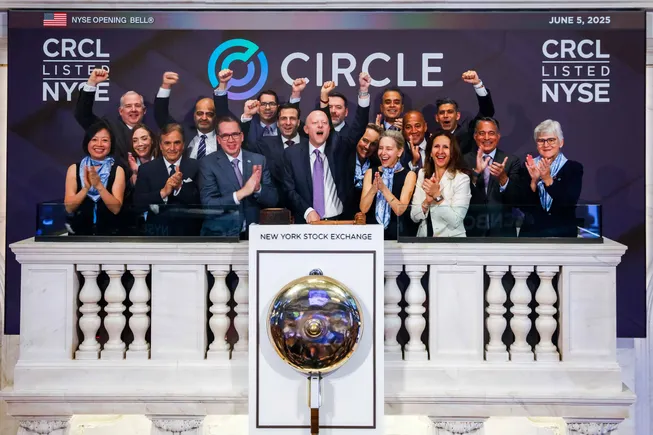
- Mid-2025: Following its successful initial public offering (IPO) on the New York Stock Exchange in June 2025, Circle began an aggressive campaign to expand its technical and regulatory moat.
- Late 2025: Circle and Tazapay officially formalize a strategic partnership, with Circle participating as the lead investor in Tazapay’s Series B round. This period served as a "trial run," testing the integration of the Circle Payments Network (CPN) with Tazapay’s infrastructure.
- July 2026: The Office of the Comptroller of the Currency (OCC) grants Circle an unconditional green light for a national trust charter, a major milestone that provided the regulatory certainty necessary to pursue larger-scale M&A activity.
- August 2026: Just weeks after securing its charter, Circle acquired a massive patent portfolio from IBM, encompassing over 680 patent families and nearly 1,000 issued patents. This move was widely viewed as a defensive and offensive play to secure the intellectual property rights necessary to lead the blockchain payments space.
- September 9, 2026: Circle announces the $400 million all-stock acquisition of Tazapay. The deal is slated to close in 2027, pending regulatory approvals, most notably from the Monetary Authority of Singapore.
Supporting Data: Why Tazapay?
Analysts have pointed to the "low integration risk" of this deal, primarily because Tazapay was already a design partner for the Circle Payments Network. This existing interoperability allows Circle to hit the ground running upon the deal’s close in 2027.
The data suggests that the market is ready for this consolidation:
- Market Coverage: 100+ markets, with roughly 60% of these corridors already utilizing stablecoin-based settlement.
- Volume: $25 billion in annualized payment volume currently handled by Tazapay.
- Partnership Depth: 60+ Tier-1 and Tier-2 banking/fintech partners, which provide the "fiat-on-ramps" and "fiat-off-ramps" essential for enterprise-grade adoption.
TD Cowen analysts Bryan Bergin and David Duka highlighted in a recent investor note that the deal is designed to "streamline integration across CPN and provide Circle with greater influence over how those capabilities are deployed as USDC adoption scales." Essentially, Circle is moving from being a provider of the asset (USDC) to being the provider of the entire rails system.
Official Responses: A Vision for the Future
The rhetoric surrounding the acquisition highlights a shared vision of a "frictionless internet."

Jeremy Allaire, CEO of Circle:
"Bringing Tazapay into Circle’s fold extends our coverage to move money anywhere stablecoin payments are being adopted globally. We are building the infrastructure that will define the next decade of digital commerce."
Rahul Shinghal, Co-founder of Tazapay:
In a blog post accompanying the announcement, Shinghal emphasized the unprecedented nature of the combination. "This transaction combines infrastructure that has never been combined at scale," he wrote. "We are creating a unique synergy: regulated stablecoin issuance, a global financial platform built for internet speed, and compliant fiat-stablecoin bridging infrastructure anchored in the markets that matter most."
Irfan Ganchi, SVP of Payments at Circle:
Ganchi underscored the operational importance of the deal, noting that by integrating Tazapay’s local payout rails, Circle can significantly reduce the "cost of complexity" that currently hinders multinational corporations from adopting blockchain payments.
Implications: The Future of Global Payments
The acquisition of Tazapay by Circle is a bellwether for the broader financial sector. As stablecoins transition from speculative assets to institutional-grade payment instruments, the role of traditional banks will likely shift from being the sole arbiters of global settlement to becoming liquidity providers within a broader, blockchain-enabled ecosystem.
1. Regulatory Hurdles
While the deal has been welcomed by the market, it faces significant scrutiny from the Monetary Authority of Singapore (MAS). Given the sensitivity of cross-border payment flows and the scrutiny surrounding stablecoin issuers, the regulatory approval process will be a critical litmus test for Circle’s new national trust charter status. Success here could pave the way for further international acquisitions.
2. The Competitive Landscape
Circle is clearly drawing a line in the sand against competitors like PayPal’s PYUSD and various CBDC (Central Bank Digital Currency) initiatives. By buying its own infrastructure rather than just leasing it, Circle is asserting that it intends to own the "plumbing" of the digital economy. This puts pressure on other stablecoin issuers to either partner with, acquire, or build similar localized payout networks.

3. Impact on Enterprise Adoption
For the average enterprise, the integration of Tazapay into the Circle ecosystem means that "blockchain payments" will feel less like a crypto-native experiment and more like a traditional wire transfer—only faster and cheaper. As the cost of cross-border movement drops, it is expected that small-to-medium enterprises (SMEs) will be the primary beneficiaries, gaining access to markets that were previously deemed too costly or risky due to banking fragmentation.
4. A New Era of Patent Control
With the earlier acquisition of the IBM patent portfolio and now the operational assets of Tazapay, Circle is insulating itself from legal challenges while simultaneously creating a "walled garden" of highly efficient, legally compliant payment technology. Critics may argue this leads to further concentration of power in the stablecoin market, but proponents see it as the necessary consolidation required to achieve global, real-time, 24/7 financial connectivity.
Conclusion
The $400 million acquisition of Tazapay is not just a growth play; it is a fundamental transformation of Circle’s business model. By marrying its regulatory status with a global, battle-tested payment network, Circle is effectively turning USDC into a global settlement utility. As the industry looks toward 2027 and the expected closing of the deal, the question is no longer whether stablecoins will be part of the global financial system, but how quickly they will replace the outdated legacy systems they were built to transcend.