








Introduction: Navigating the Holiday Travel Rush
As the bustling holiday travel season approaches—a period historically characterized by long lines, anxious passengers, and strained airport infrastructure—the Transportation Security Administration (TSA) is rolling out an ambitious technological upgrade. With nearly three million passengers traversing U.S. airports daily, maintaining operational efficiency while ensuring rigorous security is a monumental task.
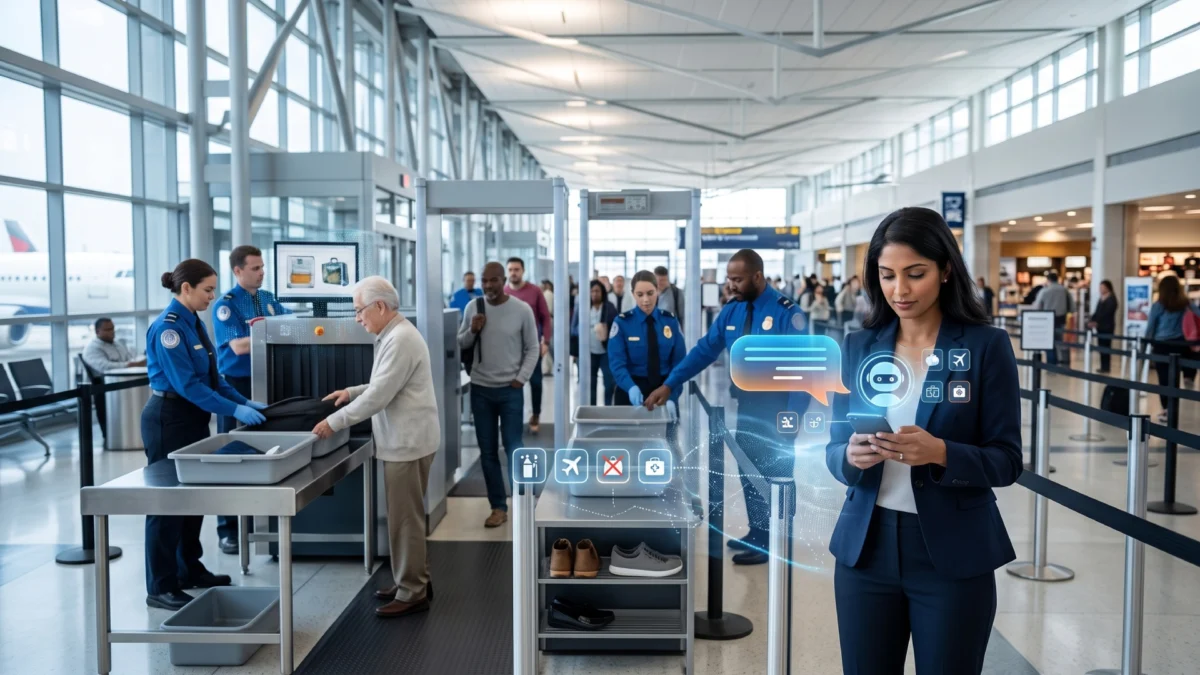
To meet this challenge, the agency has deployed "Ace," an advanced artificial intelligence agent built using Salesforce technology. Designed to streamline the security process, Ace provides timely, accurate, and automated assistance to travelers. While the initiative benefits the general public immensely, it offers a particular boon to frequent flyers and small business owners who rely on seamless air travel to maintain their professional commitments. This comprehensive report explores the genesis, implementation, data impact, leadership perspectives, and broader economic implications of the TSA’s groundbreaking integration of trusted artificial intelligence.
Main Facts: Meet Ace, the TSA’s Salesforce-Powered AI Agent
At its core, Ace is an enterprise-grade AI agent engineered to handle routine passenger inquiries before travelers even set foot in an airport terminal. Developed on the Salesforce platform, the system acts as a digital front line for the TSA’s customer service operations.
- High-Volume Automation: Since its initial rollout during the peak summer travel surge, Ace has successfully managed approximately 100,000 routine traveler inquiries every month.
- Exceptional Resolution Rate: The AI agent boasts an astounding 96% first-contact resolution rate, entirely eliminating the need for human intervention in the vast majority of routine interactions.
- Targeted Information Delivery: Ace is programmed to provide precise guidance on complex security regulations, such as allowable quantities of liquids, gels, and aerosols, as well as specific protocols for traveling with medical devices or specialized equipment.
- Operational Shift: By absorbing the brunt of repetitive inquiries, Ace allows TSA security officers and human customer service representatives to redirect their focus toward core security mandates and high-complexity situations that demand human empathy and critical thinking.
Chronology: From Summer Surge Pilot to Nationwide Modernization
The deployment of Ace did not happen overnight; it is the result of a deliberate, phased software development strategy focused on integration, collaboration, and scalable customer service solutions.
Phase 1: Identifying the Need (Pre-2024)
As U.S. air travel rebounded and surpassed pre-pandemic volumes, the TSA identified a critical bottleneck: passenger stress manifesting as an overwhelming volume of repetitive support inquiries. Contact centers and checkpoint staff were being bogged down by basic questions regarding baggage rules and checkpoint procedures. The agency recognized the urgent need for a scalable, digital-first solution that could provide consistent information without escalating operational costs.
Phase 2: Summer Travel Surge Pilot (2025)
To test the efficacy of AI-driven customer service under pressure, the TSA introduced Ace during the height of the summer travel surge. Operating in a live environment with millions of travelers on the move, the AI agent was stress-tested against thousands of daily inquiries. Its ability to resolve roughly 100,000 monthly queries with a 96% success rate validated the technology and paved the way for broader integration.
Phase 3: Ecosystem Expansion and App Deployment
Building on the success of Ace, the TSA’s modernization strategy expanded to include two critical applications designed to support both internal staff and vulnerable travelers:
- The Customer Service Managers App: A centralized platform that consolidates passenger inquiries across diverse communication channels, allowing TSA staff to efficiently monitor, manage, and respond to complex requests.
- The TSA Cares App: A specialized tool dedicated to assisting passengers with disabilities, medical conditions, or other special needs, ensuring they receive coordinated, compassionate support seamlessly from curb to gate.
Phase 4: Holiday Season Readiness (Current Phase)
As the nation prepares for the upcoming winter holidays—traditionally the most congested travel period of the year—Ace stands as a central pillar of the TSA’s operational readiness strategy, proving that government agencies can successfully deploy enterprise AI at scale.
Supporting Data: Quantifying the Impact of AI in Public Sector Operations
The integration of artificial intelligence within the TSA is not merely a customer satisfaction initiative; it represents a profound shift in government economic efficiency. Hard data from the deployment reveals staggering improvements in both labor allocation and cost reduction.
Labor Savings and Efficiency
- 11,660 Staff Hours Saved Annually: By automating routine conversational workflows, the TSA is projected to save over 11,660 staff hours every year. This reclaimed time allows personnel to pivot toward security-critical tasks and complex customer advocacy.
- $11 Million in Projected Labor Savings: Over a three-year period, the agency anticipates direct labor savings totaling $11 million. This financial optimization is vital for maintaining government budgetary responsibility amid rising travel volumes.
- 90% Cost Reduction Per Interaction: Thanks to the scalability of Salesforce-powered automation, the cost per consumer interaction has plummeted by over 90%. This dramatic drop underscores the economic viability of utilizing conversational AI for public sector service delivery.
Official Responses: Leadership Perspectives on Trusted AI
The partnership between the federal government and enterprise technology leaders highlights a broader industry trend toward trusted, mission-driven artificial intelligence.
Kendall Collins, CEO of Missionforce and Government Cloud, emphasized the human element behind the technology:
"Nearly three million people travel through U.S. airports every day, and a simple question shouldn’t stand between them and a smooth trip."
Collins noted that by preemptively answering common questions regarding security regulations and travel guidelines, Ace eliminates friction points before they manifest as stressful bottlenecks at airport checkpoints.
Echoing this sentiment, Paul Tatum, EVP of Global Public Sector Solutions at Salesforce, pointed to the broader strategic victory for federal agencies:
"The TSA is leading with trusted AI to meet the mission."
Tatum’s remarks underscore a growing paradigm shift: government and enterprise organizations are no longer experimenting with AI as a novelty, but are instead embedding it into their core operations to simultaneously elevate customer experiences and slash operational overhead.
Implications: What the TSA’s AI Integration Means for Small Business Owners
While the deployment of Ace is a federal aviation initiative, its ripple effects extend deeply into the private sector—particularly for small business owners and independent professionals who rely heavily on commercial air travel.
1. Enhanced Time Management and Reduced Stress
Small business owners often operate under tight schedules where every minute counts. Missing a flight or getting ensnared in an unexpected security delay can jeopardize crucial client meetings, contract signings, or networking opportunities. By utilizing tools like Ace to quickly resolve travel queries—such as whether specialized business equipment or digital devices can pass through screening—travelers can navigate checkpoints with greater confidence and minimal friction.
2. Lessons in Customer Service Strategy
The TSA’s success offers a masterclass for small business owners looking to overhaul their own customer service operations. Just as the federal agency utilized automated chat support and inquiry-resolution apps to handle massive influxes of questions, small businesses can adopt similar AI-driven solutions. Whether deploying automated customer service chatbots on e-commerce sites or implementing advanced project management software, embracing these technologies allows small enterprises to:
- Foster more efficient day-to-day operations.
- Slash operational and labor costs.
- Elevate overall customer satisfaction and retention.
3. Navigating Potential Challenges and Risks
Despite the clear advantages, the rapid adoption of artificial intelligence in customer-facing roles comes with caveats that small business owners must navigate carefully:
- The Risk of Over-Reliance: While AI excels at handling routine, repetitive queries, it can struggle with nuanced or emotionally charged complaints. Organizations must ensure that human agents remain readily accessible for escalation paths to maintain trust and empathy.
- Data Privacy and Security: Travel inquiries often involve sensitive personal data. Government agencies and private enterprises alike must prioritize robust cybersecurity measures to safeguard user information against emerging digital threats.
Conclusion: A Glimpse Into the Future of Travel and Operations
As small business owners and millions of everyday citizens prepare for the holiday travel rush, initiatives like the TSA’s Ace AI agent provide an encouraging glimpse into the future. By harmonizing advanced artificial intelligence with human oversight, organizations can build operational models that are simultaneously cost-effective, highly efficient, and deeply customer-centric.
The successful deployment of Ace proves that when technology is deployed thoughtfully, it does more than just process data—it smooths the pathways of human connection and commerce. For further details on this technological milestone, readers can review the original press release on the Salesforce Newsroom.