








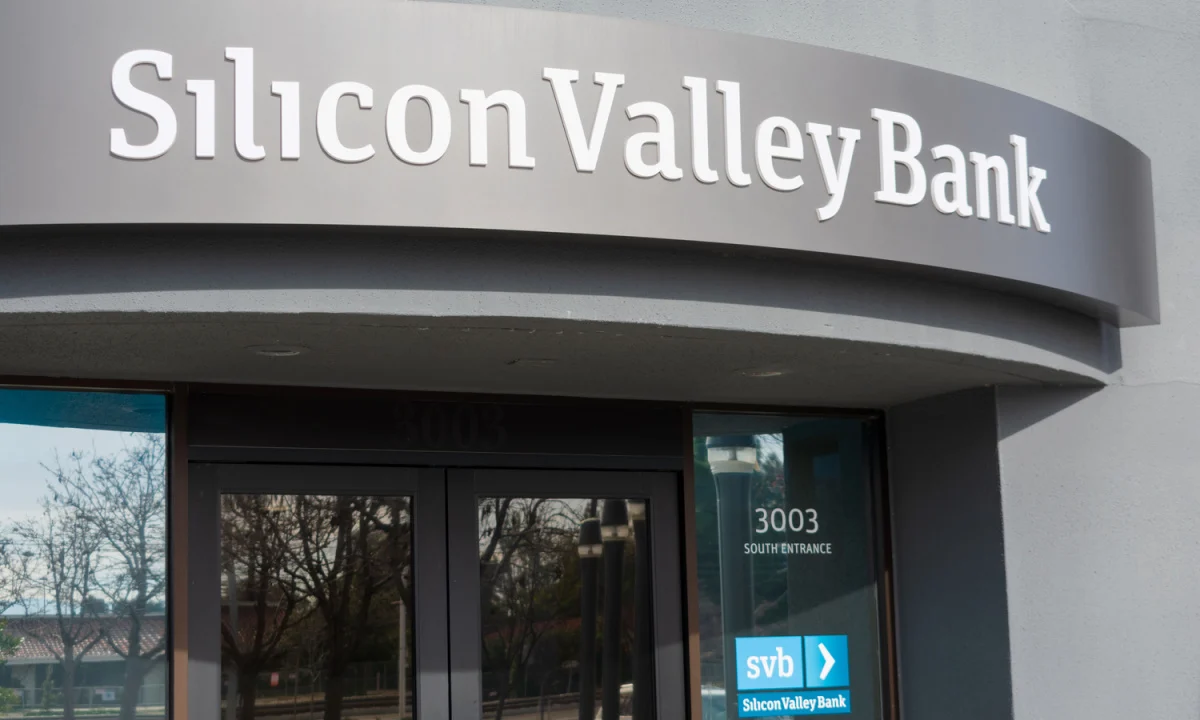
WASHINGTON — Three years after the historic collapse of Silicon Valley Bank (SVB) sent seismic shocks through the global financial system, a newly released independent review is upending the conventional narrative of how the bank fell. For years, the prevailing postmortem blamed a modern digital phenomenon: a panicked, hyper-accelerated bank run fueled in real-time by viral tweets, panicked group chats, and digital messaging boards.
However, according to fresh findings presented by Federal Reserve Vice Chair for Supervision Michelle Bowman, that narrative is fundamentally false.
The independent investigation—conducted by the Starling Advisory Group alongside forensic data work by Charles River Associates—concluded that social media did not trigger the catastrophic run on SVB, nor did it accelerate the bank’s ultimate demise. Instead, the exhaustive postmortem points the finger squarely at long-known internal structural vulnerabilities, a uniquely exposed and "run-prone" deposit base, and an immobilized regulatory framework plagued by internal cultural paralysis.
The comprehensive findings offer a profound re-examination of one of the most dramatic corporate failures in modern financial history, forcing regulators, economists, and banking executives to confront uncomfortable truths about risk management, institutional agility, and the true anatomy of a bank run.
1. Main Facts: Deconstructing the SVB Postmortem
The central revelation of the independent review centers on the timeline of public panic versus institutional insolvency.
For years, market analysts and banking sector apologists leaned heavily on the idea that SVB was the first "Twitter-fueled bank run"—a casualty of modern technology where digitized communication allowed depositors to withdraw billions of dollars with a few taps on a smartphone screen, allegedly orchestrated and exacerbated by online panic.
Not so, says the new data.
According to the analysis by Charles River Associates, an overwhelming 96% of all social media discourse concerning the bank run materialized after SVB’s failure had already become an inevitability.
"While many postmortem accounts have asserted that social media fueled the run at SVB, none of these accounts made any effort to substantiate that claim," Bowman stated during a Friday address detailing the initial findings. "The analysis concluded that social media did not trigger the bank run at SVB, and there was no evidence that social media accelerated the run."
Instead of a digital flash mob overwhelming a healthy institution, the review revealed that SVB was a house built on structural sand long before a single panicked tweet was posted. Its vulnerability stemmed from a toxic combination of factors:
- Hyper-Concentrated Deposits: A staggering 94% of SVB’s deposit base was uninsured.
- Industry Monoculture: The bank’s clientele was overwhelmingly concentrated within venture capital-backed technology companies that shared identical economic exposures, liquidity cycles, and communication networks.
- Balance Sheet Misalignment: SVB held massive, unrealized losses on long-term securities that vastly exceeded its total regulatory capital.
- Operational Inefficiencies: The bank lacked the structural, technical, and operational readiness required to rapidly borrow from the Federal Reserve’s discount window to secure emergency liquidity when cash demands spiked.
2. Chronology: The Timeline of a Foreseen Disaster
To understand how SVB collapsed, it is necessary to trace both the evolution of the bank’s internal structural decay and the timeline of regulatory awareness—or lack thereof—within the Federal Reserve system.
- March 2022 (The Warning Signs): According to Federal Reserve leadership, supervisory staff inside the Fed knew, or reasonably should have known, about the profound vulnerabilities compounding within SVB’s balance sheet as early as this month. Rising interest rates were rapidly eroding the market value of the bank’s held-to-maturity securities portfolio.
- Late 2022 to Early 2023 (The Regulatory Paralysis): Despite clear data pointing toward severe interest rate risk and extreme deposit concentration, Fed supervisors failed to take prompt, decisive enforcement or corrective action to force SVB to hedge its risks or shore up its capital buffers.
- March 8, 2023 (The Catalyst): SVB announced a staggering $1.8 billion loss after selling off a portion of its available-for-sale securities portfolio to meet liquidity needs, alongside plans to raise capital. This public disclosure broke the illusion of financial stability.
- March 9, 2023 (The Panic): Depositors—primarily venture capital firms and tech startups advised by prominent investors—began pulling capital at an unprecedented rate. In a single day, clients attempted to withdraw $42 billion.
- March 10, 2023 (The Collapse): California financial regulators closed Silicon Valley Bank and placed it into the receivership of the Federal Deposit Insurance Corporation (FDIC), ending an era for tech-sector banking.
- September 18 (Current Evaluation): Vice Chair Michelle Bowman reveals the findings of the independent Starling Advisory Group review, separating internet mythology from structural reality and evaluating institutional accountability at the Fed.
3. Supporting Data: The Anatomy of a Vulnerable Balance Sheet
The independent review emphasizes that aggregate deposit numbers can fundamentally deceive risk managers. A bank can look remarkably stable on paper while sitting atop a powder keg of systemic vulnerability.
The Danger of Uniformity
Deposit risk depends heavily on characteristics that macro-level reporting obscures. These include:
- Uninsured Proportions: The absolute volume of capital residing above the standard $250,000 FDIC insurance limit.
- Correlation of Depositor Behavior: Whether large institutional depositors share identical industry vulnerabilities. When a single macroeconomic shift—such as a tech-sector downturn or rising interest rates—impacts all depositors simultaneously, their behavior ceases to be independent. They react as a single monolithic block.
- Operational Liquidity Readiness: Possessing assets is vastly different from having access to immediate, liquid cash that can be deployed within hours to meet emergency withdrawal requests.
SVB’s failure demonstrated that identifying these risks is only half the battle. Even when a bank recognizes its exposure, a lack of operational preparedness—such as failing to establish pre-arranged, tested access to the Federal Reserve’s discount window—can prove fatal during a crisis.
4. Official Responses: The Federal Reserve Confronts Its Own Culture
Perhaps the most startling aspect of the independent review’s findings is the direct admission of regulatory failure from within the Federal Reserve itself. The report shifts the policy debate away from whether examiners simply missed the warning signs—they didn’t—and focuses on why institutional inertia prevented them from acting.
The Culture of Risk Aversion
Bowman acknowledged that Fed supervisory staff possessed the necessary data to recognize SVB’s perilous trajectory as early as March 2022. Yet, systemic inaction prevailed.
The independent review diagnosed the root cause of this regulatory paralysis as a deeply entrenched "culture of risk aversion" within the central bank’s supervisory ranks.
"Staff believed it was personally safer to take no action unless they were certain the action was exactly right," Bowman explained, illustrating how bureaucratic self-preservation superseded aggressive macroprudential oversight. Examiners feared the pushback of intervening in a high-profile institution more than they feared the consequences of the bank’s eventual collapse.
Internal Structural Reforms
To dismantle this culture of hesitation, the Federal Reserve is actively overhauling its supervisory reporting frameworks. Under the new directive:
- Examination teams must submit monthly reports directly to supervision leaders and their respective reserve banks whenever there is uncertainty regarding whether an identified issue warrants mandatory supervisory intervention.
- This policy is designed to grant Fed leadership real-time visibility into operational bottlenecks, providing field examiners with clearer, more decisive top-down guidance.
5. Implications: Reshaping Deposit Insurance, Reciprocal Networks, and Risk Management
The fallout from the SVB collapse continues to reverberate across the broader financial services regulatory landscape, influencing legislative debates and corporate treasury strategies alike.
The Deposit Insurance Dilemma
Commercial businesses routinely hold payroll, operating, and treasury balances that dwarf the standard $250,000 FDIC insurance ceiling. This structural reality has sparked fierce policy debates regarding whether statutory deposit insurance limits should be raised for business accounts—or whether doing so would create an uneven playing field, intensifying funding competition between mega-banks and community institutions.
The Rise of Reciprocal Deposits
In search of alternative solutions, regulatory bodies have expanded avenues for risk mitigation. Notably, the FDIC expanded the scope of reciprocal deposits that qualifying banks can hold under statutory exceptions from brokered-deposit treatment.
Reciprocal arrangements allow a single financial institution to distribute a client’s large cash balance across a network of other participating banks. This ingenious structural workaround ensures that millions of dollars in corporate cash remain fully covered by federal insurance limits, while the originating bank preserves the valuable customer relationship.
Lessons for the Modern Banking Sector
Ultimately, the independent review of SVB’s collapse serves as an urgent wake-up call for risk officers and executive boards across the global banking sector.
The ultimate takeaway is not that banks must monitor their social media feeds more closely to ward off digital mobs, but that they must look inward at the composition of their balance sheets.
As the financial ecosystem continues to evolve, institutions must continuously interrogate the fundamental nature of their liabilities: Who truly owns the capital on deposit? What percentage is uninsured? Are customers bound by shared economic incentives that could trigger simultaneous withdrawals? And, most critically, does the bank possess immediate, frictionless access to the liquidity required to survive a stress test of its own making?
By shattering the convenient myth of the "social media bank run," the independent review forces the industry to confront the unvarnished reality of financial risk: institutions rarely collapse because of what people say online; they collapse because of what regulators ignore, and what banks allow to fester on their balance sheets.