








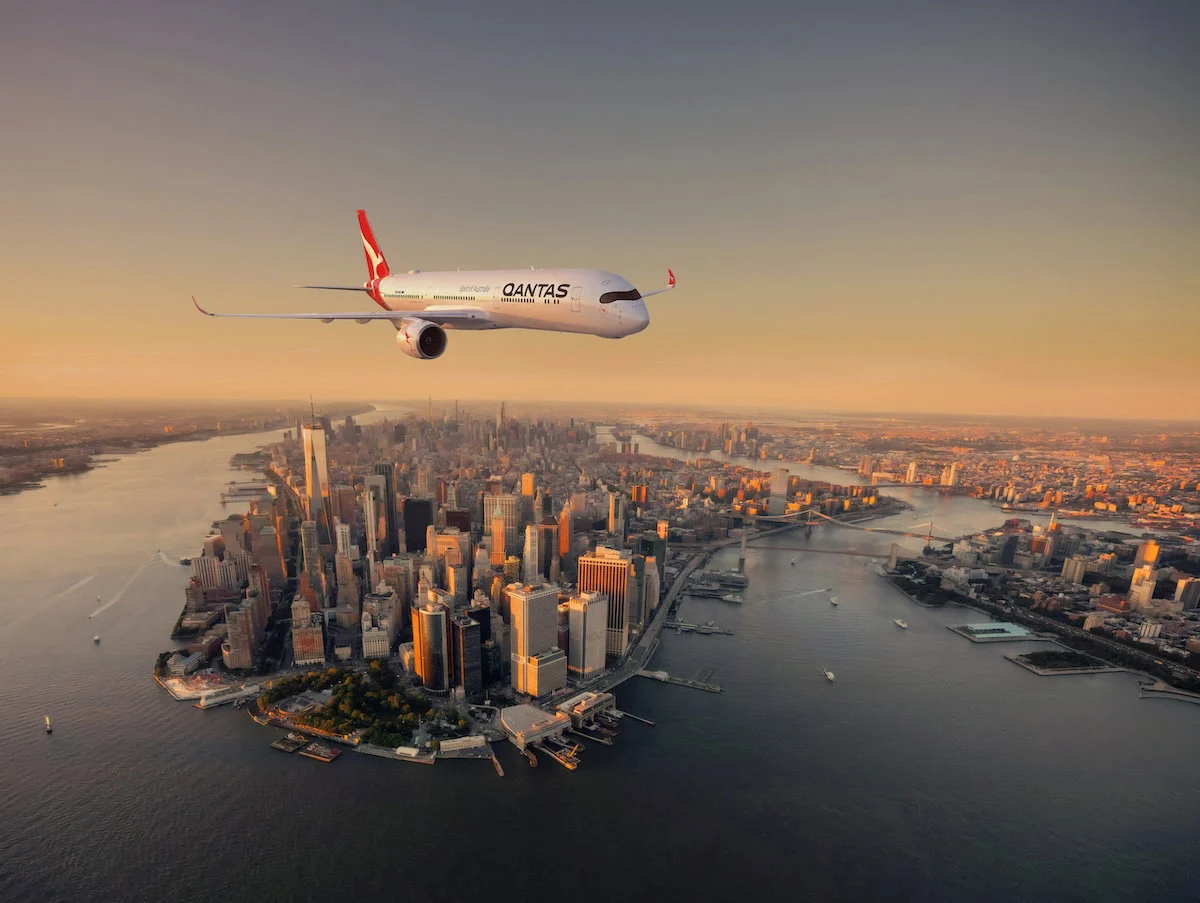
The aviation world is on the precipice of a new frontier. Since 2017, Qantas has been teasing a vision that once seemed like the stuff of science fiction: "Project Sunrise." The ambitious initiative aims to bridge the world’s most distant major cities with nonstop flights, effectively shrinking the globe and eliminating the need for tedious technical stopovers. Following years of speculation, engineering hurdles, and logistical maneuvering, the Australian flag carrier has finally solidified the timeline for its most anticipated route yet: the nonstop connection between Sydney and New York.
While the London-to-Sydney route—the crown jewel of the project—is set to commence in October 2027, Qantas has now confirmed that its Sydney-to-New York service will follow in mid-2028. This move will mark the first time in history that a regularly scheduled commercial flight will link Australia directly to the Big Apple, fundamentally altering the calculus of trans-Pacific travel.
The Evolution of the "Tyranny of Distance"
To understand the magnitude of this achievement, one must appreciate the history of Qantas’s presence in the United States. The airline first established a connection to New York in 1958, an era when such a journey was a multi-day ordeal involving stops in Fiji, Honolulu, and San Francisco. Today, the route is serviced via a daily one-stop connection through Auckland, utilizing Boeing 787-9 Dreamliners.
The transition to a direct, 9,950-mile flight represents the culmination of a decades-long effort to conquer what Australians colloquially refer to as the "tyranny of distance." By bypassing intermediate hubs, Qantas expects to shave approximately three hours off the total travel time. However, this is not merely a matter of speed; it is a logistical marathon. The flight, estimated at 18 hours eastbound and 20 hours westbound, will claim the title of the world’s second-longest flight, trailing only the Sydney-to-London route.
Project Sunrise: A Chronology of Ambition
The journey to this point has been defined by careful, calculated development. The timeline for the realization of Project Sunrise is as follows:
- 2017: Qantas formally announces "Project Sunrise," a research and development initiative focused on ultra-long-haul commercial aviation.
- 2023-2026: Extensive testing and coordination with Airbus to develop the A350-1000ULR (Ultra Long Range), featuring increased fuel capacity and optimized performance.
- October 2027: Scheduled launch of the Sydney to London nonstop route, with ticket sales commencing in February 2027.
- August 2027: Official opening of booking windows for the Sydney to New York route.
- Mid-2028: Maiden voyage of the direct Sydney to New York nonstop service.
The airline intends to maintain its existing one-stop service via Auckland even after the launch of the nonstop flight. This dual-strategy approach acknowledges that while many business travelers and time-sensitive passengers will prioritize the efficiency of the nonstop route, a significant segment of the market will continue to value the existing hub-and-spoke options for their flexibility and price points.

Engineering the Future: The Airbus A350-1000ULR
The success of Project Sunrise rests entirely on the shoulders of the Airbus A350-1000ULR. Qantas has placed an order for 12 of these specialized aircraft, which are distinct from the standard A350-1000. These jets are engineered with extra fuel tanks and a higher maximum takeoff weight to ensure they can traverse the vast expanse of the Pacific Ocean without refueling.
Crucially, Qantas does not intend to use all 12 aircraft for the "Sunrise" routes. Only six of these specialized units are earmarked for the ultra-long-haul corridors. The remainder of the fleet will be utilized to expand the airline’s capacity in other premium global markets, providing the carrier with a strategic hedge.
The cabin configuration is perhaps the most significant departure from conventional aviation. With only 238 seats—a remarkably low density for an aircraft of this size—Qantas is prioritizing passenger comfort over pure volume. The aircraft will feature four distinct cabin classes:
- First Class: Bespoke suites designed for maximum privacy and rest.
- Business Class: Lie-flat suites with direct aisle access.
- Premium Economy: Enhanced legroom and recline for long-duration comfort.
- Economy: A redesigned layout intended to mitigate the physical toll of 20 hours in the air.
Furthermore, the airline has integrated a "Wellbeing Zone," a dedicated space for passengers to stretch and hydrate, acknowledging that the biological impact of such long flights requires more than just a comfortable seat.
The Official Vision: A Word from Leadership
Qantas Group CEO Vanessa Hudson has been a vocal proponent of the project, framing it not just as a business expansion, but as a statement of national identity.
"Conquering the tyranny of distance has been part of who Qantas is from the very beginning," Hudson stated during the recent announcement in New York. "Reaching New York non-stop completes a vision we set out many years ago, and it’s a moment of enormous pride for the thousands of our people who have been working hard to make Project Sunrise a reality."

Hudson emphasized that the project was not developed in a vacuum but through years of collaboration with medical and scientific experts. "Flying these distances is only worth doing if our customers arrive feeling their best," she noted. "We’ve designed the aircraft and the onboard experience around the science of ultra-long-haul travel, from the lighting to the meals to a world-first Wellbeing Zone. This is a fundamentally different way to fly."
Economic and Lifestyle Implications
The market impact of Project Sunrise is significant. Qantas is signaling that it intends to charge a premium of approximately 20% over standard one-stop itineraries. Whether the traveling public will consistently pay this "convenience tax" remains to be seen, though the initial buzz surrounding the launch suggests high demand from corporate clients and high-net-worth individuals.
From a lifestyle perspective, the flight poses a philosophical question: at what point does convenience become a burden? While 20 hours in the air is a feat of engineering, it is also a test of human endurance. For those in the premium cabins, the experience may indeed be transformative. However, for passengers in the economy section, the reality of nearly a full day in the air—even with enhanced amenities—may lead some to continue preferring a stopover in Auckland or another hub to break up the journey and stretch their legs.
The Road Ahead
As we look toward 2028, the aviation industry will be watching Qantas closely. The success of these routes will likely influence the future of the global airline industry. If Project Sunrise proves that passengers are willing to pay for the efficiency of direct, ultra-long-haul travel, we can expect other global carriers to follow suit, potentially leading to a new era of "extreme" connectivity.
For now, the focus remains on the meticulous preparation required to launch these routes. Between the upcoming ticket sales in 2027 and the first wheels-up for New York in 2028, Qantas has positioned itself at the center of a global conversation about the future of travel. Whether this represents the ultimate luxury or an endurance test, one thing is certain: the world is about to get a little smaller.
The question remains for the frequent flyer: when the clock strikes 2028, will you choose the direct route, or will you prefer the familiarity of a stopover? Regardless of the choice, the mere existence of these flights is a testament to human ingenuity and the relentless pursuit of bridging the gaps between our cities.