








Main Facts: The Return of Taxable Forgiveness
For millions of federal student loan borrowers, loan forgiveness has long been heralded as the ultimate financial finish line. Eliminating a five- or six-figure balance through an income-driven repayment (IDR) plan can feel like a new lease on financial life. However, a hidden financial hazard—frequently referred to by financial planners as the "tax bomb"—is making an aggressive comeback.
Under current federal tax guidelines, the temporary federal tax exemption that made forgiven student loan debt completely tax-free expired on December 31, 2025. Consequently, any federal student loan debt forgiven through an income-driven repayment plan in 2026 or later is generally treated as taxable income by the Internal Revenue Service (IRS).
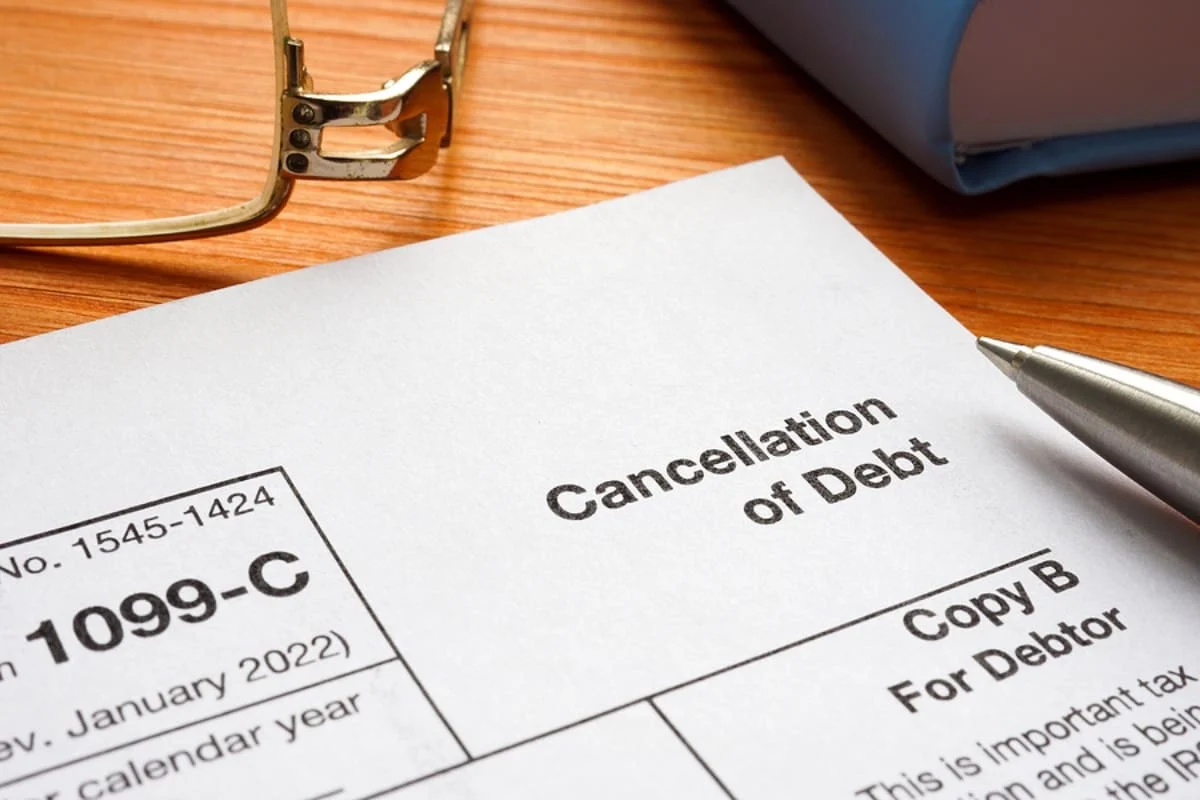
When a borrower receives debt forgiveness exceeding $600, the creditor or loan servicer is typically required to issue Form 1099-C (Cancellation of Debt). This document reports the discharged amount directly to the IRS and to the taxpayer, classifying the forgiven balance as "other income." Depending on the size of the canceled balance, this sudden influx of paper income can dramatically push a borrower into a higher tax bracket, resulting in an unexpected, massive tax bill that can rival or even exceed their actual annual wages.
Chronology: The Evolution of Student Loan Tax Policy
To understand why borrowers are suddenly facing this liability in 2026, it is vital to trace the legislative timeline governing discharged student loan debt.
- Pre-2021: Historically, the IRS treated forgiven or canceled debt—including student loans discharged through IDR plans—as taxable income. Borrowers who spent 20 to 25 years on an income-driven plan only to receive forgiveness faced a punishing tax bill on the entire remaining balance in the year the debt was canceled.
- March 2021: The landscape shifted dramatically with the passage of the American Rescue Plan Act (ARPA). Signed into law to provide economic relief during the wake of the COVID-19 pandemic, ARPA included a crucial provision: it made all student loan forgiveness entirely tax-free at the federal level. This temporary shield applied to discharges occurring between December 31, 2020, and January 1, 2026.
- December 31, 2025: The ARPA tax exemption officially sunset. Despite advocacy efforts from various consumer protection groups and financial planning organizations, Congress did not extend the provision.
- Early 2026 and Beyond: Borrowers who meet all the requirements for IDR forgiveness by December 31, 2025, remain protected under the previous exemption, even if their actual discharge paperwork is processed in early 2026. However, any borrower who officially becomes eligible for or receives IDR forgiveness in calendar year 2026 or later is subject to the return of the federal tax bomb.
Supporting Data: The Math Behind the "Tax Bomb"
The financial mechanics of a Form 1099-C can be devastatingly simple in execution yet catastrophic in outcome. To comprehend the scope of the risk, financial analysts often point to how gross income scaling impacts tax brackets.
Consider a hypothetical single filer living in the United States:
- Normal Earned Income: $40,000 per year.
- Forgiven Student Loan Balance: $50,000 discharged via an IDR plan.
- New Gross Taxable Income: $90,000 ($40,000 wages + $50,000 canceled debt).
Under historical federal tax brackets, a single individual earning $40,000 would typically find themselves comfortably resting in the 12% marginal tax bracket. However, when the $50,000 in forgiven debt is added as "other income," the gross taxable income jumps to $90,000. This catapults the taxpayer directly into the 24% tax bracket.
Using standard tax tables, the tax liability on a $40,000 income would historically amount to roughly $4,598. By contrast, a tax liability on a sudden $90,000 income can skyrocket to upwards of $15,442. This leaves the borrower owing nearly $11,000 more in taxes—all for "income" that never hit their bank account as cash.
While tax deductions and credits can help mitigate some of this burden, many middle-income professionals, such as teachers, social workers, and lower-earning white-collar workers, find themselves completely unprepared for a five-figure tax obligation.
Official Responses and Exemptions: What is Still Safe?
Not all forms of student loan forgiveness trigger a Form 1099-C or a federal tax bill. Federal regulators and statutory guidelines carve out specific exceptions where discharged debt remains entirely tax-free.
1. Public Service Loan Forgiveness (PSLF)
Borrowers pursuing Public Service Loan Forgiveness—which cancels remaining federal loan balances after 10 years of qualifying employment with a government or non-profit organization—remain completely exempt from federal income tax on the forgiven amount. Under current tax code provisions, PSLF is treated differently than IDR forgiveness, sparing public servants from the tax bomb entirely.
2. Death and Total and Permanent Disability (TPD) Discharges
If federal student loans are discharged because a borrower passes away or becomes totally and permanently disabled (TPD), the cancellation is federally tax-free. Furthermore, loan servicers are not required to issue a Form 1099-C for student loan cancellations resulting from death or permanent disability. Borrowers who erroneously receive a 1099-C under these specific circumstances are advised to immediately contact their loan servicer or the issuing institution to have the tax form formally amended.
3. State-Level Tax Variations
While federal rules provide clarity, borrowers must also navigate a complex patchwork of state tax laws. State treatment of forgiven student loan debt varies significantly by jurisdiction:
- Some states automatically conform to federal tax codes, meaning if a discharge is tax-free federally, it is tax-free in that state.
- Other states maintain independent tax codes and may choose to tax forgiven debt even if the federal government exempts it, or vice versa.
Borrowers must consult state-specific Department of Revenue guidelines or a certified tax professional to determine their local exposure.
Implications and Strategic Next Steps for Borrowers
For anyone currently enrolled in an income-driven repayment plan—such as Saving on a Valuable Education (SAVE), Pay As You Earn (PAYE), or Income-Based Repayment (IBR)—the expiration of the ARPA tax exemption demands proactive financial planning. Ignoring the issue until the year of forgiveness can lead to severe IRS collection actions, tax liens, or wage garnishments.
What to Do If You Receive a Form 1099-C
- Verify the Accuracy: Immediately cross-reference the numbers on the 1099-C (specifically Box 2) with your personal loan records, payment history, and servicer statements. Ensure the canceled amount matches the actual balance forgiven.
- Determine Your Eligibility Category: Check whether your forgiveness falls under a tax-exempt category (such as PSLF or TPD) or a taxable category (such as standard IDR timeline completion).
- Explore the IRS Payment Plan Option: If you receive a massive tax bill and lack the liquid cash to pay it in full, the IRS offers long-term installment agreements. For liabilities under $50,000, taxpayers can set up structured monthly payment plans. While interest and failure-to-pay penalties will still accrue, installment plans are vastly superior to utilizing high-interest credit cards or personal loans to satisfy the tax debt.
Claiming Insolvency
One of the most powerful legal mechanisms available to taxpayers facing a sudden tax bomb is claiming insolvency.
Under IRS rules, a taxpayer is considered insolvent when their total liabilities (debts, mortgages, credit cards, medical bills, etc.) exceed the fair market value of their total assets immediately before the debt cancellation. If a borrower can mathematically prove to the IRS that they were insolvent at the exact moment their student loan debt was forgiven, they can exclude the forgiven amount from their gross taxable income—up to the exact amount by which they were insolvent. Utilizing IRS Form 982, taxpayers can report this exclusion, effectively neutralizing or drastically reducing the tax bomb.
Preparing Ahead of Time
Because the tax bomb hits all at once, preparation is paramount. Borrowers anticipating IDR forgiveness in 2026 or later should take the following steps:
- Run Financial Projections: Utilize specialized student loan calculators and financial planning tools to estimate the exact size of your future forgiven balance and the resulting tax bracket jump.
- Establish a Dedicated Savings Fund: Reverse-engineer your tax liability and systematically set aside cash into a high-yield savings account each month. Treating your projected tax liability like a monthly bill ensures that when the 1099-C finally arrives, the cash is ready to deploy.
- Consult Professionals: Navigating the intersection of student loan management and federal tax code is notoriously complex. Scheduling a consultation with a fee-only financial planner or a certified public accountant (CPA) specializing in student debt can mean the difference between a manageable financial transition and a fiscal crisis.