









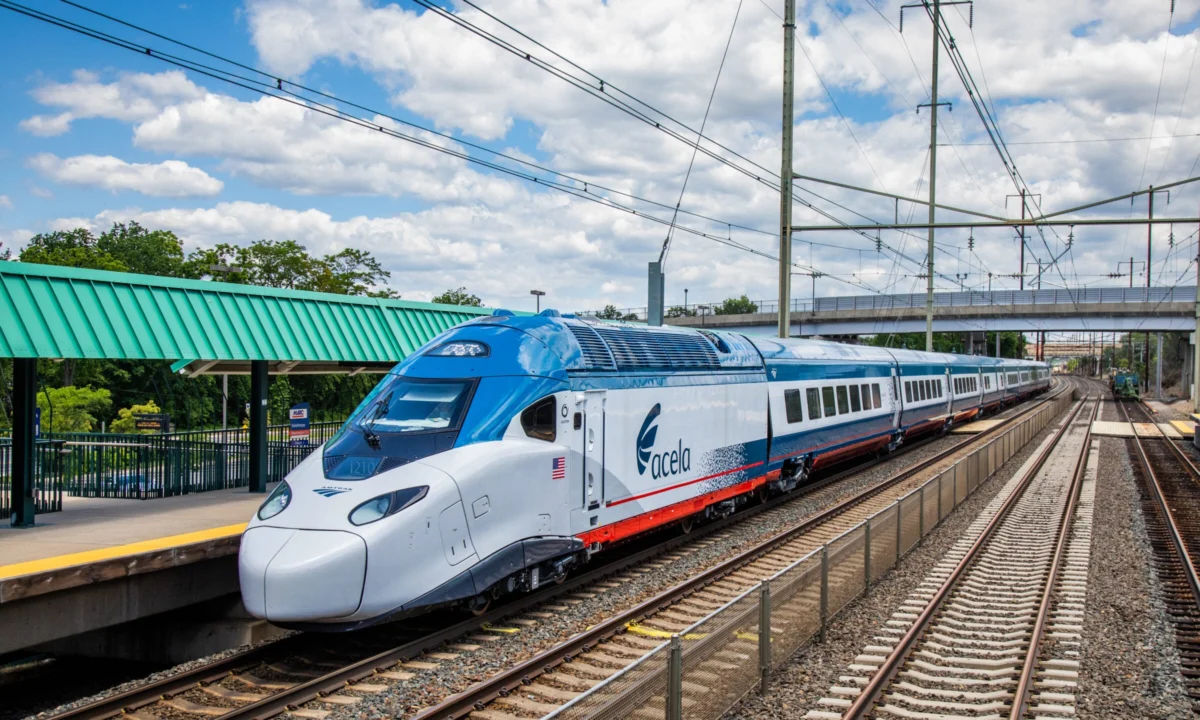
NEW YORK — In a major development for frequent travelers and points enthusiasts alike, Bilt Rewards has officially bridged the gap between loyalty currencies and rail travel. Beginning Sept. 23, 2026, members of the popular rewards program will be able to transfer their hard-earned Bilt Points directly to Amtrak Guest Rewards, marking the program’s first-ever rail partnership.
Until now, Bilt’s expansive transfer partner network had been strictly limited to major airlines and hotel chains. By welcoming Amtrak into the fold, Bilt is offering a novel avenue for urban commuters, coastal travelers, and rail fans to leverage their everyday spending—particularly rent payments—toward scenic and efficient train journeys across the United States.
While the new partnership introduces exciting flexibility, it also brings a distinct set of rules, ratios, and strategic considerations that travelers must weigh before hitting the transfer button.
Main Facts: How the Bilt-Amtrak Partnership Works
At its core, the new integration allows Bilt Rewards members to convert their points into Amtrak Guest Rewards points. However, the conversion does not follow the coveted 1:1 ratio seen with many of Bilt’s premier airline and hotel partners.
- The Transfer Ratio: Points transfer at a 2:1 ratio. This means that for every 2 Bilt Points you surrender, you will receive 1 Amtrak Guest Rewards point (e.g., 5,000 Bilt Points will yield 2,500 Amtrak points).
- Transfer Minimums: Transfers are subject to strict minimum thresholds and increment rules. For standard members, points must be transferred in 1,000-point increments, with a 1,000-point minimum.
- Bilt Blue Tier Restrictions: Members holding Bilt Blue status face a higher hurdle, subject to a 2,000-point minimum requirement for all Amtrak transfers.
- Sole Rail Partner: As of launch, Bilt remains Amtrak’s only flexible credit card transfer partner, positioning Bilt Rewards uniquely in the travel hacking ecosystem.
Chronology: The Evolution of Bilt Rewards and Rail Integration
To understand the significance of this announcement, it helps to contextualize Bilt’s rapid rise within the loyalty landscape and the timeline of this milestone feature.
- October 2021: Bilt Rewards officially launches to the public, shaking up the credit card rewards space by allowing renters to earn points on rent payments without transaction fees. At the time, its value proposition is heavily anchored in high-value, 1:1 airline and hotel transfer partners.
- 2022–2025: Bilt continuously expands its ecosystem, introducing rent day promotions, neighborhood dining rewards, and a robust roster of global aviation and hospitality brands, quickly becoming a favorite among points-and-miles enthusiasts.
- Late 2025 / Early 2026: Rumors and consumer demand for domestic travel alternatives prompt speculation regarding ground transportation partnerships. Industry analysts note a gap in the market for flexible points that cover domestic rail networks.
- Sept. 23, 2026: The official launch date for the Bilt-Amtrak Guest Rewards integration. Bilt officially breaks its aviation-and-hospitality mold, offering its user base direct access to North America’s premier passenger rail system.
Supporting Data: Crunching the Numbers on Amtrak Redemptions
At a glance, a 2:1 transfer ratio might cause seasoned points collectors to hesitate. However, the true value of any transfer currency lies in the underlying redemption value of the receiving program.
Amtrak Guest Rewards points are notoriously dynamic, but they frequently offer outsized value—often exceeding 2 cents apiece when redeemed strategically.
Case Study: Washington, D.C., to New York City
Consider a sample search for autumn travel between Washington, D.C.’s historic Union Station and New York City’s bustling Moynihan Train Hall at Penn Station:
- The Route: Northeast Corridor aboard Amtrak’s high-speed Acela train in Business Class.
- Cash Price: Approximately $139.
- Point Price: Approximately 5,213 Amtrak points.
- Raw Value: This yields a redemption value of roughly 2.67 cents per point ($139 / 5,213 points).
When you factor in Bilt’s 2:1 transfer ratio, the math shifts. Acquiring those 5,213 Amtrak points would require you to transfer 10,426 Bilt Points.
- Adjusted Value: Dividing the $139 cash cost by your 10,426 expended Bilt Points drops your net redemption value to 1.33 cents per Bilt Point.
While 1.33 cents per point may not sound staggering, it is important to put it into perspective. This return is comparable to—and in some cases higher than—the median value of economy ticket redemptions offered by some traditional 1:1 airline partners, such as United Airlines, during off-peak periods.
Alternative Redemptions and Lounge Passes
For travelers who may not have enough points for a full cross-state ticket, or who find themselves with residual Amtrak points post-transfer, secondary options exist:
- Lounge Access: A single-visit pass to Amtrak’s Metropolitan Lounge (such as the one in Washington, D.C.) typically costs $35 in cash. Redeeming Amtrak points for this perk yields a value of roughly 1.2 cents per point under the 2:1 Bilt ratio.
- Low-Cost Short Trips: According to Amtrak, short regional train tickets can cost as few as 400 Amtrak points (translating to 800 Bilt points under the 2:1 ratio).
While these secondary redemptions may not yield maximum financial return, they offer utility for travelers who prefer liquidating idle points over letting them sit unused.
(Note for travelers: Amtrak Guest Rewards points expire after 24 months of inactivity if no points are earned or redeemed within that window, making active management essential.)
Official Responses and Strategic Industry Implications
While major legacy airlines have long dominated the credit card transfer ecosystem, the inclusion of Amtrak signals a shifting paradigm in how loyalty programs view alternative mobility.
Industry analysts point out that modern consumers—particularly younger urban renters who form the core demographic of Bilt Rewards—are increasingly looking for sustainable, multi-modal travel options. By incorporating rail, Bilt is aligning itself with urban planning trends that favor high-speed trains over short-haul domestic flights.
Opportunity Cost: Should You Transfer to Amtrak?
Despite the convenience, financial experts urge Bilt members to carefully consider opportunity cost before executing a transfer.
- Better Alternatives in the Bilt Ecosystem: Bilt boasts some of the most lucrative 1:1 transfer partners in the travel industry, notably World of Hyatt and Atmos Rewards. For travelers seeking maximum return on investment, transferring points to hotel partners for luxury suite redemptions or high-tier airline partners for premium international cabins will almost always yield a higher cent-per-point valuation than regional train travel.
- Co-Branded Alternatives: For dedicated rail commuters who travel exclusively on Amtrak, the Amtrak Guest Rewards World Mastercard (issued by First National Bank of Omaha) remains an option for earning Amtrak-specific points directly, bypassing the need to dilute transfer ratios through a flexible currency.
However, for the casual traveler who occasionally rides the Northeast Regional or Acela, the ability to convert rent-day earnings into a free train ride without opening a standalone rail credit card is a net-positive addition to the Bilt value proposition.
Implications for the Future of Points and Miles
The launch of the Bilt-Amtrak partnership on Sept. 23, 2026, sets an intriguing precedent for the future of rewards currencies. As consumers demand greater lifestyle integration from their loyalty programs, rigid boundaries between airlines, hotels, and ground transportation are beginning to dissolve.
Whether other flexible point currencies (such as Chase Ultimate Rewards, American Express Membership Rewards, or Capital One Miles) will follow Bilt’s lead and introduce rail transfer partners remains to be seen. For now, Bilt Rewards has carved out a distinct niche, proving that earning points on rent can pave the way not just to the clouds, but down the tracks as well.