






The U.S. banking sector is grappling with a stark milestone as 2026 solidifies its position as the most volatile year for financial institutions this decade. On Friday, the California Department of Financial Protection and Innovation (DFPI) shuttered Irvine-based Nano Banc, marking the sixth bank failure of the year. This collapse, which follows a years-long saga of mismanagement and regulatory friction, has sent shockwaves through the regional banking landscape and underscored the ongoing fragility of smaller, niche financial institutions.
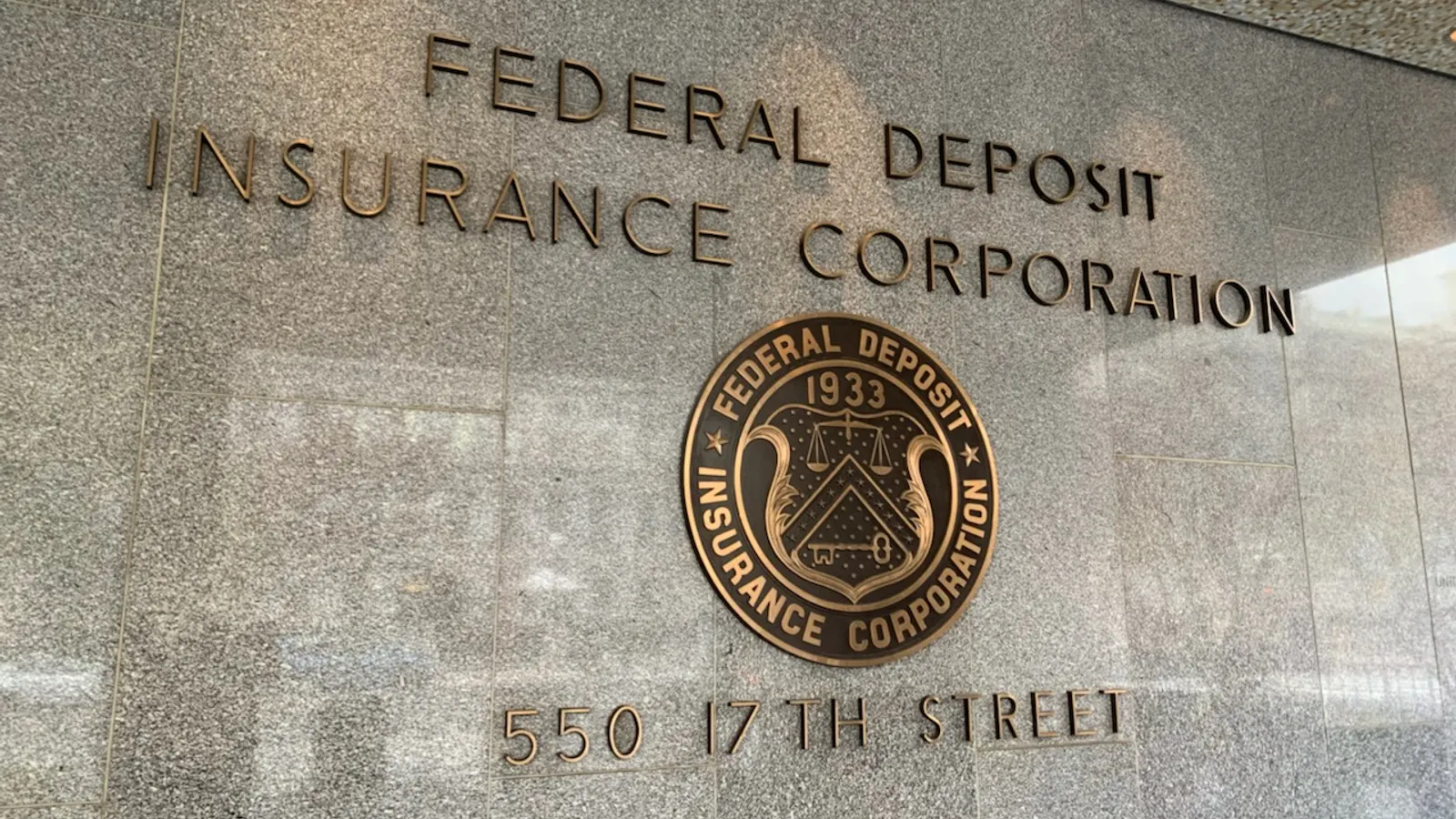
The failure of Nano Banc, which held assets estimated between $690 million and $736 million, has prompted immediate intervention by federal regulators. Sunwest Bank, headquartered in Sandy, Utah, has stepped in as the acquirer, assuming the majority of Nano’s assets and deposits in a deal facilitated by the Federal Deposit Insurance Corporation (FDIC).
The Anatomy of the Failure: A Chronology of Decline
The closure of Nano Banc was not an isolated event but rather the culmination of a multi-year descent into financial instability. While the formal shuttering occurred on Friday, regulators had been signaling their concerns for nearly six years.
The Early Warnings (2020–2021)
As early as 2020, the DFPI flagged "significant risk management weaknesses and violations of law" at Nano Banc. During this period, the bank was plagued by questionable governance, including unauthorized alterations to its board and C-suite, as well as instances of executive self-dealing that raised immediate red flags for state and federal overseers.
By February 2021, the situation had escalated, resulting in formal enforcement actions from both the Federal Reserve and the DFPI. The Federal Reserve’s intervention was primarily motivated by the bank’s dangerous concentration in commercial real estate (CRE) loans, an asset class that carries heightened risk during periods of economic uncertainty. Simultaneously, the DFPI moved to curtail the bank’s autonomy, mandating that the institution provide advance notice before any further appointments or changes to its executive leadership.
A Pattern of Defiance
Throughout late 2021, the bank’s leadership continued to operate in a manner inconsistent with regulatory expectations. In December 2021, the DFPI issued a cease-and-desist order after the bank unilaterally placed executives on administrative leave, appointed a new CEO and chair, and replaced board members—all without the required prior notification.
The Federal Reserve concurrently ordered comprehensive overhauls to Nano’s compliance and governance infrastructure. These demands were granular, targeting the bank’s oversight of insider lending, internal corporate expense policies, and the systemic deficiencies surrounding "insider transactions."
The Final Collapse (2025–2026)
The downward trajectory accelerated in 2024 when the Federal Reserve took the drastic step of banning former interim CEO Anthony Gressak III and former board member James Chung from the banking industry. The ban stemmed from findings that both individuals had engaged in the fraudulent procurement of COVID-19 relief funds, specifically through the Paycheck Protection Program (PPP) and other pandemic-era initiatives.
By March 2026, the bank’s financial health had reached a breaking point. Following a reported net loss of $75.3 million, the DFPI issued an order requiring Nano to bolster its tangible shareholders’ equity ratio to at least 9.5%. The regulator gave the bank a binary choice: meet the capital requirements or face voluntary liquidation, sale, or merger. Nano Banc proved incapable of satisfying these conditions. Its shareholder equity plummeted below the statutory minimum of 3%, leading regulators to categorize the institution as "unsafe and unsound."
The Financial Impact and Asset Resolution
The resolution process, handled by the FDIC, aims to minimize the impact on the bank’s depositors and the broader financial system. The FDIC estimates that the failure will cost the Deposit Insurance Fund (DIF) approximately $114 million, though this figure remains subject to adjustment as the remaining assets are liquidated or sold.
The Role of Sunwest Bank
Sunwest Bank, a recurring partner for the FDIC in failed-bank scenarios, has agreed to assume $605 million in deposits and $227 million in loans. This acquisition represents the sixth time the Utah-based lender has been selected by the FDIC to facilitate the purchase of assets from a collapsed institution.
"This opportunity reflects the financial strength, disciplined management, and stability that have defined Sunwest Bank for more than five decades," said Sunwest CEO Carson Lappetito in a statement. "We are excited to welcome Nano Banc’s customers to Sunwest and show them the high-touch service, advanced technology, and sophistication we offer to our clients."
As part of the seamless transition, Nano’s single branch location is scheduled to reopen on Monday, rebranded as a Sunwest Bank office, ensuring that depositors maintain uninterrupted access to their funds.
Industry Context: 2026 as a Year of Instability
The collapse of Nano Banc is not a singular anomaly but the most significant event in a year defined by increasing bank failures. With six institutions failing in the first half of 2026 alone, the current year has already surpassed the total number of failures seen in 2023, which previously held the record for this decade with five collapses.
A Comparative Analysis
The landscape of the 2020s has been characterized by sporadic but high-profile instability:
- 2020: Four bank failures.
- 2021–2022: A period of relative stability with zero bank failures.
- 2023: Five bank failures.
- 2024: Two bank failures.
- 2025: Two bank failures.
- 2026 (Year-to-Date): Six bank failures.
This year’s tally includes failures across Illinois, Georgia, Indiana, Kansas, and Pennsylvania, suggesting that the pressure on regional banks is not confined to a single geographic region or economic sector. Factors such as the lingering effects of high-interest rates, the volatility of the commercial real estate market, and the rigorous demands of modern compliance have combined to place unprecedented stress on smaller financial entities.
Regulatory and Strategic Implications
The case of Nano Banc serves as a sobering reminder of the importance of corporate governance in the banking sector. The DFPI’s narrative—which explicitly points to "executive mismanagement" as a root cause—reinforces the idea that institutional failure is often a human-centric issue.
Governance as the First Line of Defense
For community and regional banks, the Nano Banc saga highlights the catastrophic consequences of circumventing internal controls. When board oversight is compromised, and executive leadership engages in self-dealing, the institution loses the fundamental trust required to operate within the U.S. banking system. The Federal Reserve’s termination of its enforcement action in April 2025, followed so closely by the bank’s ultimate failure, illustrates that while regulatory guidance can correct process-based issues, it cannot always salvage a culture of institutional rot.
The Future of Small-Bank Consolidation
The involvement of Sunwest Bank in the acquisition of Nano Banc assets suggests a trend toward consolidation within the industry. As regulators increase their focus on capital requirements and risk management, smaller institutions with thin margins and weak compliance records will likely continue to be absorbed by more stable, better-capitalized players. This consolidation may lead to a more robust, albeit less diverse, banking ecosystem.
Ultimately, the closure of Nano Banc marks the end of a long-standing regulatory headache. While the cost to the Deposit Insurance Fund is significant, the swift resolution by the FDIC and the seamless transition to Sunwest Bank serves to protect the retail depositors who were caught in the middle of this institutional collapse. As the industry looks toward the remainder of 2026, the lesson is clear: for small banks, the margin for error has never been thinner, and the cost of mismanagement has never been higher.