








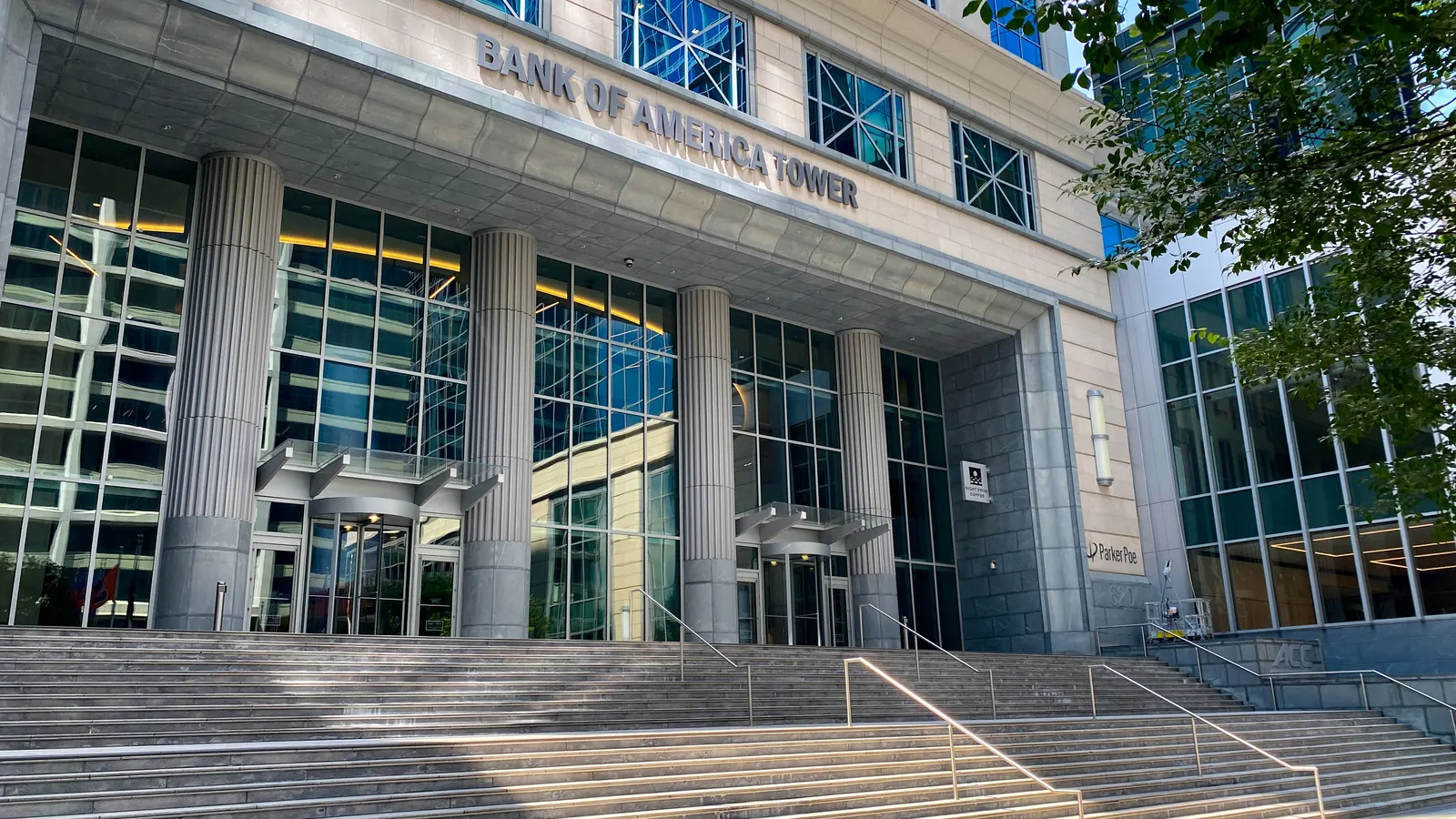
As the global financial sector grapples with the transformative, and often expensive, promise of artificial intelligence, Bank of America (BofA) has emerged as a focal point for the broader debate regarding capital allocation and measurable returns. While Wall Street and technology analysts have spent the better part of the year questioning whether the massive capital expenditures pouring into AI infrastructure will yield tangible results, the leadership at the $3.5 trillion-asset bank is shifting the conversation from "if" to "how much."
For Bank of America, the mandate is clear: AI is no longer an experimental initiative; it is a core engine for operational efficiency, productivity, and long-term cost management.
The Core Facts: A Calculated Investment
Bank of America’s approach to AI is defined by a rigorous, results-oriented framework. During a recent BofA Securities conference, Co-President Jim DeMare underscored that the mounting pressure on financial institutions to prove the viability of AI spending is both warranted and necessary. While industry data from firms like Accenture suggests that only 20% of bank leaders are currently seeing widespread, sustained value from their AI initiatives, BofA is attempting to defy this trend by embedding AI into the granular details of its daily operations.
The bank’s strategy is built on a simple premise: identify high-impact, low-risk areas where automation can immediately improve workflows. From coding assistants for software developers to internal virtual agents that streamline corporate self-service, BofA is treating AI as a tool for "force multiplication."
CEO Brian Moynihan recently revealed that the bank has successfully implemented approximately 140 AI use cases. The financial footprint of these initiatives is striking: an initial investment of $400 million has already generated a verifiable benefit of $800 million. Given these returns, the bank intends to double its AI expense budget in the coming year, signaling a high level of institutional confidence in the technology’s capacity to drive bottom-line growth.
Chronology: From Pilot Programs to Scaling
The evolution of BofA’s AI journey can be viewed through a timeline of calculated expansion:
- Early Adoption (Internal Optimization): The bank began by deploying its AI-powered virtual assistant, Erica, for internal administrative tasks. By automating help desk inquiries, the bank effectively shifted the workload of approximately 11,000 full-time employees, allowing human capital to be redeployed toward more complex, value-added client services.
- The Coding Revolution: Recognizing that the most immediate returns on AI are found in software development, the bank integrated coding agents for its 20,000-strong software development team. This move resulted in a 15% to 20% boost in coding productivity, a metric that has become the industry standard for measuring AI’s efficacy.
- Expansion to Client-Facing Tools: More recently, the bank has rolled out AI-powered customer relationship management (CRM) tools. These systems provide employees with real-time data and suggested talking points during client interactions, ensuring that staff are equipped with the most relevant information before a conversation even begins.
- The Current Phase (Scaling and Governance): As of late 2026, the bank is now in a phase of aggressive scaling. With 95% of its workforce having access to AI tools, the focus has moved from technical implementation to "general productivity," with an emphasis on improving the day-to-day work-life experience of employees.
Supporting Data: The Productivity Dividend
The financial implications of BofA’s strategy are supported by significant shifts in the bank’s operational structure. Despite the heavy investment in technology, the bank has successfully managed its headcount through a combination of attrition and careful hiring. The company’s workforce has contracted from approximately 213,000 at the start of the year to 209,000, with an attrition rate of 8.5%.
Crucially, leadership has emphasized that this reduction is not a result of mass layoffs, but rather a deliberate management of human resources in the face of increased automation. "We’re not laying off anybody," Moynihan stated. "We don’t have to do that. All we do is just manage the hiring carefully."
The bank’s commitment to tech-driven growth is further evidenced by its annual $4 billion investment in new technology initiatives. With AI becoming an increasingly larger share of that budget—and with the bank expecting to double its AI-specific spending next year—the institution is betting that the productivity gains realized by developers and administrative staff will translate into a sustained competitive advantage.
Official Responses: Addressing the Human Element
Despite the quantitative success, leadership acknowledges that the most significant barrier to AI implementation is cultural, not technical.
Jim DeMare on Organizational Anxiety
Co-President Jim DeMare has been vocal about the "fear factor" associated with AI. He notes that employees often view new technology as a threat to their job security. "One of the biggest risks to implementation of AI is people being fearful of it and thinking that it’s going to replace them," DeMare explained. "That’s not unique to AI; it’s apparent every time we try to use new technology." By democratizing access to these tools across 95% of the company, BofA is working to demystify the technology, shifting the narrative from displacement to empowerment.
Hari Gopalkrishnan on "Rich Ideas"
Chief Technology and Information Officer Hari Gopalkrishnan has championed a bottom-up approach to innovation. By soliciting ideas from employees on how to improve their workflows, the bank has tapped into a reservoir of internal intelligence that has proven to be a goldmine for ROI. "We will probably end up spending twice next year [what] we did this year because they’re just good, rich ideas that are now starting to create the return on investment for us," Gopalkrishnan said in an interview.
Brian Moynihan on Accountability and Guardrails
While the bank is pushing for increased autonomy in its AI agents, CEO Brian Moynihan maintains a cautious stance on the risks of AI-generated content. "The risk, for us, was really the risk of letting it start giving answers without humans checking to make sure the answer was right," he noted. The bank maintains a strict policy of human accountability: if an AI tool provides information, a human employee is responsible for verifying its accuracy. As Moynihan bluntly stated, "If you give a wrong answer to a client, the client’s going to walk out on you. That will gate its application in some ways."
Implications: The Future of Autonomous Finance
The path forward for Bank of America, as outlined by Gopalkrishnan, involves a delicate balancing act: expanding the autonomy of AI agents while ensuring that "guardrails are omnipotent." The bank is currently vetting a variety of third-party providers while simultaneously exploring custom-built, proprietary solutions that fit its specific operational needs.
The implications for the broader financial services industry are profound. BofA’s success in generating a $800 million return from a $400 million investment provides a blueprint for other institutions struggling to justify their own AI expenditures. However, the "BofA model" also serves as a warning: successful AI integration requires more than just capital. It requires a cultural shift where employees are active participants in the automation process, a robust framework for human-in-the-loop verification, and a commitment to measured, incremental scaling rather than rapid, unproven deployment.
As the bank continues to integrate AI into its core business, the question for investors will shift from "What is the ROI?" to "How quickly can this model be replicated across the entire global banking footprint?" If the current momentum holds, Bank of America is positioning itself not just as a financial institution, but as a technology-first entity that uses capital to purchase speed, accuracy, and unprecedented operational efficiency.
In the final analysis, the bank’s strategy suggests that the era of "AI hype" is giving way to the era of "AI utility." For BofA, the technology is no longer a futuristic goal—it is the current reality of the bank’s daily ledger.