









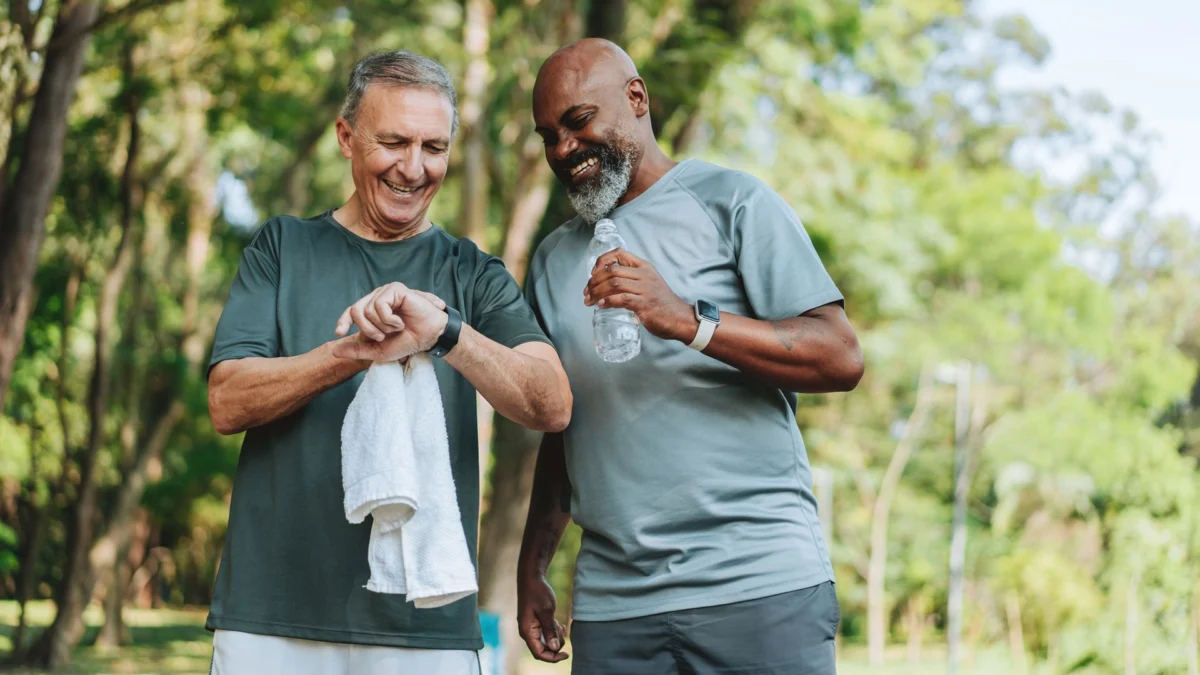
For 32 years, Diane was the embodiment of professional vitality. As a hospital administrator, her life was dictated by the rhythm of a bustling campus. She navigated miles of sterile corridors daily, bounded up stairwells to reach urgent meetings, and moved with the constant, kinetic energy of an environment that never slept. Diane didn’t own a gym membership, she didn’t track her steps with a wearable device, and she certainly didn’t identify as an “athlete.” To her, physical activity was simply the ambient noise of a productive career.
Then came the milestone: retirement at 65. She entered this new phase in excellent health and high spirits, expecting a seamless transition into leisure. But within 18 months, the reality of a sedentary life set in. The scale climbed, a persistent, heavy fatigue replaced her former stamina, and the sharp mental clarity she had always relied upon began to feel like a fading radio signal.
Baffled, Diane turned to her doctor. "I’ve always been an active person," she insisted. Her physician’s response was a simple, cutting question: "What do you mean by ‘active’?" In that moment, Diane realized she had no answer. She hadn’t been active; she had been employed. The workplace had functioned as her unintentional gym, and when that infrastructure was removed, her health architecture collapsed.
The Architecture of Inactivity: A Design Failure
The story of Diane is not an outlier; it is a systemic phenomenon. Research into the transition from employment to retirement consistently highlights a pattern that is frequently omitted from financial planning: activity levels are rarely a result of individual discipline, but rather a function of environmental design.
The average office worker logs between two and four miles of walking per day without ever setting foot on a treadmill. When you aggregate the commute, the trek to the breakroom, the navigation of office floors, and the physical demands of professional responsibilities, employment provides a baseline of movement that is essential for metabolic and cognitive health.
When an individual retires, they are effectively stripping away the "environmental scaffolding" that supported their physical well-being. Without a conscious, intentional design to replace the structure of the workplace, the default human state is sedentary. This isn’t a failure of character or a lack of willpower; it is a structural oversight. For those planning their retirement, the challenge is to move from "accidental fitness" to "intentional movement."
The Biological Asset Class: Exercise as Wealth
Most financial advisors approach retirement planning through the lens of asset allocation, tax efficiency, and withdrawal rates. However, emerging research suggests that physical fitness should be treated as its own critical asset class—one with measurable, high-yield returns that are often ignored in traditional balance sheets.
The Lancet Commission Evidence
In 2020, the Lancet Commission identified 12 modifiable risk factors that account for approximately 40% of dementia cases worldwide. Remarkably, exercise directly influences six of these: physical inactivity, hypertension, diabetes, obesity, depression, and social isolation. There are few pharmaceutical interventions in modern medicine that can claim to impact half of a major disease’s risk profile simultaneously.
The Cognitive Dividend
A 2025 meta-analysis further bolstered this case, confirming that regular aerobic exercise significantly reduces the risk of cognitive decline in adults over 65. The effect size of this intervention is comparable to—and in some cases superior to—pharmacological treatments for mild to moderate depression and cognitive impairment.
The mechanism is rooted in biology: Exercise triggers the release of Brain-Derived Neurotrophic Factor (BDNF), a protein that acts as a fertilizer for neural connections. In simple terms, a body that moves is a brain that is actively building.
The Financial Implication: Avoiding the Long-Term Care Trap
When we view fitness through a cold, actuarial lens, the numbers become staggering. According to data from Morningstar, the average cost of long-term care in the United States has soared to over $242,000 as of 2025. With roughly 70% of adults turning 65 expected to require some form of long-term care, this is perhaps the greatest unhedged risk in retirement portfolios.
Exercise is the single most effective intervention for deferring, reducing, or even preventing the primary drivers of long-term care costs: falls, sarcopenia (muscle loss), cardiovascular disease, and cognitive decline. If a disciplined fitness regimen can defer the need for institutionalized care by just two years, the financial return on that time investment dwarfs the performance of most conventional market strategies.
Yet, this "investment" appears on no financial statement. It is rarely a line item in a retirement plan, despite being the only strategy that protects the most valuable asset of all: the independence to actually spend the money you have saved.
Social Integration: The Return Multiplier
The research into healthy aging consistently identifies three forms of exercise as the "gold standard" for retirees: walking groups, pickleball, and structured community activities. The common thread is not merely cardiovascular exertion—it is social engagement.
Social isolation is one of the most potent drivers of cognitive and physical decay. Studies have shown that social connection outperforms both "brain games" and dietary supplements in maintaining cognitive health. When a retiree chooses a social form of exercise, they are essentially "compressing" their health investments. A morning walk with friends addresses physical fitness, emotional regulation, and cognitive stimulation in a single, efficient window of time.
For the retiree, this is the ultimate optimization. You are not choosing between your social life and your health; you are integrating them.
Implementation: How to Design Your "Post-Work" Life
The research indicates that the key to success is not high-intensity training, which can often lead to injury or burnout in the sedentary population. Instead, the focus should be on the following three pillars:
1. Environmental Design
Make movement the default. This is the "path of least resistance" strategy. Keeping walking shoes by the bed, joining a club with a set schedule, or choosing a home location with high walkability are all forms of environmental engineering. If your environment mandates movement, you do not have to rely on your motivation.
2. The Social Multiplier
Prioritize exercise that involves others. If you are accountable to a group, your attendance is no longer a personal preference—it is a social obligation. This creates a psychological "hook" that keeps individuals engaged long after the initial novelty of retirement wears off.
3. Incremental Compounding
Avoid the urge to transform your life overnight. Aggressive, high-intensity starts often lead to attrition. Instead, aim for the "10-minute rule." If you add 10 minutes of movement to your daily routine each week, you will not notice the difference in week two, but by month six, you will have fundamentally altered your physical baseline. This is the compounding interest of the human body.
The Case of Diane: A New Definition of Wealth
Today, Diane’s life looks very different. She walks every morning with two neighbors, participates in a golf league twice a week, and has successfully maintained her ideal weight for over two years. When asked about her routine, she no longer calls it "exercise." She views it as a non-negotiable appointment on her calendar—the most important meeting of her day.
Diane’s transformation underscores a critical truth: retirement is not a destination where you stop working; it is a new project that requires a new design.
As you approach retirement, your financial plan will tell you how long your money will last, but your physical fitness will determine whether you are capable of enjoying that time. A robust portfolio is meaningless if you lack the mobility or cognitive capacity to engage with the world. Both your finances and your physical health deserve an expert-level plan before you sign your retirement papers.
The goal is not to live forever; the goal is to be fully present, fully capable, and fully independent for as long as possible. By treating your body with the same strategic rigor you apply to your retirement accounts, you ensure that your "encore years" are not merely a long, slow decline, but a vibrant, intentional, and active phase of life.
To learn more about the psychology and physical strategies for a fulfilling post-work life, consult your financial planner about integrating health milestones into your wealth strategy, and consider resources such as "Your Encore Years: The Psychology of Retirement" for a deeper dive into the behavioral design of a successful retirement.