







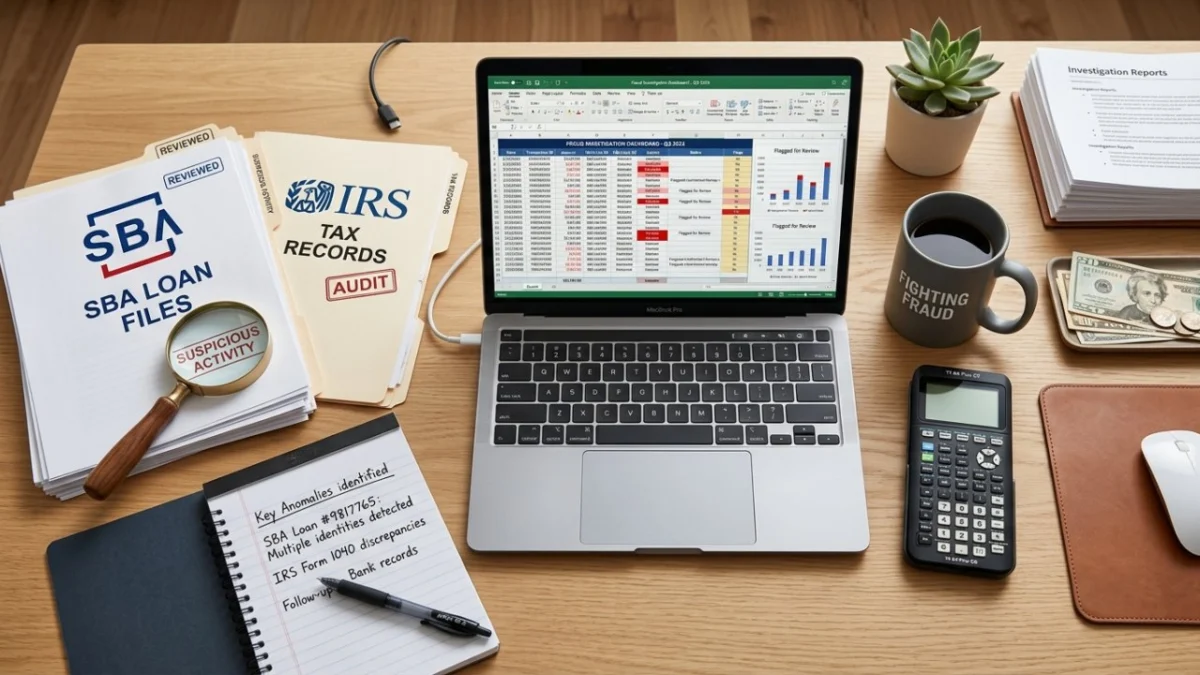
WASHINGTON — In one of the most aggressive inter-agency enforcement actions in recent history, the U.S. Small Business Administration (SBA) has joined forces with the Internal Revenue Service (IRS), the Department of Justice, and the Department of the Treasury to root out historic levels of pandemic-era fraud. The joint initiative has flagged approximately $100 billion in suspected fraudulent tax discrepancies linked directly to the Paycheck Protection Program (PPP) and COVID-19 Economic Injury Disaster Loan (EIDL) assistance.
This sweeping financial dragnet underscores a sobering reality about the nearly $1.2 trillion disbursed during the height of the global health crisis. According to updated federal assessments, roughly 20% of all pandemic relief funds may have been diverted away from struggling Main Street businesses and into the pockets of fraudulent actors.
As federal investigators comb through millions of tax filings and loan applications, the crackdown marks a definitive turning point. The message from Washington is unambiguous: while pandemic assistance was designed as an emergency lifeline for a crippled economy, the systematic exploitation of these programs will face relentless prosecution, asset recovery, and severe legal penalties.
Main Facts of the Inter-Agency Enforcement Initiative
The staggering scale of the coordinated federal response highlights the unprecedented nature of pandemic-era oversight. At the core of the initiative is a massive data-matching operation led by the IRS, which is cross-referencing tax returns with the data provided by borrowers during their original SBA loan applications.
- The Scope of the Discrepancies: The IRS has identified approximately $100 billion in suspected tax fraud tied directly to PPP and EIDL disbursements.
- Administrative Suspensions: Acting swiftly on internal compliance flags, the SBA has already suspended roughly 1 million borrowers from future lending and programs. This includes 870,000 specific borrowers tied to an estimated $39 billion in suspected fraud.
- Treasury Referrals: The SBA has officially referred approximately $22 billion in suspected fraudulent loans directly to the U.S. Department of the Treasury for aggressive debt collection and asset seizure.
- Multi-Agency Coalition: The effort operates through a synchronized pipeline involving the SBA, IRS, Department of Justice, and Department of the Treasury, ensuring that violations face administrative blocks, civil clawbacks, and potential criminal indictments.
Chronology of the Pandemic Relief Fraud Crisis
To understand how federal investigators arrived at this $100 billion threshold, it is necessary to examine the timeline of the COVID-19 relief rollout and the subsequent evolution of government oversight.
Phase 1: Rapid Deployment (2020–2021)
When the COVID-19 pandemic paralyzed the global economy in the spring of 2020, Congress rushed to pass the Coronavirus Aid, Relief, and Economic Security (CARES) Act. The legislation established the PPP and expanded the EIDL program, funneling more than $1.2 trillion into the financial bloodstream of the American economy.
To ensure that funds reached desperate business owners within days rather than months, the federal government deliberately streamlined the application process. Minimal documentation was required upfront, allowing banks and fintech lenders to disburse funds at lightning speed. While this approach successfully saved millions of businesses from immediate bankruptcy, it inadvertently created wide vulnerabilities that cybercriminals, domestic syndicates, and opportunistic fraudsters eagerly exploited.
Phase 2: Early Warnings and Initial Audits (2021–2023)
Even as funds were still being distributed, federal watchdogs—including the Government Accountability Office (GAO) and the SBA Office of Inspector General (OIG)—began flagging systemic vulnerabilities. Reports surfaced detailing how billions of dollars had been funneled to non-existent businesses, shell corporations, and individuals using stolen identities.
During this phase, federal prosecutors began bringing high-profile criminal cases against individuals who used PPP and EIDL funds to purchase luxury automobiles, high-end real estate, and jewelry. However, these early enforcement actions represented only a fraction of the total illicit outflow.
Phase 3: The Big Data Integration (2024–2025)
As the statute of limitations for various pandemic-related offenses began to loom, federal agencies shifted from reactive, isolated investigations to a proactive, data-driven strategy. Recognizing that many fraudsters had successfully hidden their tracks across disparate banking channels, the SBA and IRS pooled their vast data repositories. By combining loan application metrics with historical and contemporaneous tax filings, investigators unlocked the ability to spot systemic reporting discrepancies on a massive scale.
Phase 4: Current Inter-Agency Crackdown (2026)
The current phase represents the culmination of this data integration. With the identification of $100 billion in suspected tax fraud, federal agencies have transitioned from detection to widespread execution—issuing administrative suspensions, referring bad actors to the Treasury for collection, and opening criminal tax investigations nationwide.
Supporting Data and Financial Metrics
The numbers associated with pandemic relief fraud illustrate an administrative challenge of historic proportions.
| Metric / Category | Estimated Value / Count | Description |
|---|---|---|
| Total Pandemic Relief Disbursed | ~$1.2 Trillion | Cumulative funds distributed via PPP, EIDL, and related COVID-19 emergency programs. |
| Estimated Fraud Rate | ~20% | Proportion of total disbursed funds estimated by watchdogs to have been fraudulently acquired. |
| Suspected Tax Fraud Discrepancies | ~$100 Billion | Amount identified by the IRS through cross-referencing tax filings with loan data. |
| SBA Borrower Suspensions | ~1 Million Total | Total number of delinquent or flagged borrowers barred from future SBA programs. |
| High-Risk Suspensions | $39 Billion (870,000 Borrowers) | Specific borrowers flagged for severe discrepancies and barred from federal lending. |
| Treasury Collection Referrals | ~$22 Billion | Suspected fraudulent loans formally transferred to the Treasury for collection and recovery. |
These figures demonstrate that federal oversight has moved past theoretical estimates into concrete punitive measures, targeting both systemic abusers and individual bad actors.
Official Responses and Leadership Statements
Federal leaders have adopted an uncompromising tone regarding the necessity of holding fraudsters accountable while safeguarding the future of legitimate small business programs.
SBA Administrator Kelly Loeffler emphasized the broader message sent by the joint initiative during a press briefing addressing the findings.
"The IRS’s identification of approximately $100 billion in suspected tax fraud sends a clear message," said SBA Administrator Kelly Loeffler. "Fraudsters who stole from SBA’s COVID-relief programs will not only face accountability at the SBA, but they will also face the full weight of federal tax enforcement and asset recovery."
Echoing this sentiment, IRS Chief Executive Officer Frank J. Bisignano highlighted the specific mechanisms being utilized to pursue offenders across judicial boundaries.
"The IRS has opened investigations because of SBA’s referrals and will pursue penalties for tax fraud," added IRS CEO Frank J. Bisignano. "Our coordinated efforts are designed to ensure that no one is above the law, whether they attempted to cheat the loan application process or falsify their subsequent tax liabilities."
Together, agency heads have made it clear that inter-agency collaboration will remain a permanent fixture of federal oversight, ensuring that future emergency programs are built with robust cryptographic and analytical safeguards from inception.
Implications for Legitimate Small Business Owners
While the primary target of this sweeping federal enforcement action is criminal elements and bad actors, the ripple effects are being felt across the entire small business community. For honest entrepreneurs who relied on PPP or EIDL funds simply to keep their doors open, the current environment presents a distinct mix of operational benefits and compliance challenges.
The Benefits: Restoring Market Integrity
For legitimate business owners, the aggressive pursuit of pandemic relief fraud brings a long-awaited sense of justice and economic fairness. During the height of the pandemic, honest enterprises frequently found themselves competing against fraudulent entities that had artificially inflated their payrolls or invented non-existent workforces to secure massive cash injections.
By systematically weeding out these dishonest actors and barring nearly 1 million compromised accounts from future programs, the federal government is helping to level the playing field. Ensuring that SBA funding streams are protected from systemic drain guarantees that future entrepreneurial initiatives, disaster loans, and small business development funds remain solvent and accessible to those who genuinely need them.
The Challenges: Heightened Scrutiny and Compliance Risks
Conversely, the data-matching initiatives being deployed by the IRS mean that ordinary business owners must exercise extreme caution. Because the IRS is comparing historical tax information against what was reported during loan applications, even unintentional clerical errors, miscalculations, or administrative mistakes made during the chaotic application period could trigger automated compliance flags.
Business owners who submitted loan applications during periods of shifting guidance now face the daunting task of ensuring absolute harmony between their financial statements, tax returns, and loan forgiveness documentation. Discrepancies, even those born of innocent confusion rather than malicious intent, can lead to protracted inquiries, delayed audits, or unexpected tax liabilities.
Recommended Best Practices for Entrepreneurs
To navigate this era of heightened federal oversight safely, financial advisors and legal experts strongly advise small business owners to take proactive steps:
- Conduct Internal Financial Audits: Review all historical PPP and EIDL loan applications, forgiveness requests, and corresponding tax returns to ensure complete consistency in reported revenue, payroll figures, and employee counts.
- Maintain Open Lines with CPA Professionals: Consult certified public accountants or financial advisors immediately if any discrepancies or reporting errors are discovered within past filings.
- Preserve Documentation: Retain all supporting records—including bank statements, payroll ledgers, and expense reports—for a minimum of seven years, as federal audit windows remain active.
- Prioritize Transparency: If an error is identified, proactive disclosure and transparent remediation through professional channels are significantly safer than waiting for an automated federal flag to trigger an involuntary audit.
Conclusion
The collaborative crackdown by the Small Business Administration, the Internal Revenue Service, the Department of Justice, and the Department of the Treasury represents a watershed moment in pandemic accountability. By identifying $100 billion in suspected tax fraud, freezing millions of compromised accounts, and referring billions to the Treasury for collection, the federal government is signaling that financial crimes committed during national emergencies will not be written off as administrative loss.
For America’s small business community, this disruptive period serves as both a cautionary tale and a stabilizing force. While the increased scrutiny demands meticulous record-keeping and vigilance, the ultimate elimination of fraudulent competition restores integrity to the programs upon which Main Street relies. By anchoring future economic support in transparency, accuracy, and rigorous oversight, the federal framework aims to ensure that public trust—and taxpayer dollars—remain firmly protected.
For further information, official updates, and detailed guidance, consult the official press release issued by the U.S. Small Business Administration via their official portal.