








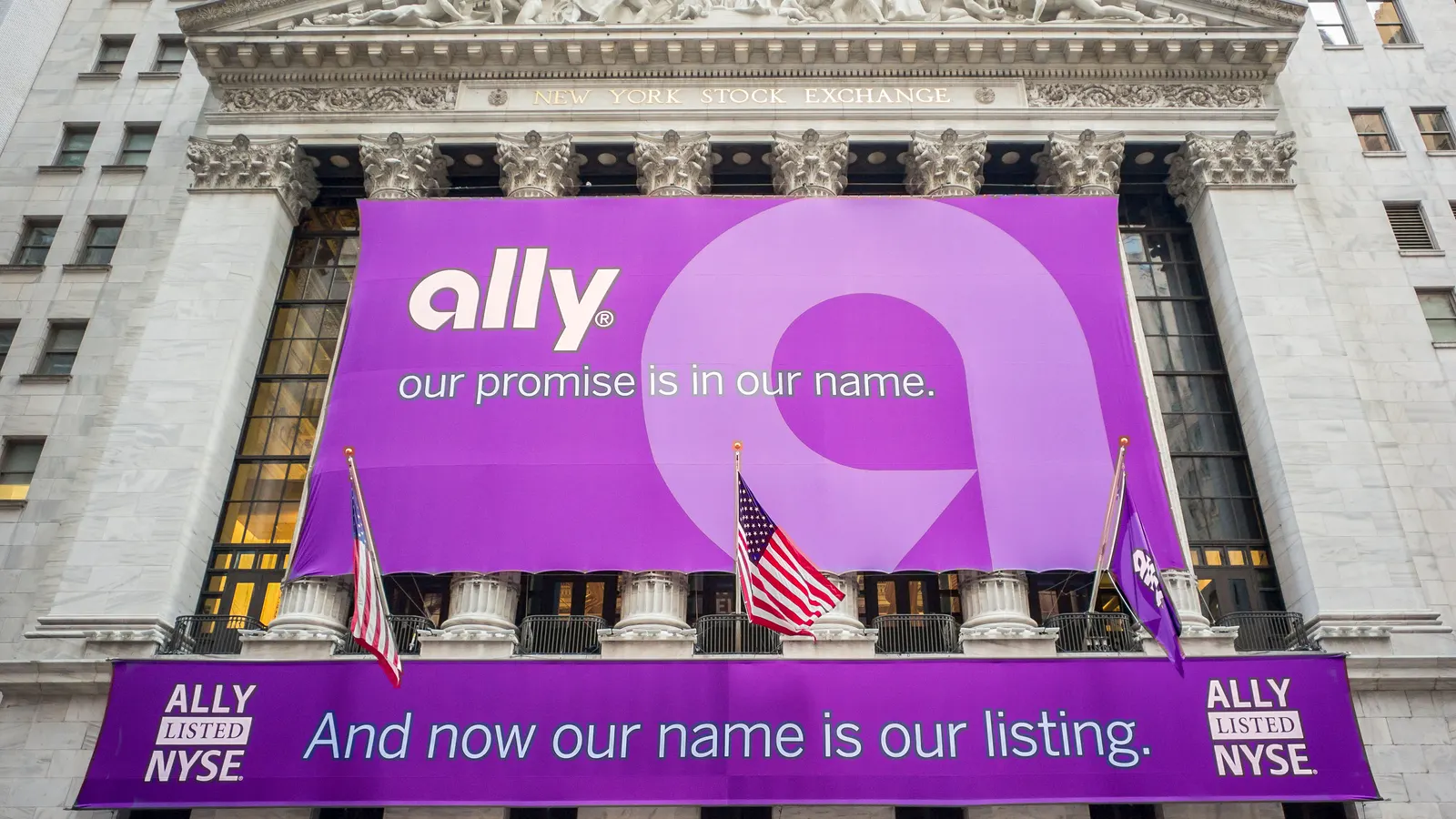
In the high-stakes world of modern banking, where the pressure to diversify often leads institutions into sprawling, unmanageable portfolios, Ally Financial CEO Michael Rhodes is charting a different course. Since assuming the helm in April 2024, Rhodes has championed a philosophy that favors strategic subtraction over additive growth. By narrowing Ally’s mandate to three core pillars—consumer banking, corporate finance, and auto dealer financial services—Rhodes is executing a calculated pivot designed to insulate the $200 billion-asset lender from volatility while driving superior long-term returns.
"Strategy is about choices, and sometimes the best strategy is to choose to do less, not more," Rhodes remarked in a recent interview. This minimalist approach is not merely an exercise in corporate pruning; it is a fundamental re-evaluation of what a digital-native bank should represent in an increasingly crowded and fragmented financial ecosystem.
The Chronology of a Strategic Pivot
The transformation of Ally Financial under Rhodes did not happen in a vacuum. It follows a period of introspection for the Detroit-based lender, which has spent the last two years systematically exiting business lines that lacked a clear competitive advantage or created unnecessary friction with its core customer base.
- April 2024: Michael Rhodes officially takes the CEO post, signaling a shift in leadership style and operational focus.
- Late 2024 – Early 2025: Ally initiates a major restructuring, moving to shutter its mortgage origination business. The bank concluded that holding 30-year loans on its balance sheet was inherently incompatible with its funding structure.
- Early 2025: The company completes the sale of its credit card program. This exit was driven by a realization that the credit card business—focused on a near-prime demographic—was mismatched with Ally’s digital consumer bank customers, who lean toward a "high-earner-not-yet-wealthy" profile.
- 2025 – 2026: Throughout this period, Ally intensified its focus on its three core business units, leading to a marked increase in operational efficiency and a 28% jump in full-year net income between 2024 and 2025.
- Mid-2026: Ally reported a strong second-quarter performance, with profits totaling $367 million, a 13% year-over-year increase, signaling that the "less is more" thesis is gaining traction.
The Core Pillars: Where Ally Intends to Win
Rhodes’ mandate is built on a simple premise: "play in places where you have a reason to win." By divesting from areas where Ally was a generalist, the bank has committed capital and resources to sectors where it can establish, or maintain, market dominance.
1. Auto Dealer Financial Services
As the successor to the storied GMAC, Ally holds a century of expertise in auto finance. With a 7% market share, this segment is the bedrock of the company. Despite aggressive encroachment from major lenders like Wells Fargo, Ally’s deep-rooted relationships with dealers and its refined risk management processes remain a significant moat.
2. Corporate Finance
Perhaps the most aggressive growth area, the corporate finance unit has seen loan volumes climb by roughly 40% since the beginning of 2025. While Ally currently holds less than 1% of the market share, the potential for expansion is vast. The division specializes in lending to companies backed by private equity sponsors. As these sponsors raise more capital, their demand for debt financing grows, and Ally has strategically positioned itself as the go-to partner for these sophisticated players.
3. Consumer Banking
The consumer bank remains the engine of the company’s identity. With approximately $144 billion in retail deposits and 3.6 million customers as of the second quarter of 2026, the unit is the primary source of funding for Ally’s other ventures. By leaning into its "do it right" ethos and digital-first branding, the bank has successfully captured the attention of Gen Z and millennial demographics who are increasingly disillusioned by the traditional branch-heavy model.
Data-Driven Performance: The Proof of Concept
The financial results underscore the efficacy of this streamlined approach. Ally’s decision to exit the mortgage and credit card businesses has allowed the bank to de-risk its balance sheet and focus on higher-margin, more agile products.
- Profitability: Net income rose from $668 million in 2024 to $852 million in 2025. The positive trajectory continued into Q2 2026, with a 26% increase in profit compared to the previous quarter.
- Growth Metrics: Consumer bank customers have grown by 7% over the last year. Auto originations, despite a highly competitive environment, have risen 10% in consecutive years.
- Market Position: While the bank’s total share of FDIC-insured deposits has seen a slight decline—moving from 0.92% in 2023 to 0.82% in June 2026—management views this as a calculated trade-off. The focus has shifted from raw deposit volume to the quality and cost of those deposits within a digital-only environment.
Official Perspectives and Leadership Vision
Michael Rhodes is acutely aware of the headwinds facing the industry. From the K-shaped economy to the persistent pressure of Federal Reserve interest rate hikes, the environment remains volatile. When asked about the challenges of rising deposit costs—a consequence of Ally’s commitment to competitive yields for savers—Rhodes remains pragmatic.
"The flip side is that new loans are going to be more expensive," Rhodes noted, framing the interest rate environment as a margin-balancing act rather than an existential threat. He emphasizes that the capital freed up from the divestitures—specifically the credit card business—has provided the bank with the necessary liquidity to manage interest rate risk effectively.
Lindsay Sacknoff, president of consumer banking, has echoed this sentiment, emphasizing that the brand’s digital identity is its greatest asset. As more customers migrate away from brick-and-mortar institutions, Ally’s marketing campaigns, which often poke fun at the overhead costs of traditional banks, are proving to be effective tools for customer acquisition.
Implications for the Future: Navigating the Competitive Landscape
The path forward for Ally Financial is not without critics. Analysts at institutions like Truist Securities have pointed to the inherent tension in the bank’s model: the need to pay competitive rates to keep depositors happy while simultaneously navigating a market where auto finance competitors are aggressively chasing growth.
The primary benchmark for success remains the mid-teens return on tangible common equity (ROTCE). With the second quarter of 2026 clocking in at 11.8%, the bank still has a runway to climb. The strategy for 2027 is clear: "keep on putting points on the board."
The "Winning Formula"
Rhodes believes the bank’s future is secure because it has stopped trying to be a "universal bank." By retreating from the commoditized mortgage market and the hyper-competitive credit card space, Ally has freed up the management bandwidth to excel in its niche.
In the broader context of the U.S. banking sector, Ally’s journey serves as a case study for mid-sized institutions. In an era where fintechs and digital-only challengers are constantly redefining the rules of engagement, Ally is betting that a focused, specialized approach—combined with a relentless commitment to digital efficiency—will allow it to survive and thrive.
"The bet we’re making," Rhodes concluded, "is that by doing less but doing what we do extraordinarily well, that’s going to be the winning formula." Whether this disciplined focus will be enough to achieve the bank’s ambitious return targets remains to be seen, but for now, Ally Financial is moving forward with a level of clarity that has been absent in its previous iterations. As the financial landscape continues to shift, the bank’s ability to remain "extraordinarily good" at a few things, rather than "average" at many, will define the next chapter of its evolution.