For the average aspiring real estate investor, the mountain of building a sizable rental portfolio often appears insurmountably steep. The prevailing myth in the property market is that achieving financial freedom requires a massive trust fund, an immense nest egg, or hundreds of thousands of dollars in liquid capital right out of the gate.
However, seasoned investors and market veterans know a very different truth: most successful portfolio owners started with virtually nothing, utilizing a calculated, compounding strategy that turns a single property acquisition into a multi-unit enterprise. Known in industry circles as the "stack method," this blueprint allows rookie investors to scale from a single-family home to a 10-unit portfolio in just a few years—all without breaking the bank.
The Main Facts: Demystifying the Stack Method
At its core, the stack method is a progressive acquisition strategy designed to minimize upfront capital requirements while maximizing long-term portfolio growth. Rather than jumping straight into large, intimidating commercial complexes or purchasing dozens of scattered single-family homes, investors follow a geometric scaling progression.
- The Progression Curve: Investors typically start with a small, manageable property—such as a single-family home in year one. In year two, they graduate to a duplex. Year three brings a triplex or fourplex, followed by larger multi-family assets in subsequent years (1, 2, 4, 8 units, and so on).
- Low-Capital Entry: By leveraging primary residence loan products, such as FHA loans or conventional low-down-payment mortgages, investors can get started with as little as 3% to 5% down.
- The Power of House Hacking: Combining the stack method with house hacking—living in one unit (or renting out individual rooms) while renting out the rest—drastically cuts living expenses and accelerates savings for the next down payment.
- Leveraging Equity (HELOCs): Investors utilize Home Equity Lines of Credit (HELOCs) secured against their initial primary residences to fund subsequent down payments and property rehabilitations at favorable introductory rates.
Chronology: A Step-by-Step Playbook for 2026
Building a portfolio using the stack method is a deliberate, multi-year journey. Here is how the step-by-step chronology unfolds for a disciplined investor:
Year 1: The Foundation (Single-Family Home)
The journey begins with the purchase of a modest single-family home. To minimize overhead, investors can employ extreme house-hacking tactics—such as renting out individual bedrooms to roommates while occupying the couch or a master bedroom. This drastically slashes personal housing expenses, allowing the investor to rapidly accumulate cash reserves.
Year 2: Securing the First HELOC and Buying a Duplex
Before moving out of the first property after fulfilling the standard one-year primary residency requirement, the investor secures a HELOC on the home. Even a modest $20,000 credit line provides vital liquidity for future deals or property rehabs. The investor then purchases a duplex, putting down 3% to 5% by utilizing a primary residence loan. The single-family home is converted into a full rental property, generating cash flow to cover both its original mortgage and the new HELOC payment.
Year 3: Scaling to a Triplex
With the duplex fully rented out (and perhaps continuing to house-hack by living in one half of the duplex), the investor repeats the cycle. They secure a triplex using low-down-payment primary financing. By year three, the investor is managing a single-family home, a duplex, and a triplex—pushing past the 6-unit mark.
Year 4 and Beyond: The Fourplex and Beyond
The final phase of the initial stack involves acquiring a fourplex (quadplex). At this stage, the portfolio reaches or exceeds 10 total units. Because residential loans generally cap out at four units before transitioning into commercial financing territory, the investor now sits on a substantial cash-flowing asset base built incrementally over four years.
Supporting Data: Comparing the Stack Method to Traditional Single-Family Investing
To truly understand the value of the stack method, one must look at the math compared to the traditional approach of buying standalone single-family rental properties.
The Traditional Single-Family Route
- Average Purchase Price: $300,000 per home.
- Monthly Rent: $1,800 to $2,200.
- Down Payment (20%): $60,000 per property.
- The Challenge: In many modern markets, putting 20% down on a $300,000 property yields razor-thin or negative cash flow due to elevated interest rates and home prices. To achieve true financial freedom via this method, an investor might need 20 to 30 properties, resulting in massive debt exposure, high capital requirements ($1.2M+ in down payments), and severe management headaches.
The Stack Method Route
- Initial Capital Required: $10,000 to $15,000 (3.5% to 5% down via primary financing).
- Duplex / Triplex Entry: Down payments scale modestly ($14,000 to $27,000 with low-down-payment options), while 20% down options ($80,000 to $110,000) offer lower risk and higher immediate cash flow if the investor chooses to bypass house hacking.
- Risk Mitigation: By building equity incrementally and utilizing existing portfolio cash flow to fund future down payments, the barrier to entry remains remarkably low.
Optimal Markets for Stacking in 2026
According to recent real estate data reports analyzing price-to-rent ratios, cash-flow-friendly markets are heavily concentrated in the Midwest corridor rather than coastal tech hubs. Top markets for executing the stack method include:
- Indianapolis, Indiana
- Cleveland, Ohio
- Memphis, Tennessee
- Kansas City, Missouri
- Birmingham, Alabama
- Pittsburgh, Pennsylvania
- St. Louis, Missouri
- Columbus, Ohio
- Detroit, Michigan
- Milwaukee, Wisconsin
Official Insights and Expert Perspectives
Industry experts emphasize that while the stack method accelerates growth, pacing and discipline are paramount.
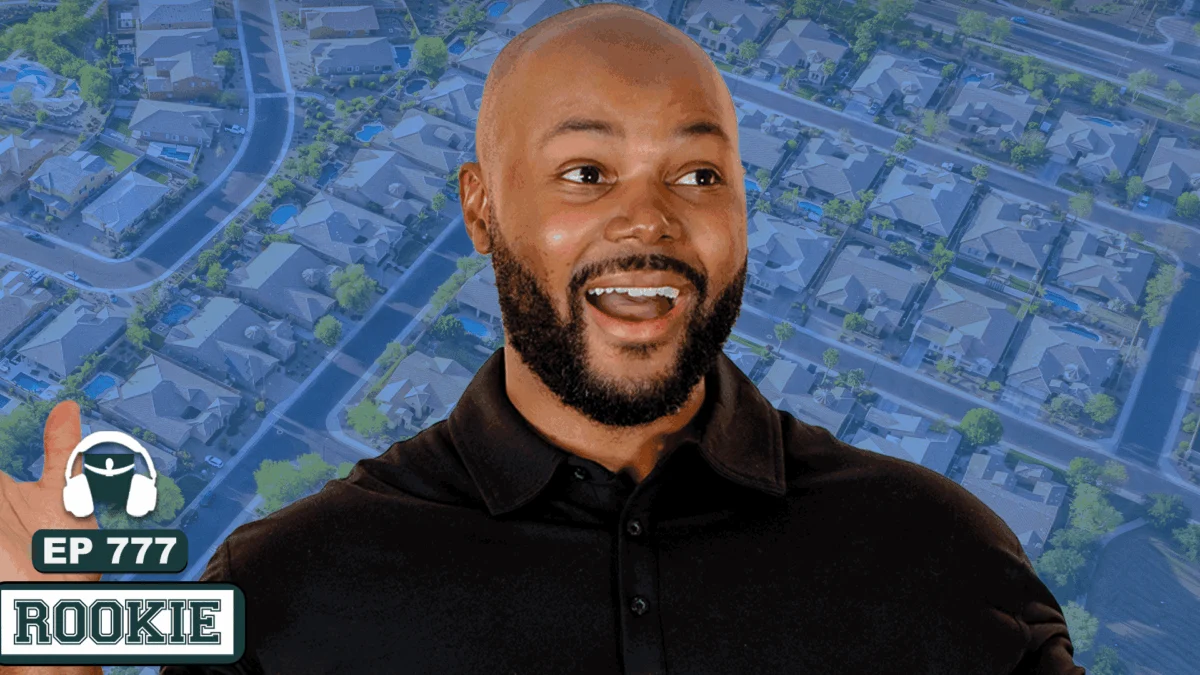
Tony J. Robinson, co-host of the Real Estate Rookie podcast, points out the psychological advantage of the strategy: "Telling someone, ‘Hey, you’re going to buy an eight-unit when you’ve never purchased anything,’ feels intimidating. But telling someone, ‘Hey, you’re just going to buy one single family home,’ allows them to learn the ropes, gain critical skills, and build the confidence needed for the next deal."
Ashley Kehr, co-host and experienced portfolio owner, offers a word of caution regarding scaling speed. Drawing from personal experiences where investors rapidly accumulate properties without adequate operational systems, Kehr notes: "Sometimes slow and steady actually makes you better off in the long run. Don’t feel rushed that you have to hit any kind of timeline. This is on your own timeline—when you have that down payment saved, when you have reserves, and when you are ready to move."
Experts also remind borrowers to be mindful of their Debt-to-Income (DTI) ratios. Because lenders only count a percentage of future rental income (often around 70%) to offset mortgage liabilities when qualifying for subsequent loans, rookie investors are strongly advised to maintain their W-2 or primary employment income streams until the stack method is fully established.
Implications for Future Real Estate Investors
The widespread adoption of the stack method signals a shifting paradigm in modern wealth building. As housing affordability remains a challenge across North America, traditional wealth-accumulation models are increasingly out of reach for everyday wage earners.
By democratizing real estate investing through low-down-payment house hacking and strategic equity leverage, the stack method proves that financial independence is not reserved exclusively for inherited wealth or high-income earners. Instead, it offers a pragmatic, repeatable roadmap for the next generation of real estate entrepreneurs—proving that the journey to a 10-unit portfolio truly does begin with a single, disciplined step.