








SAN FRANCISCO — In a move designed to cement its dominance over enterprise workflows and developer ecosystems, OpenAI officially rolled out GPT-6.1 Terra on Monday. Touted as a major upgrade to the mid-tier model in OpenAI’s lineup, Terra is specifically engineered for routine office tasks, boasting vastly improved “computer use” capabilities—the ability to visually interpret a computer screen, click through applications, and draft responses just as a human would.
According to OpenAI’s official release, GPT-6.1 Terra hits the market with a sweeping 50% reduction in standard API prices compared to its predecessor, GPT-5.6 Terra. The rollout is immediate, covering paying subscribers across Plus, Pro, Enterprise, and Edu tiers via ChatGPT Work and Codex, OpenAI’s dedicated coding environment. Meanwhile, free-tier users will continue to utilize the lower-tier GPT-5.6 Luna.
While heavy-duty research and advanced, complex software architecture remain the domain of OpenAI’s flagship models like GPT-6.1 Sol and GPT-6 Astra, Terra is engineered to be the ultimate daily workhorse for knowledge workers and software developers alike.
Main Facts: What is GPT-6.1 Terra?
GPT-6.1 Terra is positioned as OpenAI’s everyday agentic model. Its primary utility lies in automating repetitive, cross-application digital labor.
- Core Competency: Computer use. Terra can perceive elements on a user’s screen, manipulate interfaces by clicking and typing, and browse websites or draft content autonomously.
- Pricing Model: Standard API pricing for developers has been slashed by 50% relative to the previous iteration, GPT-5.6 Terra, significantly lowering the barrier to entry for companies building automated workflows.
- Availability: Instantly accessible for Plus, Pro, Enterprise, and Edu users through ChatGPT Work (OpenAI’s agentic mode capable of signing in and completing tasks across web applications) and Codex.
- Performance Milestones: Internal and benchmark testing point to drastic reductions in factual hallucinations and massive leaps in command-line execution speeds.
Chronology: The Evolution of the Terra Lineup
The path to GPT-6.1 Terra reflects a fast-moving release cycle shaped by both regulatory pressures and hyper-competitive pressures from rival labs like Anthropic.
1. Limited Government Preview (Late June)
OpenAI initially introduced the Terra architecture on June 26 as part of the GPT-5.6 family. This initial deployment was released in a limited preview format, a maneuver reportedly requested by the Donald Trump administration to test early administrative and security safeguards.
2. Public Rollout (Early July)
By July 9, OpenAI expanded access to the public, marketing Terra as a model capable of matching GPT-5.5 performance metrics at roughly half the operating cost.
3. The September Sol and Luna Drop
As the competitive landscape intensified, OpenAI made waves in September by launching GPT-6 Sol and Luna mere minutes after Anthropic unveiled its Claude Opus 5.5 model. Notably, that autumn release skipped any updates to the Terra branch, leaving developers waiting for an optimized mid-tier option.

4. The GPT-6.1 Terra Release (Monday)
Addressing developer demands for a more cost-effective, highly reliable everyday model, OpenAI released GPT-6.1 Terra, integrating it directly into ChatGPT Work and Codex while cutting API overhead in half.
Supporting Data: Benchmarks and Reliability
OpenAI has backed the release of GPT-6.1 Terra with a battery of internal evaluations and third-party benchmark scores. However, industry analysts note that these metrics currently rely primarily on OpenAI’s internal testing data.
1. Dramatic Drop in Factual Errors
To test robustness against adversarial prompts—inputs specifically designed to trick models into generating hallucinations or logic errors—OpenAI deployed an internal testing suite.
- At low reasoning effort (a user-adjustable setting controlling how long the model spends deliberating before outputting an answer), the factual error rate plummeted from 53.6% in GPT-5.6 Terra down to 16.7% in GPT-6.1 Terra.
- At maximum reasoning effort, error rates dropped by 18 points, resting at an impressive 4.3%.
2. Terminal-Bench 4.0 Success
In evaluating coding agents operating through a command-line terminal, Terra was tested on the Terminal-Bench 4.0 benchmark, which measures the exact percentage of multi-step engineering tasks completed successfully.
- Operating at maximum reasoning effort, GPT-6.1 Terra successfully completed 50.3% of the test tasks.
- In contrast, the older GPT-5.6 Terra managed a success rate of only 21.5%.
3. Speed Improvements
Beyond raw accuracy, OpenAI claims that Terra executes tasks more than three times faster on average than its sibling models, GPT-6 Astra and GPT-6.1 Sol, making it exceptionally well-suited for high-frequency, low-latency enterprise tasks.
Official Responses and Strategic Positioning
OpenAI’s announcement emphasized that the model strikes a crucial balance between cost, speed, and capability.
"It’s a significant step up over GPT-5.6 Terra, with 50% lower standard API prices," OpenAI stated in its official release documentation, highlighting the model’s immediate integration into productivity suites.
Industry observers have noted that by positioning Terra as the "everyday assistant" while leaving complex, compute-heavy deep reasoning to Sol and Astra, OpenAI is segmenting its product portfolio with surgical precision. This allows smaller businesses and independent developers to deploy reliable AI agents without incurring the prohibitive operational costs associated with frontier-class reasoning models.
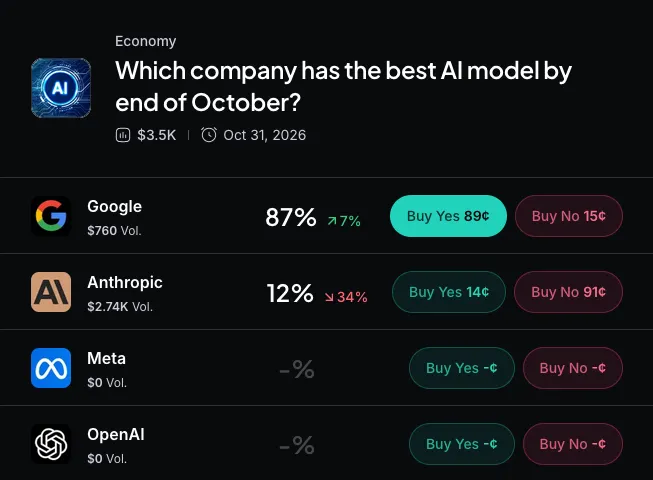
For specialized, highly complex research and advanced software architecture, OpenAI continues to direct developers toward GPT-6.1 Sol or GPT-6 Astra. However, for standard business process automation, Terra has instantly become the default recommendation.
Implications for the AI Ecosystem
The launch of GPT-6.1 Terra carries profound implications for the broader artificial intelligence landscape, particularly concerning enterprise software and developer economics.
1. The Race to the Bottom on API Pricing
With OpenAI cutting API costs by 50% for its mid-tier agentic model, competitors are under intense pressure to respond. As AI models become increasingly commoditized, providers can no longer rely solely on raw intelligence milestones. Margins are shifting toward efficiency, inference speed, and practical workflow integration.
2. Mainstreaming "Computer Use"
The maturation of computer use—allowing AI to interact natively with graphical user interfaces (GUIs)—paves the way for fully autonomous software agents. By embedding Terra into ChatGPT Work, OpenAI is moving past conversational chat interfaces toward an era where AI assistants execute complex multi-step digital workflows across disparate third-party applications without human hand-holding.
3. Impact on Software Development and Routine Office Work
With Codex integration and a dramatic reduction in command-line errors (verified via Terminal-Bench 4.0), developers can automate routine debugging, testing, and deployment scripts at a fraction of previous costs. Similarly, administrative workers can leverage ChatGPT Work to handle data entry, email triage, and web-based research seamlessly.
As the enterprise market transitions into late 2026, GPT-6.1 Terra represents a pivotal turning point: AI is no longer just a conversational oracle or an expensive research tool, but a cheap, fast, and reliable digital coworker.