









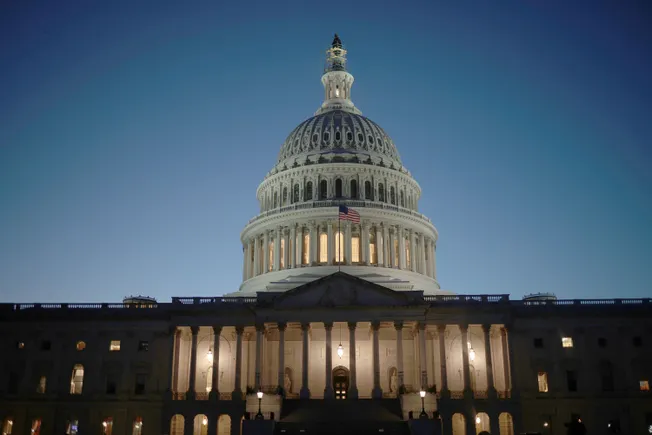
The financial landscape of the Washington, D.C. metropolitan area is undergoing a significant transformation. In a move that blends century-old tradition with modern growth-oriented banking, Old Dominion National Bank (ODNB) and National Capital Bancorp (NACB) have announced a definitive merger agreement. This strategic consolidation is set to create a formidable regional institution, ranking as the seventh-largest bank headquartered in the nation’s capital region.
By combining ODNB’s aggressive growth trajectory with National Capital’s deep-rooted historical presence, the merged entity aims to offer a sophisticated suite of services while maintaining the personalized touch of a community bank. With approximately $2.3 billion in combined assets and a footprint spanning four states and the District of Columbia, the merger signals a new era for local commercial and retail banking.
Main Facts: A Strategic Marriage of Assets and Reach
The merger is fundamentally a union of two institutions with distinct but complementary strengths. Old Dominion National Bank, headquartered in Tysons Corner, Virginia, brings approximately $1.6 billion in assets to the table. Known for its rapid expansion and "best-in-class" growth rates, ODNB has spent the last decade positioning itself as a premier commercial lender in the Mid-Atlantic.
On the other side of the ledger is National Capital Bancorp, the holding company for National Capital Bank of Washington. With approximately $735.3 million in assets, NACB provides the combined entity with a rock-solid deposit base and a prestigious reputation. National Capital is famously known as the oldest bank headquartered in the District of Columbia, having served the Capitol Hill community for over 130 years.
The Combined Footprint
Upon completion of the merger, the new institution will operate 10 branches. The geographic reach is notably diverse for a bank of its size:
- Washington, D.C.: A central presence in the nation’s capital, particularly the historic Capitol Hill area.
- Northern Virginia: Continued dominance in the high-growth corridors of Tysons, Arlington, and Alexandria.
- Central Pennsylvania: Serving the State College market through the Centre 1st Bank division.
- Florida: Maintaining a strategic wealth and lending office in Boca Raton.
This expanded network allows the bank to serve a wide array of clients, from D.C. policy influencers and non-profits to Pennsylvania’s academic and agricultural sectors, and Florida’s high-net-worth individuals.
Chronology: From 1889 to the 2024 Consolidation
To understand the weight of this merger, one must look at the diverging yet intersecting timelines of these two banks.
The Legacy of National Capital (1889–Present)
Founded in 1889, National Capital Bank (NCB) was established just as Washington, D.C. was evolving into a modern global city. For 135 years, it remained a fixture on Capitol Hill, surviving the Great Depression, two World Wars, and numerous financial crises. It earned a reputation for conservative management and deep community ties, becoming the "neighborhood bank" for generations of D.C. residents and businesses. Its stability provided a "sticky" deposit base—low-cost, long-term accounts that are highly prized in the banking industry.
The Rise of Old Dominion (2007–Present)
Old Dominion National Bank followed a very different path. Founded in 2007, right on the precipice of the Great Recession, the bank was reimagined in 2016 by a new leadership team led by Mark Merrill. Under this new vision, ODNB pivoted toward a high-touch commercial banking model. It successfully raised significant capital and expanded its reach into Pennsylvania and Florida. Its growth was fueled by a "banker-entrepreneur" mindset, attracting top-tier talent from larger regional and national banks who were looking for a more nimble, client-focused environment.
The Path to Convergence
The two institutions did not meet by chance. The leadership teams, specifically Mark Merrill and Randy Anderson Jr., have a professional history spanning over 12 years. This long-term relationship facilitated a "friendly" merger based on shared values rather than a hostile takeover. Discussions culminated in 2024 with the realization that NACB’s liquidity and ODNB’s lending engine were a perfect match for the current economic climate.
Supporting Data: The Financial Mechanics of the Deal
The financial structure of the merger is designed to provide flexibility for National Capital stockholders while ensuring the combined company remains well-capitalized for future growth.
Transaction Terms
National Capital Bancorp stockholders are offered three distinct paths for their shares:
- All-Stock Option: Shareholders can receive 5.2390 shares of ODNB common stock for each share of NACB. Based on current valuations, this places the deal value at approximately $85.08 per share.
- All-Cash Option: Shareholders can opt for $83.00 in cash per share.
- Mixed Consideration: A combination of 90% stock and 10% cash.
To protect the combined entity’s capital structure, the cash portion is capped. It cannot exceed 10% of the total consideration or a total of $1 million (equivalent to 12,048 shares) per individual shareholder. ODNB’s common stock for the purpose of the transaction is valued at $16.24 per share.
Projected Financial Impact
The merger is expected to be highly accretive for shareholders. According to the investor presentation accompanying the announcement:
- Earnings Per Share (EPS): The deal is projected to generate an EPS accretion of approximately 53% by 2027.
- Cost Savings: The banks anticipate "meaningful" efficiencies. Estimated pre-tax cost savings are pegged at $5.4 million in 2027, rising to $7.8 million in 2028.
- One-Time Costs: The organizations have budgeted approximately $8.1 million (pre-tax) for merger-related expenses, including system integrations and rebranding.
- Earnback Period: The tangible book value earnback period—a key metric for bank investors—is estimated at a healthy 3.4 years.
Public Listing Plans
In a significant move for its future liquidity, the combined company intends to list its common stock on either the Nasdaq or the New York Stock Exchange (NYSE). It plans to trade under the ticker symbol “NACB,” preserving the heritage of the National Capital brand in the public markets.
Official Responses: Leadership Perspectives
The leadership of both banks expressed a unified vision, emphasizing that the merger is about more than just numbers; it is about culture and scale.
Mark Merrill, CEO and Chair of ODNB, who will serve as CEO of the combined holding company and bank, highlighted the synergy of the two platforms. “This strategic combination creates a strong and promising future for our organization, our customers and our shareholders,” Merrill stated. “NACB brings one of the strongest deposit bases in the Washington, D.C. region, which complements ODNB’s best-in-class growth rate.” He also noted the personal trust between the leaders, citing their decade-long relationship as a foundation for a smooth integration.
Randy Anderson Jr., Chair and CEO of NACB, will transition to the role of non-executive chairman of the boards for both the combined holding company and the bank. Anderson focused on the benefits for the clients and staff. “With greater scale, expanded resources, higher loan limits, and broader geographic reach, we will be better positioned to serve customers,” Anderson said. He emphasized that the merger allows the bank to "deepen our presence in existing markets and expand more effectively into the markets we seek to serve."
Jack Infield, the current President of ODNB, will maintain a vital role as the President of the combined holding company, ensuring continuity in the bank’s expansion strategies, particularly in the Pennsylvania markets where he has significant expertise.
Implications: A New Competitive Landscape
The merger of ODNB and National Capital Bancorp has several far-reaching implications for the D.C. banking market and the broader community banking sector.
1. The Rise of the "Super-Community" Bank
As the seventh-largest bank in the D.C. metro area, the combined entity moves out of the "small bank" category and into the "mid-size" or "super-community" tier. This status is critical. It provides the bank with a higher lending limit, allowing it to compete for larger commercial real estate deals and corporate lines of credit that were previously out of reach for each bank individually.
2. Defensive Strategy in a High-Rate Environment
In the current economic climate, where interest rates remain elevated, banks with "sticky" retail deposits are at a significant advantage. By acquiring National Capital’s 135-year-old deposit base, ODNB secures a lower cost of funds. This allows the combined bank to maintain better net interest margins (NIM) even if the cost of wholesale funding remains high.
3. Governance and Cultural Integration
The board composition—10 directors from ODNB and seven from NACB—suggests a balanced approach to governance. However, the primary challenge of any merger is cultural. Integrating a 135-year-old "Capitol Hill" institution with a 17-year-old high-growth Virginia firm requires careful management. The fact that the CEOs have worked together previously is a strong indicator that the cultural "clash" often seen in mergers may be mitigated here.
4. Expansion and Brand Preservation
By choosing the "NACB" ticker for the public markets, the bank is signaling a deep respect for the National Capital heritage. The D.C. market is notoriously brand-conscious; preserving the "National Capital" name in some form likely helps retain the loyalty of the District’s long-standing business families and non-profits.
5. Potential for Further M&A
With a planned listing on a major exchange (Nasdaq/NYSE) and a significantly larger balance sheet, the combined bank will have a more "liquid currency" (publicly traded stock) to pursue further acquisitions. This merger may be the first step in a broader strategy to consolidate other smaller community banks in the Mid-Atlantic and Southeast regions.
In conclusion, the merger of Old Dominion National Bank and National Capital Bancorp represents a calculated and strategic response to the evolving demands of the banking industry. By bridging the gap between historical stability and modern growth, the new NACB is poised to become a central pillar of the Washington, D.C. financial community for years to come.