







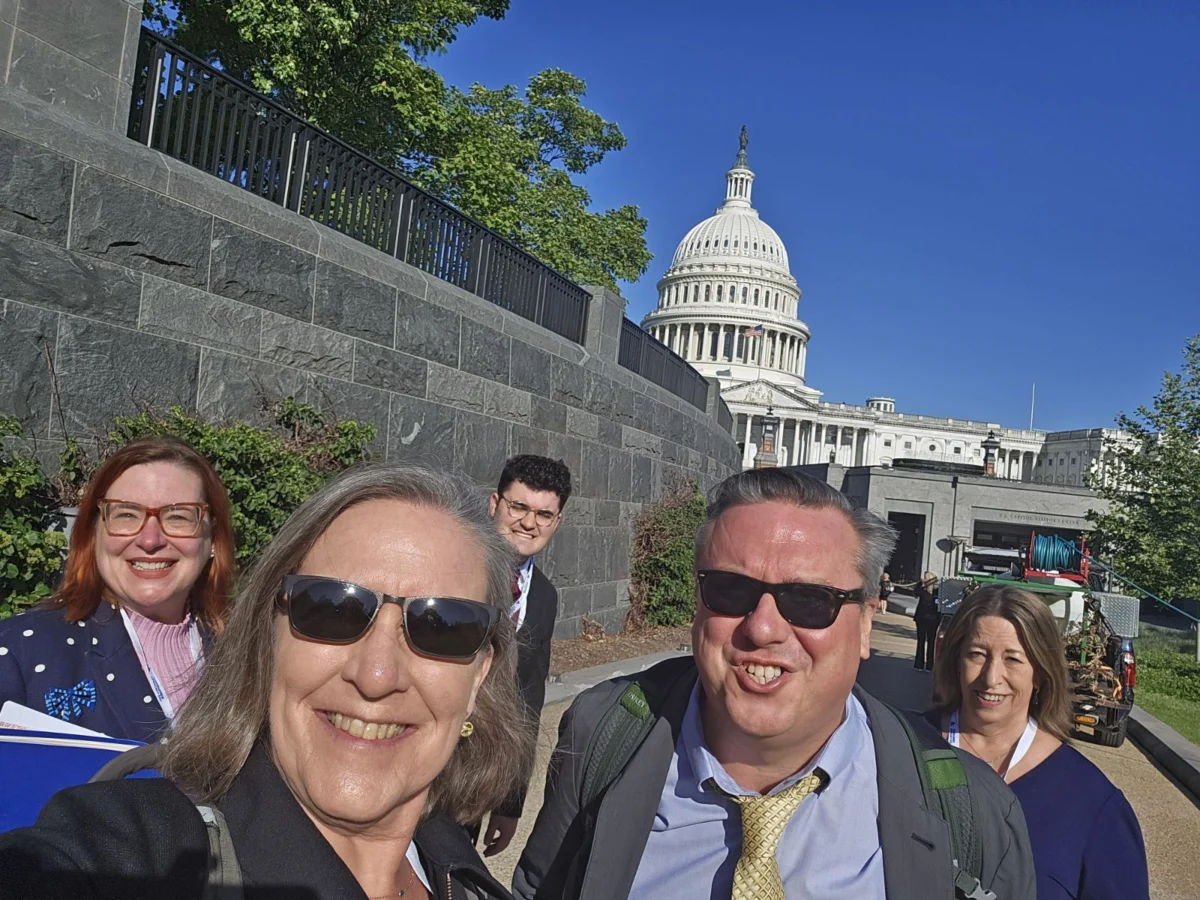
WASHINGTON, D.C. — In a massive, coordinated display of grassroots mobilization, over 100 consumer advocates representing organizations from 30 states and the District of Columbia converged on Capitol Hill on June 2, 2026. The event, dubbed “Consumer Advocacy Day,” serves as a direct challenge to current federal financial policy, with advocates demanding a swift reversal of recent trends that they argue have left working families, military personnel, and seniors increasingly vulnerable to predatory financial practices.
The delegation, a cross-section of rural, suburban, and urban activists, spent the day in a flurry of meetings with Members of Congress and their senior staff. Their mission is twofold: to secure the future of the Consumer Financial Protection Bureau (CFPB) and to push for legislative barriers against a rising tide of high-cost debt traps and exploitative payday lending apps.
The Core Issues: A Financial Landscape Under Siege
The urgency of this year’s Advocacy Day is fueled by what many experts characterize as an affordability crisis exacerbated by regulatory retrenchment. According to advocates, recent federal policies have systematically dismantled safeguards meant to curb bank overdraft fees, cap credit card late fees, and limit the presence of medical debt on consumer credit reports.
The Fight for the CFPB
At the heart of the debate is the Consumer Financial Protection Bureau, an agency that has become a lightning rod for ideological disagreement in Washington. Since its inception, the CFPB has returned over $21 billion to consumers through enforcement actions, settlements, and relief programs. However, the agency currently faces what advocates describe as a “death by a thousand cuts” through budget reductions and administrative rollbacks.
The Rise of Digital Predation
Beyond the institutional fight, the coalition is sounding the alarm on a new generation of financial exploitation: “earned wage access” (EWA) payday loan apps. These platforms, often marketed as convenient financial tools, are frequently categorized by consumer advocates as high-cost debt traps that operate outside the traditional regulatory framework. The advocates are calling on lawmakers to reject legislation that would grant these apps exemptions from key federal protections, arguing that the “convenience” comes at a predatory price for the most financially fragile Americans.
Chronology of the Advocacy Campaign
The events of June 2 represent the culmination of months of coalition-building among national organizations, including the National Consumer Law Center (NCLC), Consumer Action, Americans for Financial Reform, and the Consumer Federation of America.
- Pre-event (Early 2026): National advocacy groups identified the legislative window for the 119th Congress as a critical period to push for specific bills that would cap interest rates and empower state-level oversight.
- The Morning of June 2: Advocates held a briefing at a central D.C. venue to coordinate messaging and share “ground truth” stories—firsthand accounts of families struggling with debt cycles—before breaking into smaller teams for back-to-back meetings in the House and Senate office buildings.
- The Midday Legislative Push: The afternoon was dedicated to direct lobbying. The primary focus was placed on two pieces of legislation:
- The Empowering States’ Rights to Protect Consumers Act (S. 3721): A bill designed to ensure that state-level interest rate caps remain enforceable, preventing financial institutions from using federal loopholes to bypass local protections.
- The Predatory Lending Elimination Act (S. 3793): A measure aimed at implementing a hard cap on interest rates for consumer loans, which proponents argue is the only way to stop the “debt trap” cycle for millions of Americans.
- The Counter-Offensive: Concurrently, advocates lobbied against S. 3889/H.R. 7866, which they claim would weaken existing state-level interest rate caps and prioritize corporate lending interests over consumer safety.
Supporting Data: Why the Fight Matters
The case for stronger protections is backed by data that highlights the fragility of the American household economy. Despite economic headlines focusing on macroeconomic growth, the micro-level reality for millions of Americans remains dire.
The $21 Billion Impact
The CFPB’s $21 billion in relief represents not just a statistic, but a lifeline. This money has gone toward correcting errors in credit reports, refunding illegal charges, and stopping discriminatory lending practices. When advocates discuss the CFPB, they emphasize that it is often the only entity to which a consumer can turn when a massive financial institution refuses to resolve a dispute.
The Cost of “Convenience”
Research shared by the Consumer Federation of America indicates that while digital lending apps are growing in popularity, the lack of transparency regarding hidden fees and interest rates is creating a new class of long-term debtors. In many cases, these apps function as high-interest payday loans disguised as “advances” on future earnings. Without the regulatory oversight the CFPB typically provides, these companies operate in a grey zone that avoids traditional Truth in Lending Act (TILA) disclosures.
Official Responses and Expert Commentary
The voices representing the coalition highlight a deep-seated frustration with the current legislative trajectory in Washington.
Alys Cohen, Director of Federal Housing Advocacy at the National Consumer Law Center, did not mince words regarding the administration’s role. “This Administration has fueled the affordability crisis by gutting the CFPB and rolling back key anti-discrimination rules,” Cohen stated. “People need relief. We’re on Capitol Hill this week to urge Congress to restore funding to the nation’s top consumer watchdog.”
Ruth Susswein of Consumer Action emphasized the necessity of the CFPB’s complaint system, noting that for many, it is the last resort. “Consumers rely on the CFPB’s complaint process as often the only place they can turn to address financial disputes that companies refuse to resolve,” she said.
From a federalism perspective, Tom Feltner of Americans for Financial Reform argued that states must lead where the federal government fails. “States have served as the front-line defense against high interest rates,” Feltner remarked. “Lawmakers in Washington need to hear firsthand how strong state protections can translate into a national movement for safer, fairer lending.”
Christine Hines of the National Association of Consumer Advocates and Adam Rust of the Consumer Federation of America echoed these sentiments, stressing that the current economic climate makes the need for oversight more critical than ever. “Families are working harder than ever just to keep up,” Rust noted. “It is crucial that lawmakers hear how high-cost lending and scams are impacting real people.”
Implications: A Crossroads for Financial Regulation
The presence of over 100 advocates on Capitol Hill signals a broader, brewing conflict over the future of the American financial marketplace. The implications of this lobbying day are significant for several reasons:
- The Federal-State Tension: The battle over S. 3721 and S. 3889 highlights a growing divide between those who believe in a “one-size-fits-all” federal regulatory environment and those who believe states should be empowered to set their own, more stringent standards. If the current federal trend of preempting state laws continues, the ability of local legislatures to protect their citizens will be severely curtailed.
- The Future of the CFPB: The CFPB remains a political football. If funding is not restored, the agency’s ability to conduct investigations and perform market surveillance will wither, potentially leading to a “Wild West” era of financial products.
- The Digital Evolution: The fight over “earned wage access” apps is a precursor to a larger debate on how to regulate fintech. As financial services move increasingly online and into mobile applications, the traditional legislative tools designed for brick-and-mortar banks are proving inadequate.
As the sun sets on this year’s Consumer Advocacy Day, the message delivered to lawmakers is clear: the status quo of diminishing protections and rising costs is unsustainable. Whether Congress will respond to these pleas remains to be seen, but the coalition has made it evident that they are prepared to turn this day of lobbying into a sustained, long-term political effort.
For millions of Americans, the stakes could not be higher. In an era where the margin between stability and debt is razor-thin, the policy decisions made in the halls of Congress over the next few months will determine whether the financial system serves as a ladder for economic opportunity or a trap for the vulnerable.