









WASHINGTON — In a political landscape perpetually gridlocked over revenue, spending, and economic growth, the debate over how the United States collects taxes remains one of the most contentious issues in Washington. Yet beneath the partisan bickering over tax rates lies a bipartisan consensus on at least one front: the federal tax code has become an unnavigable labyrinth of special interest carveouts, parallel filing requirements, and conflicting incentives.
To address this compounding crisis, the Tax Foundation has released its flagship publication, Options for Reforming America’s Tax Code 3.0. The comprehensive volume models the economic, distributional, and revenue effects of 86 distinct modifications to the U.S. tax code. While some pathways explore increased complexity, a substantial portion of the guide focuses on a core principle of sound public policy: simplicity.
According to the Tax Foundation, an ideal tax code should be transparent and easy for everyday citizens to comply with, while remaining straightforward for government agencies—primarily the Internal Revenue Service (IRS)—to administer and enforce. The newly published guide offers a blueprint for how lawmakers can radically streamline the system, alleviating the administrative burden on American taxpayers and businesses alike.
Main Facts: The Anatomy of a Bloated Tax Code
At its core, the U.S. tax code is no longer just a mechanism for funding government services and goods; it has evolved into a sprawling socio-economic steering wheel. Congress routinely deploys tax credits, deductions, and penalties to influence everything from energy consumption to family planning. However, this accumulation of policy preferences has birthed overlapping frameworks that cost the American economy billions of dollars in compliance costs and countless hours of lost productivity.
The Tax Foundation’s Options 3.0 targets the most egregious contributors to this complexity. Among the 86 modeled changes, six primary areas stand out as foundational opportunities to streamline federal taxation:
- Eliminating the Individual Alternative Minimum Tax (AMT) (Option 38)
- Repealing the Corporate Alternative Minimum Tax (CAMT) (Option 74)
- Establishing Universal Savings Accounts (USAs) (Option 39)
- Reforming the Earned Income Tax Credit (EITC) and Child Tax Credit (CTC) (Option 21)
- Enacting Full Expensing for All Capital Investments (Option 53)
- Integrating Corporate and Individual Tax Systems via a Dividend Deduction (Option 60)
Together, these proposals challenge decades of legislative patching, offering a systemic rethink of how individuals, corporations, savers, parents, and investors interact with the federal government.
Chronology: How America’s Parallel and Overlapping Taxes Evolved
To understand why the tax code requires such drastic surgery, it is necessary to examine the historical trajectory of how these complex layers were constructed.
The Rise of the Alternative Minimum Taxes
The Alternative Minimum Taxes—both individual and corporate—were born out of populist outrage over high-income earners and massive corporations paying little to no income tax due to legal deductions and loopholes.
- 1969: Congress established the Individual AMT to serve as a parallel tax system, creating a tax floor that forced certain high earners to calculate their liabilities twice.
- 1986: Lawmakers introduced a Corporate AMT to achieve a similar parity for businesses.
- 2018: The Tax Cuts and Jobs Act (TCJA) significantly reined in the Individual AMT and outright repealed the Corporate AMT, signaling a brief era of legislative simplification.
- 2022: Reversing course, the Inflation Reduction Act reinstated a newly structured Corporate AMT under a complex set of modern rules, sparking renewed compliance headaches for U.S. corporations.
The Proliferation of Savings Accounts
Over the decades, Congress attempted to encourage personal savings by carving out specialized, tax-advantaged accounts. What began with standard 401(k) plans and Individual Retirement Accounts (IRAs) expanded into a fragmented ecosystem that now includes Health Savings Accounts (HSAs), Flexible Spending Accounts (FSAs), 529 college savings plans, and various proposals for first-time homebuyers and disaster recovery funds. Each account type arrived with its own distinct contribution limits, phase-out rules, and penalty structures, turning household financial planning into a high-stakes puzzle.
The Divergence of Business Structures
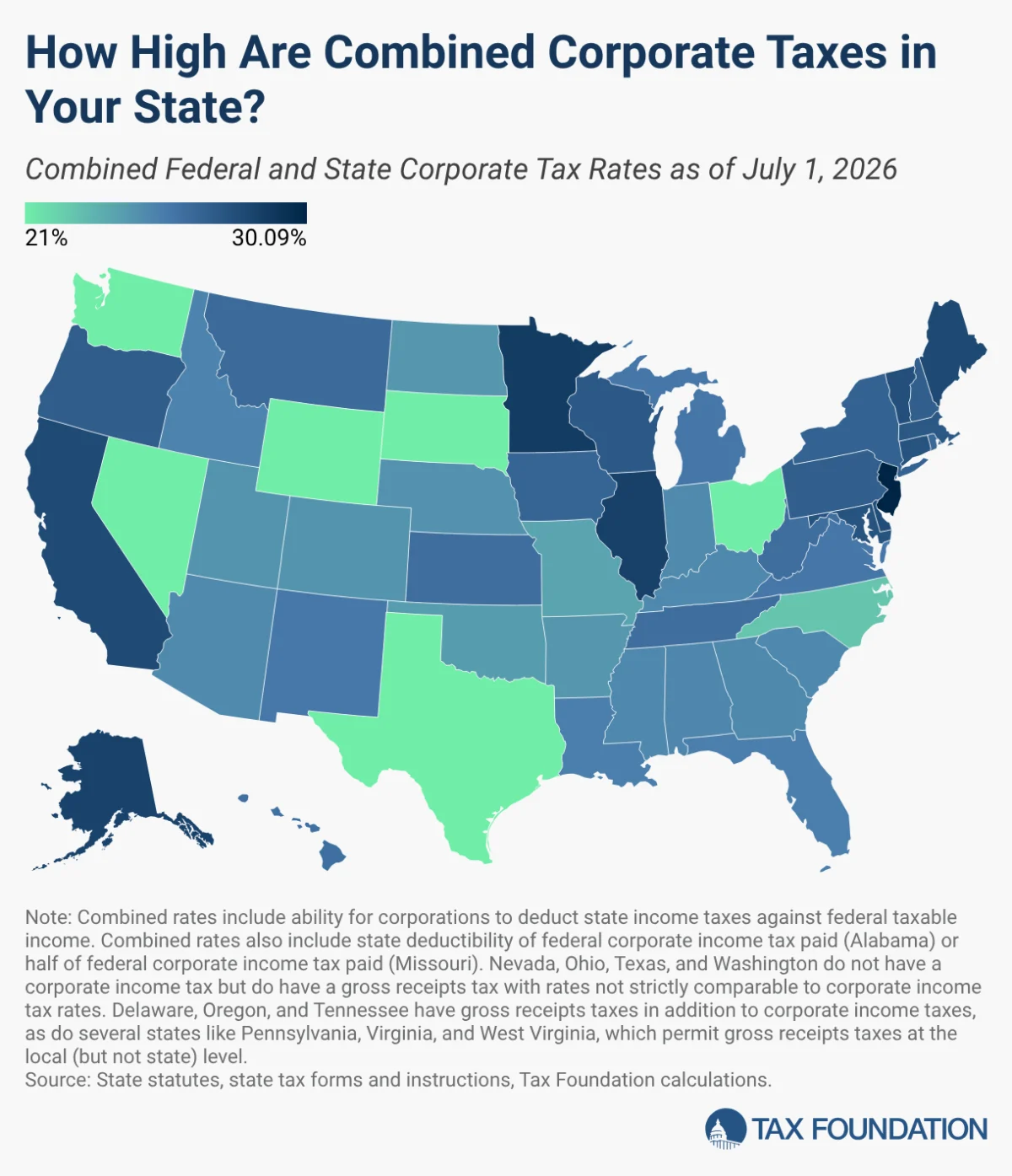
The structural division between traditional "C corporations" and "pass-through" entities (such as S corporations, partnerships, and LLCs) has defined American commerce for generations. While pass-through businesses distribute their profits directly to owners to be taxed on individual returns, C corporations face classic double taxation: first at the corporate level via the federal corporate income rate, and a second time when shareholders pay taxes on dividends or capital gains.
Supporting Data: The High Cost of Complexity
The empirical data compiled in Options for Reforming America’s Tax Code 3.0 highlights just how burdensome these overlapping rules have become for the economy.
The Toll of Alternative Minimum Taxes
While legislative adjustments—such as the TCJA and the One Big Beautiful Bill Act—have limited the reach of the Individual AMT (projecting that fewer than 600,000 taxpayers, or just 0.3 percent of all returns, will pay it in 2026), its impact on those affected remains punishing. As the National Taxpayer Advocate once famously observed, "the AMT nearly doubles the burden" of filing a federal income tax return.
Meanwhile, survey data from the Tax Executives Institute reveals that the reinstated Corporate AMT under the 2022 Inflation Reduction Act has generated staggering compliance burdens for U.S. businesses while delivering relatively meager new federal revenue.
Fragmentation in Savings and Credits
The current system of targeted savings vehicles violates core tax neutrality by favoring specific behaviors over others. The Joint Committee on Taxation (JCT) estimates billions in annual tax expenditures tied to these compartmentalized accounts, which collectively compound the paperwork and tracking required by both citizens and the IRS.
Similarly, the current intersection of the Child Tax Credit (CTC) and the Earned Income Tax Credit (EITC) creates a bureaucratic minefield. Under current law:
- A parent can claim a CTC of up to $2,200 per child in 2026, which phases out for single filers earning over $200,000 and joint filers earning over $400,000.
- The EITC rewards work but operates under entirely different phase-in and phase-out rules, with complicated qualifying child definitions. Notably, children are eligible under the EITC through age 18 (or 23 for full-time students), but age limits for the CTC cut off strictly at 16.
Official Responses and Policy Implications
As lawmakers digest the Tax Foundation’s extensive modeling, the policy implications of adopting these simplification options are drawing mixed reactions from economists, tax practitioners, and congressional insiders.
The Case for Streamlining Savings via USAs
Option 39 proposes the establishment of Roth-style Universal Savings Accounts (USAs). Under this framework, individuals could contribute a standardized amount ($10,200 post-tax in 2027, indexed to inflation) to a single account with unused contribution room rolling over year-to-year. Earnings would grow tax-free, and withdrawals would be permitted at any time for any reason without penalty.
To make this functional, Congress would need to consider phasing out legacy accounts like HSAs, FSAs, and 529 plans. Proponents argue this would eliminate administrative overhead, whereas cautious critics warn that transitioning millions of families away from legacy accounts requires careful legislative calibration.
Work vs. Child Support: Reforming EITC and CTC
Option 21 seeks to untangle the overlapping functions of the EITC and CTC. By restructuring the two credits so that one functions strictly as a work incentive and the other serves purely as family support, Congress could eliminate a massive source of taxpayer errors and IRS audit triggers. Harmonizing age thresholds and phase-out income brackets would drastically reduce the "bracket creep" and marginal tax penalties that currently discourage low-income workers from increasing their earnings.
Fueling Investment Through Full Expensing
Under current U.S. law, businesses must navigate complex depreciation schedules for buildings and capital structures, writing off investments over many years. Option 53 proposes full expensing for all capital assets.
- The Economic Impact: Allowing businesses to immediately deduct 100 percent of the cost of new equipment, technology, and buildings removes the tax code’s historical bias against long-term investments.
- The Long-Term Benefit: According to economic theory, full expensing raises worker productivity, boosts real wages, and expands job creation by lowering the after-tax cost of capital accumulation.
Bridging the Corporate Divide
To resolve the double taxation of C corporations, Option 60 proposes a dividend deduction at the corporate level. By allowing corporations to deduct dividends paid to shareholders, the tax code would effectively align C corporations and pass-through entities under a single layer of taxation. This move would remove tax-driven distortions that currently force entrepreneurs to choose their business legal structure based on tax minimization rather than operational efficiency.
The Big Picture: A Path Forward
The debate over tax reform in Washington often oscillates between pursuing targeted social objectives and maintaining macroeconomic efficiency. In recent years, while Congress has successfully enacted isolated simplifying provisions, the broader trajectory of the tax code has trended toward heightened complexity. Emerging proposals for new carveouts, targeted tax increases, and specialized savings vehicles threaten to add even more layers of bureaucracy.
The Tax Foundation’s Options for Reforming America’s Tax Code 3.0 serves as a timely reminder that policy trade-offs do not always have to result in administrative nightmares. By presenting clear, data-driven pathways to eliminate redundant AMTs, consolidate savings vehicles, separate work and child credits, enact universal investment expensing, and integrate corporate systems, the guide demonstrates that a simpler, pro-growth tax code remains entirely within reach—if lawmakers possess the political will to pursue it.
Disclaimer: The reform options and models presented within Options for Reforming America’s Tax Code 3.0 are designed to illustrate the economic, revenue, and distributional tradeoffs of various tax policies and do not constitute an official institutional endorsement or opposition by the Tax Foundation.