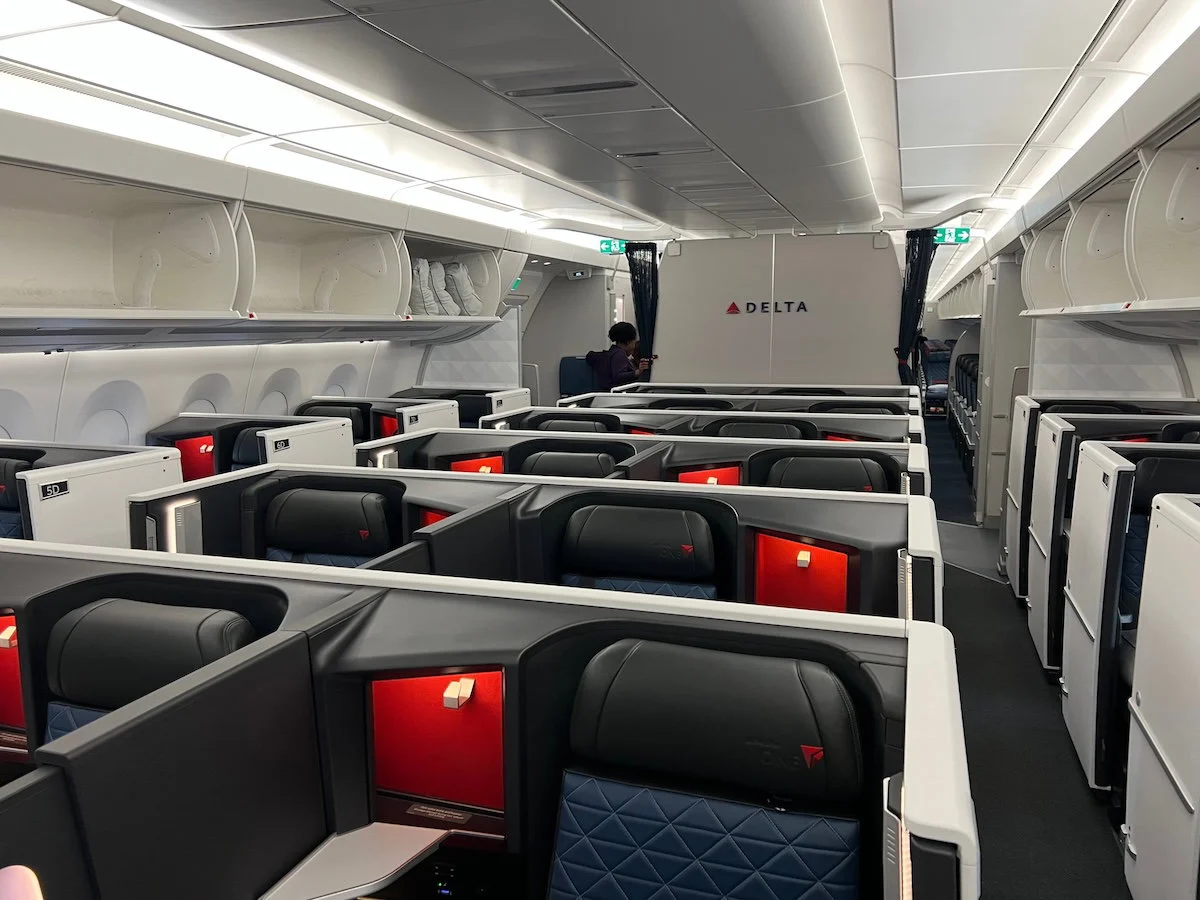







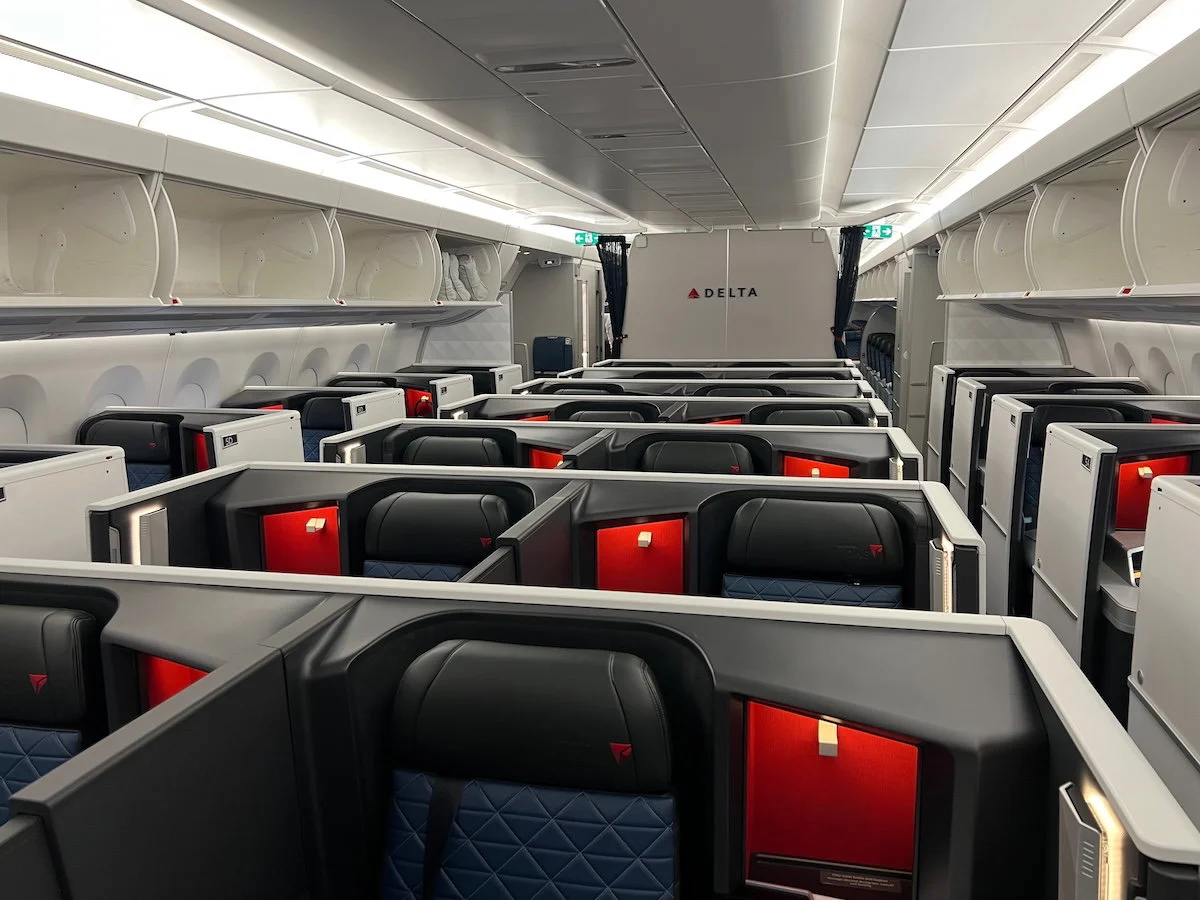
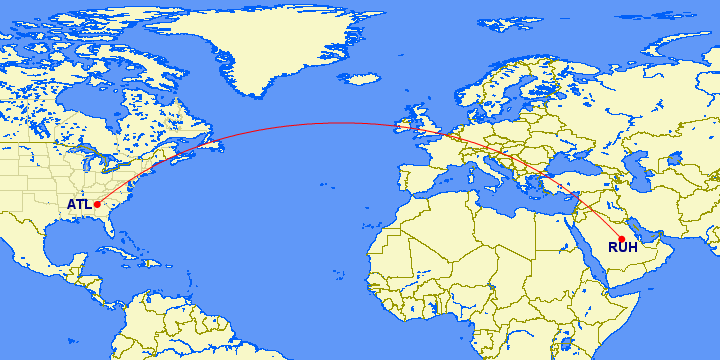
As the aviation industry watches with bated breath, Delta Air Lines faces a mounting predicament regarding its highly publicized, yet seemingly ghost-bound, expansion into the Middle East. With the clock ticking down to a late 2025 launch for the nonstop service between Hartsfield-Jackson Atlanta International Airport (ATL) and King Khalid International Airport (RUH) in Riyadh, Saudi Arabia, questions are shifting from "How will the route perform?" to "Will the flight even take off?"
Industry analysts and frequent flyers alike have begun to scrutinize the booking data for this upcoming service. With just three months remaining before the inaugural flight, the numbers are, to put it mildly, startling.
The Strategic Context: Why Riyadh?
The announcement of the ATL-RUH route was met with a mix of intrigue and skepticism when it was first revealed in late 2025. Delta CEO Ed Bastian has been notably vocal about his enthusiasm for the Saudi market, describing the Kingdom as one of his favorite recent travel destinations. Beyond the personal interest of the executive suite, the partnership with the nascent Riyadh Air—the Kingdom’s state-owned carrier—is a cornerstone of this expansion.
However, the elephant in the room remains the Saudi Arabian "Air Connectivity Program." This initiative is designed to aggressively incentivize international airlines to establish direct links to Riyadh. In an era where airlines are hyper-focused on yield management and margin protection, the allure of government subsidies is powerful. The core question for shareholders is whether these subsidies are intended to help a new route gain traction during its infancy, or if they are essentially paying for the operational costs of flying nearly empty aircraft.
A Chronology of the Route’s Development
The journey to this point has been marked by bold declarations and quiet uncertainty.
- Late 2025: Delta officially announces the new transatlantic service, framing it as a strategic move to tap into the booming Saudi market and align with the ambitious Vision 2030 goals.
- Early 2026: Delta and Riyadh Air sign an interline agreement, signaling a deeper integration and long-term commitment to the region.
- Mid-2026: The airline opens reservations for the inaugural flight, scheduled for late October.
- Present Day (Three Months Pre-Launch): As the 90-day countdown begins, public seat maps for the inaugural and subsequent flights remain largely stagnant, fueling speculation about the route’s viability.
The Data: Analyzing the "Ghost Flights"
To understand the severity of the situation, one must look at the standard metrics of airline health. Delta executives have previously gone on record stating that a healthy long-haul route typically sees booking load factors of 50% to 60% approximately 90 days out from departure.
While seat maps are not a perfect proxy for total passenger load—due to blocked seats, unassigned passengers, and potential group bookings—they serve as a reliable "thermometer" for demand. When analyzing the flights immediately following the inaugural service, the data is bleak. A recent review of the first eight non-inaugural flights revealed a total of just eight assigned seats.
That is an average of one passenger per flight.
Even if we account for a conservative margin of error—assuming that internal corporate travel, high-net-worth individuals who do not select seats in advance, or technical glitches are hiding the true numbers—the discrepancy between this data and the standard 50-60% load factor is statistically significant. It suggests a complete lack of organic demand for the route at this stage.
The Economic Implications: Subsidies vs. Reality
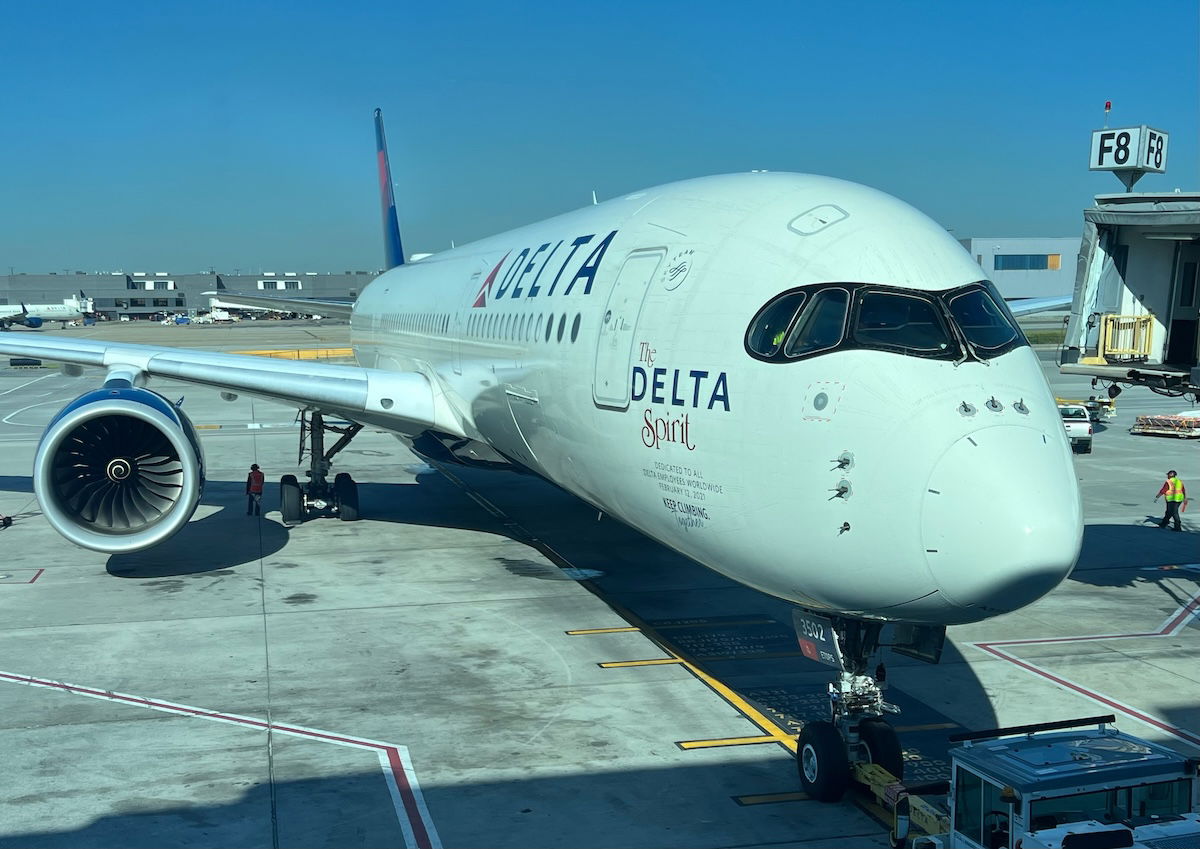
Operating a wide-body aircraft, such as the Airbus A350, on a long-haul route like Atlanta to Riyadh is an expensive endeavor. Between the high cost of jet fuel, flight crew salaries, maintenance, and airport fees, the "burn rate" for such a flight is substantial.
The aviation industry is no stranger to "developmental routes," where airlines lose money for the first few years to build brand loyalty and passenger awareness. However, there is a vast chasm between a flight that loses money and a flight that carries almost zero revenue-generating passengers.
The wildcard here is the Air Connectivity Program. If the Saudi government is providing substantial financial guarantees, Delta may be in a position where the flight is technically "profitable" on a spreadsheet, even if the plane is empty. But this presents a reputational risk: What does it signal to the market when a legacy carrier continues to operate ghost flights, regardless of government support?
Regional Geopolitics and Passenger Sentiment
The geopolitical landscape of the Middle East is another factor that cannot be ignored. The region has experienced significant volatility, which often dampens demand for travel. However, Riyadh is arguably in a different category than hubs closer to the Gulf or the Iranian border.
Some analysts argue that Riyadh could serve as a "safe" hub for passengers who are hesitant to connect through more volatile regions. Yet, the current booking data suggests that this potential advantage has not yet translated into consumer confidence or demand. It is possible that the American traveling public remains largely uneducated about the safety and accessibility of Riyadh, or perhaps the sheer length of the flight from Atlanta to Riyadh—a massive 14-plus hour trek—is a deterrent for the average leisure traveler.
Official Responses and Corporate Strategy
To date, Delta Air Lines has remained tight-lipped regarding the specific booking performance of the Riyadh route. Standard corporate protocol dictates that airlines do not comment on route-specific load factors for competitive reasons.
However, the silence is deafening. Usually, when a route is performing well, or even meeting initial projections, marketing pushes, promotional fare sales, and PR campaigns are visible. The current lack of visibility suggests that Delta’s commercial team may be in a state of crisis management, weighing the cost of reputation loss against the potential for contract penalties or lost subsidies if they were to postpone or cancel the launch.
The Potential Outcomes: Delay or Departure?
As the industry looks toward the October launch, three primary scenarios emerge:
- The "Full Speed Ahead" Approach: Delta proceeds with the launch, betting that once the flights are operational, the presence of the aircraft and the reality of the service will drive last-minute bookings. This is a high-risk strategy that could lead to significant financial hemorrhaging in the first quarter of operations.
- The "Strategic Delay": The airline announces a postponement, citing "operational adjustments" or "alignment with partner schedules." This would allow Delta to save face while quietly trying to bolster marketing efforts and reassess the commercial viability of the route.
- The "Slow Launch": Delta proceeds but immediately reduces frequency, cutting the route from daily service to a skeleton schedule of two or three flights per week. This is a common tactic to minimize losses while keeping the slot and the subsidy agreement active.
Conclusion: A High-Stakes Gamble
Delta Air Lines is currently engaged in one of the most curious aviation experiments of the decade. By attempting to force a connection between Atlanta and Riyadh, they are testing the limits of government-subsidized aviation in a post-pandemic world.
Whether this route becomes a triumph of strategic foresight or a cautionary tale of corporate hubris remains to be seen. However, one thing is certain: if the seats do not start filling up rapidly in the coming weeks, the industry will be watching to see if Delta has the courage to pivot, or if they will continue to fly into the silence of an empty sky.
The question remains for every stakeholder involved: Is this a bridge to a new market, or a bridge to nowhere? The next 90 days will provide the answer.