






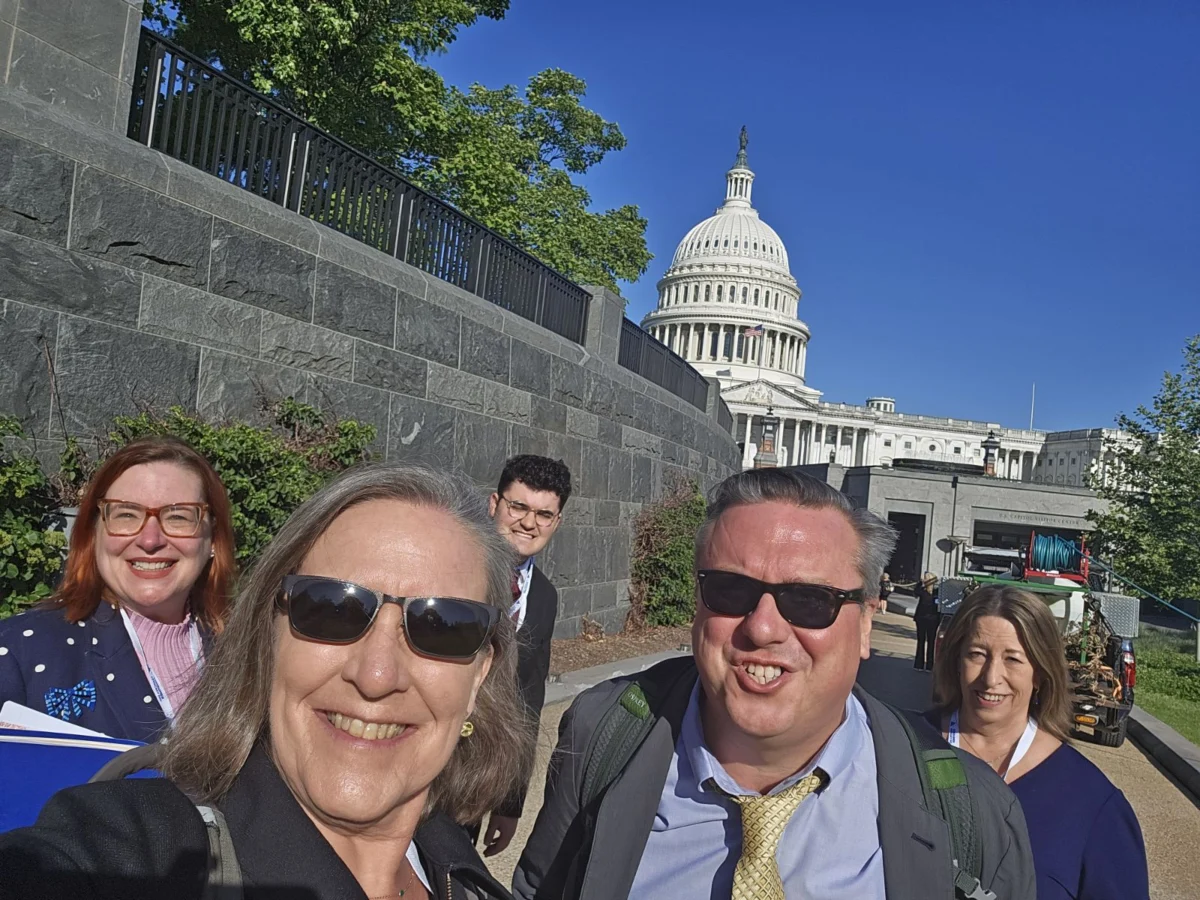
WASHINGTON – As the American financial landscape faces increasing volatility and a tightening cost-of-living crisis, a massive coalition of over 100 consumer advocates—hailing from 30 states and the District of Columbia—converged on the nation’s capital this week. The coordinated event, designated "Consumer Advocacy Day," serves as a high-stakes lobbying effort aimed at curbing predatory lending, fortifying the Consumer Financial Protection Bureau (CFPB), and halting legislative efforts that critics say would dismantle essential financial safeguards.
The delegation, representing a diverse array of organizations, arrived at the halls of Congress on Tuesday, June 2, 2026, armed with personal narratives and economic data intended to illustrate the human cost of current federal financial policy.
The Core Mandate: Restoring Accountability in the Marketplace
The primary objective of this year’s Consumer Advocacy Day is to push back against what participants describe as a systemic erosion of consumer rights. For years, the financial services sector has seen an explosion of high-cost debt products—most notably "earned wage access" apps and payday-style digital lending—which advocates argue function as modern-day debt traps.
Advocates are focusing their legislative agenda on several key fronts:
- Support for Federal Interest-Rate Caps: Supporters are pushing for the Predatory Lending Elimination Act (S. 3793), which would establish national interest rate caps to protect borrowers from triple-digit APRs.
- Empowering State-Level Protections: Through the Empowering States’ Rights to Protect Consumers Act (S. 3721), the coalition is fighting to ensure that states retain the legal authority to enact stricter consumer protection laws than those found at the federal level.
- The Defense of the CFPB: The Bureau, which has returned over $21 billion to consumers through enforcement actions since its inception, is currently viewed by the coalition as a vital—and endangered—infrastructure of economic justice.
A Chronology of the Advocacy Effort
The mobilization of this coalition did not occur in a vacuum; it is the culmination of months of deteriorating conditions for middle- and low-income households.
- Early 2026: Consumer groups noted a sharp uptick in reports of aggressive marketing by fintech lenders, particularly those offering "instant" wage access.
- Spring 2026: Legislative drafts such as S. 3889 and H.R. 7866 surfaced, seeking to limit the scope of state-level interest rate caps. Consumer advocacy groups labeled these bills as "anti-consumer," sparking the organization of the June 2nd event.
- June 1, 2026: The coalition finalized its briefing materials, preparing "story banks" that detail how military households, seniors, and rural families are being impacted by rising debt.
- June 2, 2026 (The Main Event): Advocates engaged in back-to-back meetings with Senators and Representatives, emphasizing that the "affordability crisis" is exacerbated, not solved, by predatory financial products.
Supporting Data and Economic Realities
The argument presented by the coalition is grounded in the belief that the current financial ecosystem is tilted heavily in favor of large financial institutions at the expense of individual stability.
Since its creation, the Consumer Financial Protection Bureau has served as the primary mechanism for holding banks and lenders accountable. Its complaint database acts as a critical barometer for consumer grievances. According to figures provided by the coalition, the Bureau’s intervention has been the deciding factor in thousands of cases where consumers were being unfairly charged or scammed.
However, the current legislative environment has seen significant efforts to reduce the Bureau’s funding and curtail its regulatory authority. Advocates argue that removing these oversight powers is akin to removing the referee from a game where one side has all the leverage.
The data presented by advocates points to the "hidden costs" of current policies:
- Bank Overdraft Fees: Regulatory rollbacks have allowed for the resurgence of high-cost overdraft charges that disproportionately affect households with low balances.
- Medical Debt: The persistence of medical debt on consumer credit reports continues to lock millions of Americans out of housing and employment opportunities, a practice the coalition is urging the government to strictly limit.
- The "Debt Trap" Cycle: Earned wage access apps, often marketed as a convenience, are frequently being scrutinized for high "voluntary" tips and processing fees that effectively function as high-interest loans.
Voices from the Frontlines: Official Responses
The coalition’s messaging is anchored by leadership from some of the nation’s most prominent consumer advocacy organizations. Their statements highlight a sense of urgency regarding the current administration’s approach to financial regulation.
Alys Cohen, Director of Federal Housing Advocacy at the National Consumer Law Center (NCLC), was stark in her assessment: "This Administration has fueled the affordability crisis by gutting the CFPB and rolling back key anti-discrimination rules and critical consumer protections that limited bank overdraft fees, credit card late fees, and medical debt on credit reports. People need relief. We’re on Capitol Hill this week to urge Congress to restore funding to the nation’s top consumer watchdog, cap interest rates on loans, and uphold the ability of states to protect residents from predatory, debt-trap lending."
Ruth Susswein, Director of Consumer Protection at Consumer Action, highlighted the indispensability of the CFPB’s complaint system. "Consumers have come from all over the country to urge lawmakers to fully fund the CFPB and to vote against dismantling the agency’s critical complaint system. Consumers rely on the CFPB’s complaint process as often the only place they can turn to address financial disputes that companies refuse to resolve."
Tom Feltner, Associate Director of Consumer Policy at Americans for Financial Reform, underscored the importance of federalism in financial regulation. "States have served as the front line defense against high interest rates and harmful lending practices that continue to make life more difficult and more expensive for tens of millions of people across the country. Lawmakers in Washington need to hear firsthand how strong state protections can translate into a national movement for safer, fairer lending."
Christine Hines, Senior Policy Director at the National Association of Consumer Advocates, added: "Current federal policies are weakening consumer protections and making everyday life more expensive for working people. We’re pleased to join consumer advocates in Washington, DC to support the CFPB’s mission, tackle predatory lending, and ensure that states can play their part to protect their residents."
Adam Rust, Director of Financial Services at the Consumer Federation of America, summarized the overarching struggle of the average American household: "Families across America are working harder than ever just to keep up with the rising cost of living. During this affordability crisis, it is crucial that consumer advocates come to Washington to ensure lawmakers hear firsthand how high-cost lending, payday loan apps, scams, and diminished consumer protections are impacting real people and their communities."
Implications: A Crossroads for American Economic Policy
The events of June 2, 2026, represent a pivotal moment in the ongoing debate over the role of government in private finance. For the lawmakers receiving these advocates, the choice is clear: either side with the industry lobbyists pushing for deregulation and "innovation" (which often masks predatory practices), or side with the coalition demanding structural integrity in the financial marketplace.
The implications of this advocacy day are far-reaching. Should the coalition succeed in blocking bills like S. 3889, it would represent a significant victory for state-level sovereignty and the preservation of interest-rate caps. Conversely, if funding for the CFPB remains in limbo, the long-term prospects for consumer protection in the United States may face their most significant contraction in over a decade.
As the advocates return to their respective states, the pressure on Capitol Hill will likely persist. The movement, which spans from rural agricultural hubs to major urban centers, has successfully signaled that the "affordability crisis" is not merely an abstract economic concept, but a tangible, daily struggle for millions of voters.
Whether this week’s lobbying effort will translate into legislative wins remains to be seen, but the coalition has made its mission clear: they are no longer asking for minor concessions—they are demanding a fundamental re-centering of the American economy around the interests of the consumer.