








By PYMNTS | July 6, 2026
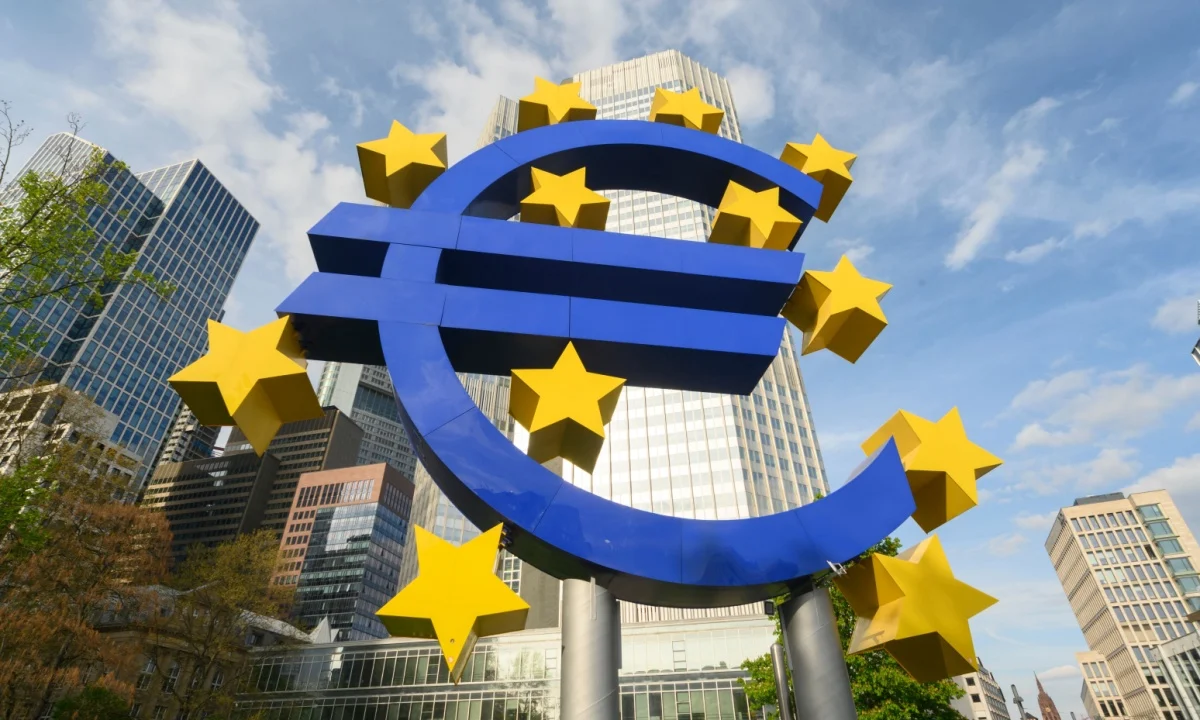
The backbone of Europe’s financial architecture, the European Central Bank’s (ECB) T2 payment system, has found itself under intense scrutiny this week following two separate technical outages within the span of a single seven-day period. These disruptions, occurring on June 29 and again on July 6, have reignited concerns regarding the operational resilience of the eurozone’s primary settlement mechanism at a time when the central bank is aggressively pivoting toward the launch of a digital euro by 2029.
While the ECB has moved quickly to reassure markets that these incidents are resolved, the back-to-back failures highlight the mounting complexity of maintaining legacy infrastructure while simultaneously architecting the future of European monetary movement.
The Chronology of Disruption
The most recent incident occurred in the early hours of Monday, July 6, 2026. According to an official notice published by the ECB, the T2 system experienced a significant outage that halted settlement operations for payments denominated in euros and Danish crowns. The disruption, though brief, underscored the fragility of the systems that process billions of euros in daily financial market transactions.
This event was preceded by a similar, though less publicized, technical issue on June 29. Together, these two incidents mark a challenging start to the month for the ECB’s technical teams. In both instances, the downtime lasted less than an hour, yet the impact of even a sixty-minute delay in a high-value payment system can ripple through interbank lending markets, liquidity management desks, and retail settlement layers.
The persistence of these issues stands in stark contrast to the ECB’s "Target" services, which are designed to provide the highest levels of availability. For the financial institutions that rely on T2 for real-time gross settlement (RTGS), these outages serve as a reminder of the inherent risks embedded in centralized, large-scale financial platforms.
Official Responses and Technical Root Causes
In response to inquiries from Reuters and other financial outlets, an ECB spokesperson confirmed that both the June 29 and July 6 outages were directly attributable to a recent software update. The spokesperson stated that the update had "introduced an issue" that has since been identified, isolated, and addressed.
The ECB maintains that its systems are currently operating within normal parameters. However, the explanation—that a standard software deployment triggered two separate failures—raises questions about the testing protocols and deployment strategies currently utilized by the central bank.
Historically, the T2 system has not been immune to more severe malfunctions. In a notable incident last year, a hardware failure resulted in a total shutdown of the T2 platform for seven hours. That particular outage had tangible, real-world consequences: it delayed salary disbursements and welfare payments for thousands of European citizens and paralyzed a wide array of financial market transactions. By comparison, the most recent events were contained, but they highlight a pattern of technical sensitivity that stakeholders in the European financial ecosystem are increasingly watching with concern.
The Broader Context: The Digital Euro and Monetary Rearchitecting
The timing of these outages is particularly significant given the European Central Bank’s formal plans to launch a digital euro by 2029. The move is not merely a technological upgrade but a fundamental rearchitecting of how money moves within the Eurozone.
In an exclusive interview with PYMNTS, Lamine Brahimi, Co-Founder and Managing Partner of Taurus, emphasized that the current financial infrastructure is undergoing a period of profound transformation. "The current way that money movement is being done is being totally rearchitected," Brahimi noted.
The rationale behind the digital euro goes beyond mere convenience; it is a strategic maneuver for European economic sovereignty. Currently, a significant portion of credit card payments and retail digital transactions in the Eurozone are routed through American-dominated schemes. The digital euro is envisioned as a counterweight—a homegrown alternative that reduces dependency on non-European infrastructure.
A Sorting Process: The Evolution of Digital Money
As the debate surrounding the digital euro intensifies, it is becoming clear that the future of finance will not be defined by a single, monolithic digital asset. Instead, experts describe a "sorting process" where different forms of money find their specific use cases.
The market is currently bifurcating into three distinct layers:
- Central Bank Digital Currencies (CBDCs): The digital euro, representing a direct claim on the central bank.
- Tokenized Deposits: Commercial bank money represented on distributed ledgers.
- Stablecoins: Privately issued tokens backed by traditional assets.
Brahimi argues that these are "very different animals." One of the most important distinctions is the underlying technology. While the digital euro is often conflated with blockchain, it is not necessarily blockchain-based. The true innovation lies in the nature of the counterparty.
"You or me, as a holder of digital euro, we will have technically the counterparty risk of the central bank, which is by definition zero," Brahimi explained. This structural shift from holding a claim on a commercial bank (which carries credit risk) to holding a claim on the central bank represents a fundamental change in the safety profile of retail money.
Implications for Market Infrastructure
The recent T2 outages provide a cautionary backdrop for the digital euro project. If the ECB struggles to maintain 100% uptime on its existing settlement systems, critics argue, the challenge of building a robust, secure, and always-on infrastructure for a retail-facing digital euro will be exponentially greater.
Operational Resilience vs. Innovation
The transition to a digital euro requires the integration of legacy systems with new, high-speed, programmable financial rails. The technical hurdles faced by T2 suggest that the central bank must prioritize "operational excellence" at the same level as "financial innovation." If the digital euro is to succeed, it must be demonstrably more resilient than the infrastructure it aims to augment or replace.
Sovereign Money and the Competitive Landscape
The push for a digital euro also serves as a defensive measure in a world where tokenized deposits and stablecoins are gaining traction. By offering a risk-free, sovereign digital alternative, the ECB aims to maintain the integrity of the euro as a unit of account in the digital age. However, the coexistence of sovereign money, commercial bank money, and on-chain money will create a complex ecosystem that requires sophisticated regulatory oversight.
Conclusion: Looking Toward 2029
The incidents of early July serve as a stark reminder that even the most well-capitalized and secure financial systems are susceptible to the complexities of modern software and hardware integration. As the ECB moves toward its 2029 goal, the focus will undoubtedly shift from the conceptual design of the digital euro to the engineering requirements necessary to support a national—and eventually international—digital payment standard.
For the ECB, the path forward requires a delicate balance. It must continue the "sorting process" of digital assets while ensuring that the underlying plumbing of the European economy remains rock-solid. As Lamine Brahimi noted, the world is in the midst of a massive architectural shift in money movement. Whether the European Central Bank can lead this shift while maintaining the stability of its current systems remains the defining question of the next few years.
The residents and businesses of the Eurozone will be watching closely. In a digital economy, downtime is not just an inconvenience—it is a disruption to the very lifeblood of commerce. As the bank works to stabilize its T2 system, the lessons learned from these outages will be critical in building the foundation for the digital currency that will eventually define the next generation of European finance.