





The global financial landscape is witnessing a seismic shift as the lines between technology platforms and traditional deposit-taking institutions continue to blur. In a move that signals a definitive end to its era as a mere "checkout button," the Swedish buy now, pay later (BNPL) titan Klarna has officially submitted applications to United States regulators to operate as a fully-fledged bank. This strategic pivot represents not just an expansion of services, but a fundamental challenge to the American banking establishment.
Main Facts: The Application for Financial Autonomy
On Monday, Klarna announced that it has formally applied with the Federal Deposit Insurance Corp. (FDIC) and Utah’s Department of Financial Institutions for an Industrial Loan Company (ILC) charter. This specific type of charter would allow Klarna to operate an industrial bank, granting it the authority to accept insured deposits and provide a wide array of credit products without being subject to the same level of oversight from the Federal Reserve that traditional bank holding companies face.
The move is designed to bring Klarna’s U.S. operations in-house. For years, the company has operated in the American market through a "rent-a-charter" model, partnering with established financial institutions—most notably WebBank—to facilitate its lending products. By securing its own license, Klarna aims to eliminate these intermediaries, thereby increasing its profit margins, gaining direct control over its regulatory destiny, and expanding its product suite to include more sophisticated financial tools.
If the application is approved, the new entity will operate as a subsidiary of Klarna and will be led by Gary Harding. Harding is a veteran of the banking industry, having previously served as CEO of Milestone Bank and Prime Alliance Bank, bringing a layer of traditional institutional experience to the disruptive fintech firm.
Chronology: From Stockholm Startup to Global Contender
To understand the magnitude of Klarna’s U.S. banking application, one must look at the company’s nearly two-decade trajectory from a niche Scandinavian experiment to a global household name.
The Formative Years (2005–2010)
Klarna was founded in 2005 in Stockholm, Sweden, under the name "Kreditor." Its original mission was simple yet revolutionary: to make online shopping safer and easier by allowing consumers to receive goods before paying for them. In 2010, the company rebranded as Klarna and began its aggressive expansion across Europe, capitalizing on the burgeoning e-commerce market.
The Banking Pivot (2017)
A critical turning point occurred in 2017 when Klarna secured a full banking license from the Swedish Financial Supervisory Authority (Finansinspektionen). This allowed the company to operate as a bank across the European Union, offering savings accounts and even branded physical cards. This experience served as a "proof of concept" for the company’s global banking ambitions.
The American Invasion (2019–2023)
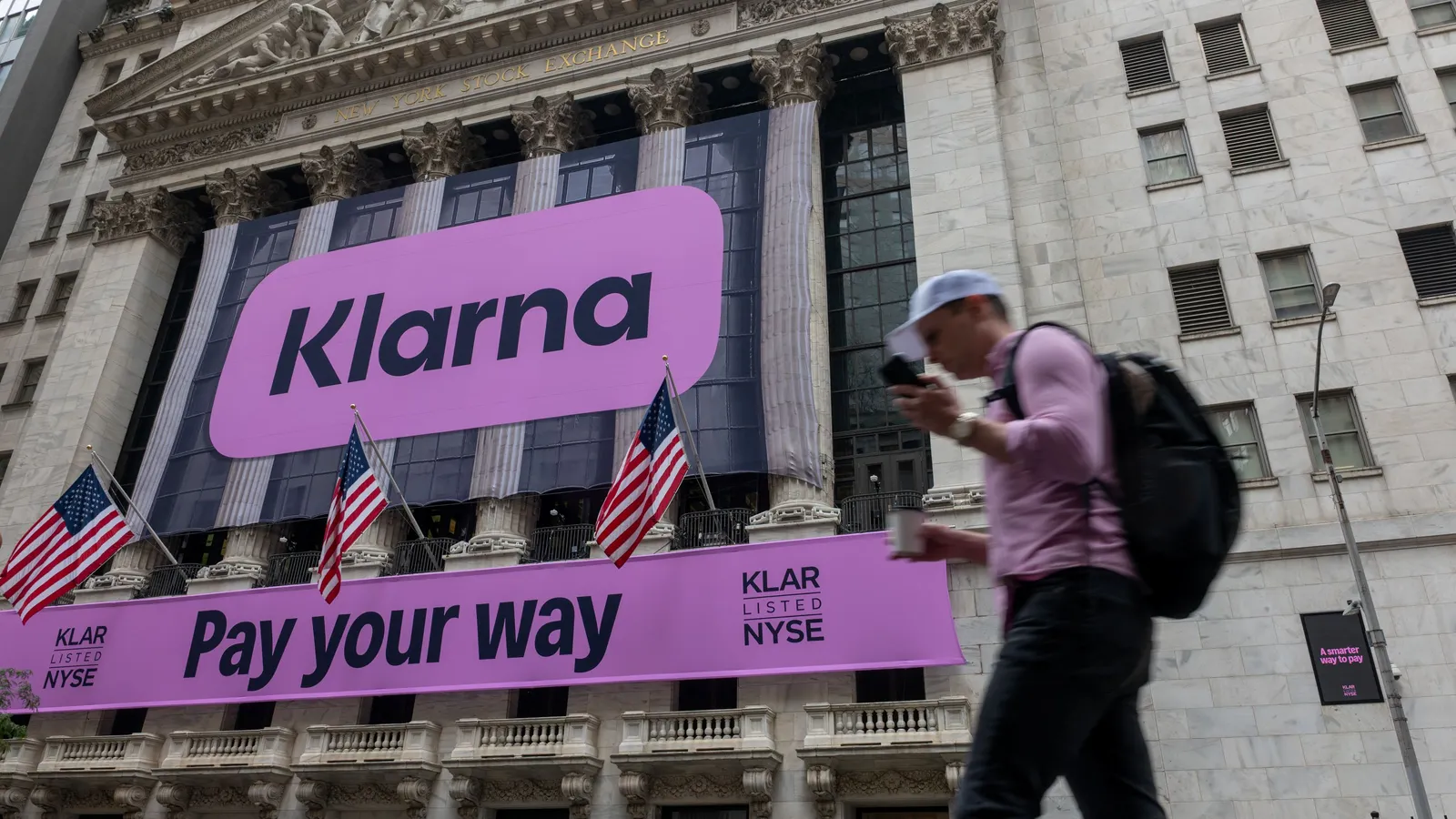
Klarna turned its sights toward the U.S. market in earnest around 2019. Despite facing stiff competition from homegrown rivals like Affirm and PayPal, Klarna’s aggressive marketing and seamless integration with major retailers allowed it to scale rapidly. In 2023, the company reached a significant milestone by registering for its initial public stock offering (IPO) in London, though it notably pivoted its focus toward New York for its public listing, reflecting the U.S. market’s growing importance to its bottom line.
The Present Day (2024)
By early 2024, the U.S. had officially become Klarna’s largest market by revenue. This shift in geographic dominance made the reliance on partner banks like WebBank increasingly inefficient. The Monday filing for an ILC charter marks the final stage of Klarna’s transition from a foreign disruptor to a domestic financial powerhouse.
Supporting Data: The Scale of the Klarna Ecosystem
Klarna’s application is backed by a massive footprint that provides it with significant leverage. The company’s growth metrics suggest that it is no longer a "fintech startup" but a systemic player in the retail economy.
- Lending Volume: Since 2019, Klarna has extended an estimated $91.3 billion in credit to millions of consumers in the United States alone.
- Global Reach: Worldwide, the company boasts approximately 119 million active consumers and partners with roughly 1 million merchants.
- Merchant Partnerships: Its roster includes global giants such as Sephora, H&M, Adidas, and Nike, spanning 26 countries.
- Market Performance: Despite its operational success, Klarna has not been immune to the "fintech winter." After going public last year, the company’s shares have lost approximately 50% of their value, following a broader trend of cooling investor sentiment toward high-growth, high-burn tech firms.
- Investor Base: A company spokesperson confirmed that the majority of Klarna’s investors are now based in the U.S., further justifying the need for a domestic banking charter.
Official Responses: Vision vs. Regulation
The announcement has triggered a wave of responses from both company leadership and the regulatory community, highlighting the tension between innovation and systemic stability.
The Corporate Vision
Sebastian Siemiatkowski, Klarna’s co-founder and CEO, framed the banking application as a win for the consumer. "Our own banking license is the natural next step, giving customers tools to borrow responsibly and build financial confidence," Siemiatkowski stated. He emphasized that the move would bring "greater competition, innovation, and choice to consumers and merchants alike," suggesting that the traditional American banking model is ripe for disruption.
The Regulatory Pushback
However, the path to an ILC charter is fraught with political and regulatory hurdles. The ILC model has become a "lightning rod" in Washington. Critics, including both Republican and Democratic lawmakers, argue that ILCs exploit a "shadow banking loophole."
In January, Senators John Kennedy (R-LA) and Andy Kim (D-NJ) reintroduced legislation aimed at closing this loophole. They argue that because ILCs are not technically defined as "banks" under the Bank Holding Company Act, they can bypass the stringent consolidated supervision of the Federal Reserve. This sentiment is echoed by the Independent Community Bankers of America (ICBA), which warned that granting these charters creates a "dangerous gap in safety and soundness oversight."
The Pro-Innovation Stance
Conversely, some regulators appointed during the Trump administration have signaled a renewed openness to the ILC model. FDIC Chair Travis Hill has publicly touted the ILC charter as a vital tool for boosting the establishment of "de novo" (new) banks and fostering competition. This openness has already resulted in approvals for non-traditional players; car makers Stellantis, Ford, and GM, along with the investment firm Edward Jones, have all received green lights for ILC charters within the last year.
Implications: A New Era of "Super-App" Banking
The implications of Klarna’s successful charter application would be far-reaching, affecting consumers, traditional banks, and the broader fintech industry.
1. The Death of the "Rent-a-Charter" Model
If Klarna succeeds, it will likely inspire a mass exodus of large fintechs from the partner-banking model. Rivals like Affirm and PayPal have already begun their own quests for charters. This shift would deprive smaller "partner banks" like WebBank or Cross River of significant revenue streams, potentially forcing a consolidation among firms that specialize in "Banking-as-a-Service" (BaaS).
2. The Rise of the Financial "Super-App"
With a banking license, Klarna can evolve into a "Super-App" similar to Alipay or WeChat Pay. It will no longer be limited to BNPL. Consumers could soon see Klarna-branded checking accounts, high-yield savings products, and even insurance or personal loans—all integrated into the same app used for shopping. This deepens the "stickiness" of the platform, making it harder for consumers to switch back to traditional banks.
3. Increased Pressure on Traditional Retail Banks
Traditional banks have long relied on credit card interest and late fees as a primary revenue driver. Klarna’s model—which often focuses on interest-free installments funded by merchant fees—poses a direct threat to the high-interest revolving credit model. If Klarna gains the ability to hold deposits, it can lower its own cost of capital, allowing it to offer even more competitive rates that could lure younger, tech-savvy "Gen Z" and Millennial customers away from legacy institutions.
4. Regulatory Precedent
The FDIC’s decision on Klarna will serve as a bellwether for the future of fintech regulation in the U.S. An approval would signal that the U.S. is ready to embrace the "European model" of integrated fintech-banking. A denial, however, would reinforce the barrier between commerce and banking, potentially stifling the growth of the BNPL sector in the American market.
As Klarna awaits a decision from the FDIC and Utah regulators, the financial world is watching closely. The outcome will determine whether the "Buy Now, Pay Later" juggernaut becomes a permanent pillar of the American financial establishment or remains a specialized tool on the periphery of the banking system. Regardless of the result, Klarna’s application has officially fired a warning shot across the bow of Wall Street.