







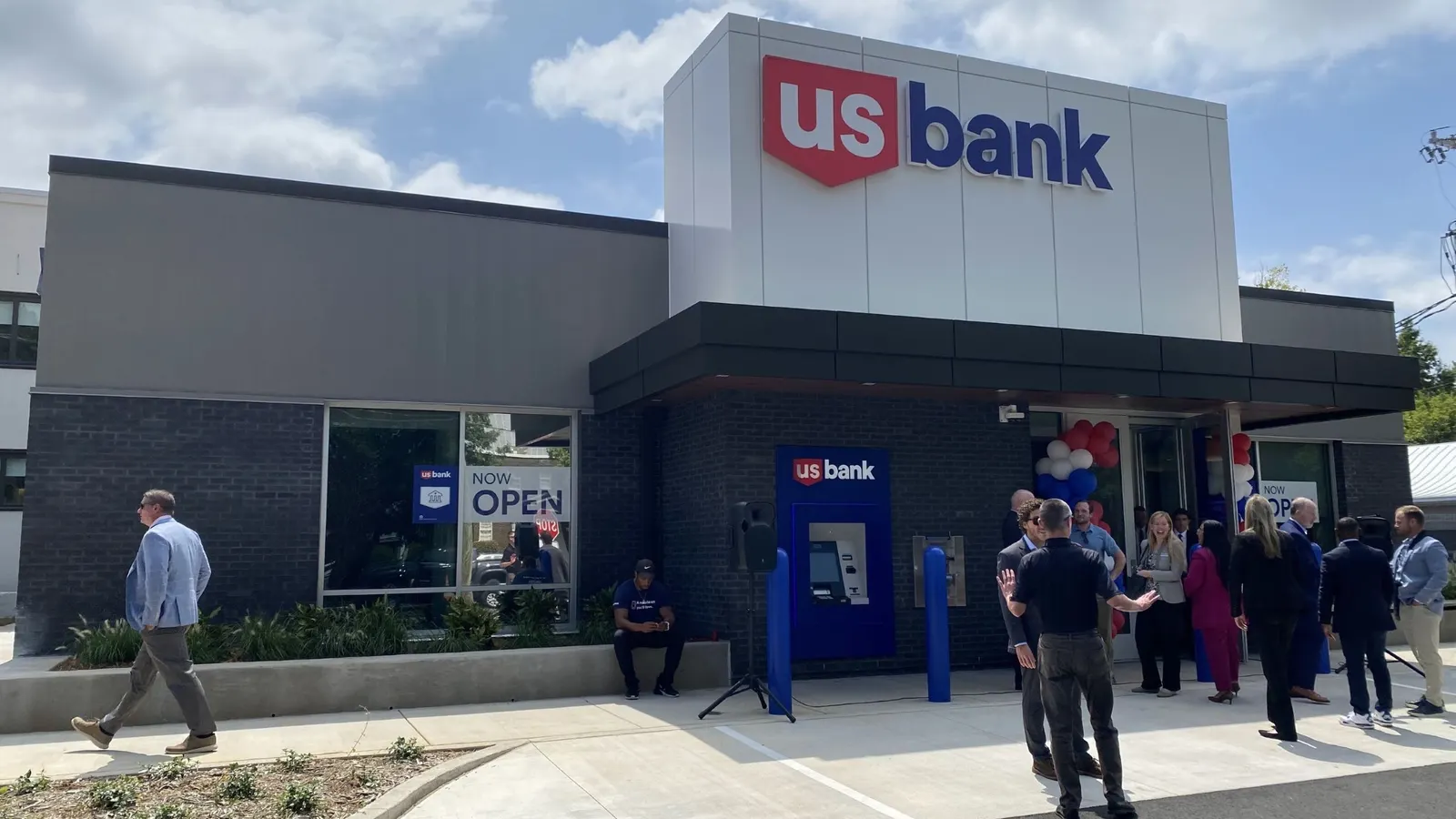
In an era defined by aggressive competition for liquidity and a fundamental shift in how younger consumers interact with their finances, U.S. Bank is deploying a calculated strategy to secure its future. As the "deposit wars" among American financial institutions intensify, the Minneapolis-based lender—the nation’s fifth-largest bank by assets—is increasingly leaning into a specific product suite designed to capture the attention, and the capital, of Generation Z.
The strategy marks a departure from traditional banking wisdom, which historically viewed the checking account as the "anchor" of a customer relationship. Instead, U.S. Bank is betting that for the next generation of earners, the entry point into the banking ecosystem is no longer the vault, but the "payment vector."
Main Facts: The "Payment-First" Philosophy
U.S. Bank’s current retail strategy is centered on the "Bank Smartly" suite, a modular ecosystem of financial products that includes checking, savings, and credit offerings. According to Arijit Roy, U.S. Bank’s head of consumer and business banking products, the bank has identified a distinct psychological shift in how Gen Z perceives financial services.
To a 22-year-old entering the workforce, a bank is not necessarily a building or even a place to store a paycheck; it is the platform through which they execute transactions. This "primary payment vector" might be a peer-to-peer (P2P) platform like Venmo or Cash App, or a rewards-heavy credit card. By recognizing that payments lead the relationship, U.S. Bank has streamlined its Bank Smartly credit card application process and tied it to a tiered rewards structure that incentivizes deeper cross-product integration.
The bank’s goal is to create a "halo effect." When a customer uses a credit card and pays off the balance regularly, they are more likely to maintain higher balances in their associated checking accounts. Crucially for the bank’s bottom line, these checking accounts often do not pay interest, providing the institution with a low-cost funding base at a time when many competitors are forced to offer high-yield certificates of deposit (CDs) to retain customers.
Chronology: The Evolution of "Smartly"
The rollout of the Bank Smartly ecosystem has been a multi-year endeavor, reflecting a methodical approach to product integration.
- 2022: The Foundation. U.S. Bank launched the Bank Smartly checking account. The product was designed to replace a fragmented array of legacy accounts with a single, flexible option that offered rewards for higher balances and linked activities.
- Early 2024: The Expansion. Recognizing the need for a comprehensive suite, the bank introduced the Smartly savings product and the Bank Smartly credit card. This expansion allowed the bank to offer a "spend-and-save" combination that mirrors the integrated experiences found in popular fintech apps.
- Mid-2024: Market Validation. By the summer of 2024, the bank began reporting significant traction. During an investor conference in June, CFO John Stern revealed that the savings offering alone had amassed nearly $50 billion in deposits in a remarkably short timeframe.
- Q1 2026 Reporting: Recent financial disclosures indicate that the strategy is yielding steady, if not explosive, growth. Average consumer deposits rose 2.7% year-over-year in the first quarter, reaching $270 billion, even as the broader industry struggled with deposit flight to money market funds.
Supporting Data: Deposits, Demographics, and the "Halo" Effect
The success of the Smartly suite is grounded in its ability to generate "low-cost funding." In the current high-interest-rate environment, banks are facing a "beta" problem—the degree to which they must raise deposit rates to keep up with the Federal Reserve’s benchmarks.
U.S. Bank’s data suggests that the Smartly ecosystem provides a partial hedge against these rising costs. Because the rewards structure is tied to the relationship rather than just the interest rate, customers are willing to leave funds in non-interest-bearing checking accounts to unlock better credit card rewards or fee waivers.
Key metrics highlighting this trend include:
- $50 Billion Influx: The Smartly savings product’s ability to attract $50 billion represents a significant vote of confidence from the market in the bank’s digital-first approach.
- 2.7% YoY Growth: While a 2.7% increase in consumer deposits may seem modest, it occurred during a period where many regional banks saw flat or declining deposit bases.
- The Transactor Advantage: Roy noted that users who pay off their credit card balances—referred to in the industry as "transactors" rather than "revolvers"—are parking more liquidity in their Smartly checking accounts. This creates a stable, liquid pool of capital for the bank to utilize for lending.
To further its reach into the Gen Z demographic, U.S. Bank has established formal partnerships with dozens of colleges and universities. These partnerships serve as a direct pipeline, introducing students to the bank’s digital tools before they have established loyalty to a competitor or a fintech.
Official Responses: Strategy Over "Flags"
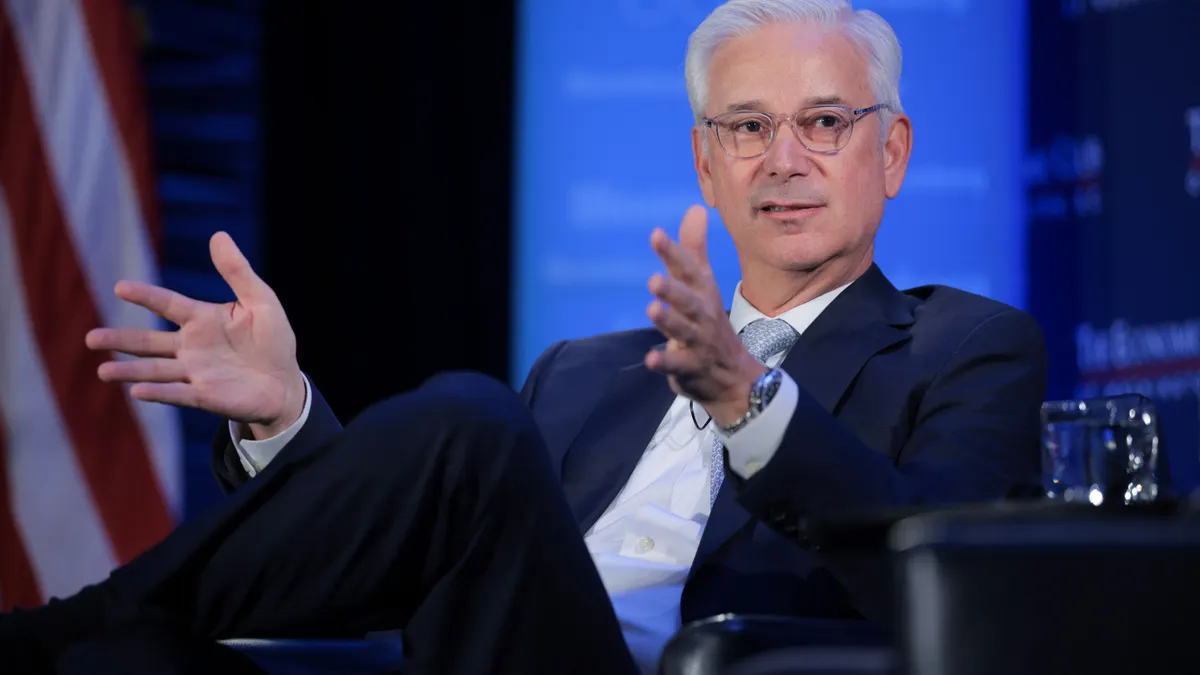
Despite the clear focus on younger consumers, U.S. Bank’s leadership is careful not to pigeonhole the brand as a "Gen Z bank." Arijit Roy emphasized that the bank is "deliberately not planting a flag" on a single segment. Instead, the focus is on being "multi-decade in nature."
"We’re a lot more focused on being multi-decade in nature," Roy said, explaining that the bank wants to attract customers at the start of their financial journey and retain them as they move into homeownership, wealth management, and retirement.
CEO Gunjan Kedia has echoed this sentiment, stating at a recent Morgan Stanley investor conference that the bank is intent on "improving the quality" of its deposit base. For Kedia, "quality" means deeper, multi-product relationships that are less sensitive to interest rate fluctuations.
However, the bank remains tight-lipped about specific growth targets. While Roy confirmed a reduction in the "cost of acquisition" for younger customers—a holy grail for retail banking—the institution declined to provide specific figures or the exact percentage of its retail base that identifies as Gen Z.
The internal culture at U.S. Bank is also evolving. Roy admitted that there is "a lot of debate" internally regarding whether the bank’s products are sufficient to compete with the likes of Chime, Klarna, and Cash App. "It’s something that we pay a lot of attention to," he said, noting that fintechs have taught legacy banks to be "relentless about making it as seamless as possible for clients to engage."
Implications: The Battle Between Trust and Frictionless UX
The success of U.S. Bank’s Smartly suite has broader implications for the future of the American financial landscape. It highlights a three-way tug-of-war between legacy institutions, fintech disruptors, and shifting consumer psychology.
1. The Death of the "Siloed" Product
U.S. Bank’s move suggests that the era of selling a "checking account" or a "credit card" in isolation is over. To compete for Gen Z, banks must offer a holistic ecosystem where every product communicates with the others. The "halo effect" Roy described is essentially a "walled garden" strategy, similar to those used by tech giants like Apple or Amazon, where the value of the ecosystem increases with the number of services used.
2. The Trust Advantage vs. The Innovation Gap
Roy’s critique of the fintech credo—"move fast and break things"—points to a core pillar of the bank’s defensive strategy: trust. While fintechs offer superior user interfaces and instant gratification, they often lack the "longevity" and perceived security of a $700 billion-asset institution. U.S. Bank is betting that as Gen Z matures and their financial lives become more complex (e.g., mortgages, small business loans), they will gravitate toward the stability of a traditional bank, provided that bank offers a "seamless" digital experience.
3. Data-Driven Personalization
One of the most significant implications of U.S. Bank’s strategy is its use of "goal-based" data. By allowing users to set goals within the app—such as saving for a wedding or a first home—the bank gains invaluable "intel" on customer intent. This allows the bank to prioritize its capital expenditures on features that customers actually want, such as cash-flow prediction tools, rather than generic upgrades.
4. Weathering the Deposit Wars
By cultivating a highly engaged client base that "unlocks" rewards through deposits, U.S. Bank is insulating itself from the "deposit wars." If a bank can convince a customer to stay because of a 2% cash-back reward and a seamless app experience, they don’t have to offer a 5% APY on a savings account to keep that customer from moving their money. This "non-rate-sensitive" liquidity is the ultimate prize for any CFO in the current economic climate.
Conclusion
U.S. Bank’s pivot toward the "payment vector" represents a sophisticated understanding of the modern consumer. By blurring the lines between spending, saving, and borrowing, and by focusing on the "transactor" who values rewards over revolving credit, the bank is positioning itself to capture the most profitable segment of the next generation.
While fintechs continue to lead in terms of pure UX innovation, U.S. Bank’s "Bank Smartly" suite proves that legacy players can adapt. The question remains whether the "trust and longevity" of a 160-year-old institution can ultimately outweigh the "frictionless" allure of the digital disruptors. For now, with $50 billion in new deposits and a growing "halo" of engaged users, U.S. Bank appears to be winning its flank of the war.