








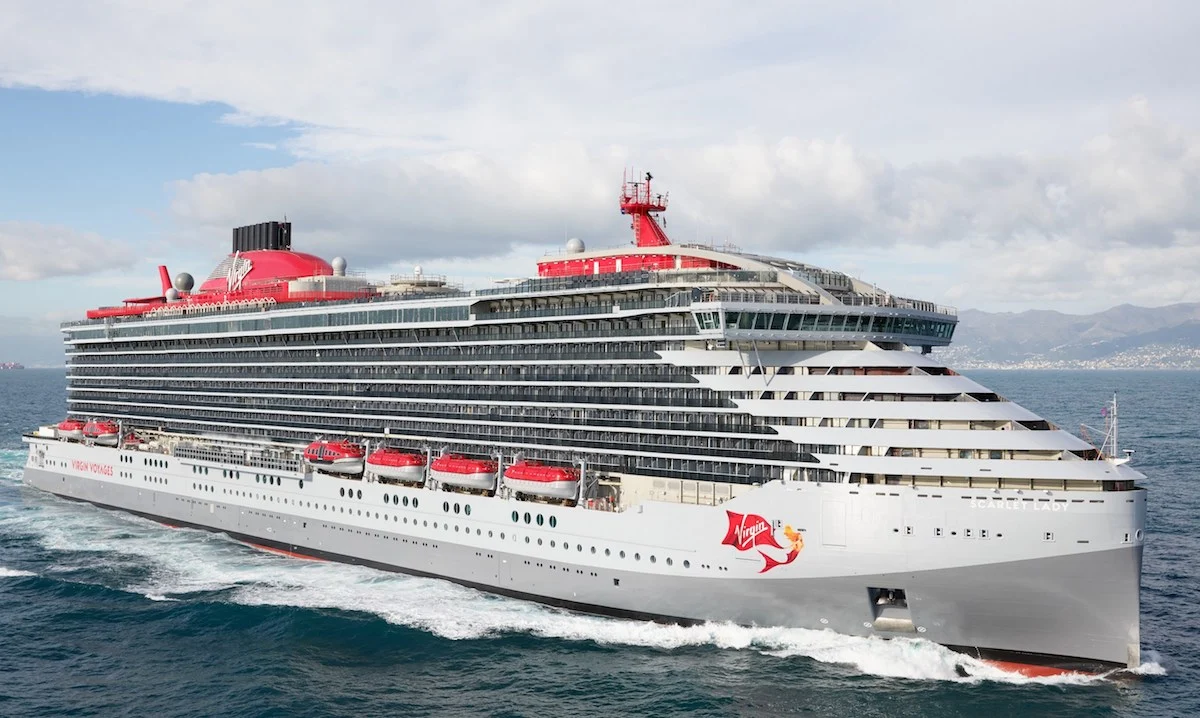
In a sequence of events that highlights the growing tension between international tourism operators and the legislative landscapes of conservative nations, a high-profile cruise organized by Atlantis Events has faced a second consecutive rejection. The Virgin Voyages vessel, Scarlet Lady, which was initially barred from docking in Turkey due to government-cited "moral standards," found itself facing a similar fate in Egypt.
The incident, which occurred on the morning of July 9, 2026, serves as a stark reminder of the complexities involved in planning global travel for LGBTQ+ focused groups when itineraries intersect with nations that maintain strict, religiously influenced social codes.
The Chronology of a Failed Arrival
The saga began when the Scarlet Lady, chartered by Atlantis Events—a company renowned for organizing cruise vacations specifically for the gay community—found its Turkish port calls canceled. In an effort to maintain the integrity of the itinerary and provide guests with a high-value experience, organizers scrambled to secure an alternative stop in Alexandria, Egypt.
According to reporting from The Washington Post, the organizers had initially received official permission to dock in Alexandria. However, the diplomatic and administrative reality shifted rapidly. On the morning of July 9, at approximately 3:30 AM—just hours before the vessel was scheduled to arrive at 7:00 AM—Egyptian authorities abruptly rescinded that permission.
Ship tracking data captured the vessel’s movements as it approached the Egyptian coastline, only to execute a sharp turn away from the port. The sudden reversal left the cruise operators and the 1,200 passengers onboard in a state of flux, forced to navigate the logistical nightmare of finding a new port of call on short notice.
Economic and Logistical Fallout
The implications of this last-minute denial extend far beyond the inconvenience of the passengers. Atlantis Events had reportedly pre-sold approximately 1,200 shore excursions through local Egyptian operators. By blocking the ship, the government effectively severed a significant infusion of capital into the local tourism economy.
Rich Campbell, the CEO of Atlantis Events, expressed profound frustration with the process. Describing the revocation as “really unheard of” and “strange and sad,” Campbell underscored the lack of transparency in the decision-making process. For the local businesses in Alexandria, the abrupt cancellation of the ship’s arrival represents a missed opportunity for revenue, raising questions about the balance between national social policies and the economic benefits of international tourism.
The Intersection of Moral Legislation and Tourism
To understand the trajectory of this incident, one must examine the environment in which these decisions are made. When the Turkish government blocked the cruise, they explicitly cited "family values," stating that the ship was being chartered by groups "known for behaviors incompatible with the fabric of our society and our moral values."
While Egypt has not yet released a formal, detailed statement regarding the specific reasoning behind the revocation of the Scarlet Lady’s docking rights, observers suggest the parallels to the Turkish decision are unmistakable. Both nations are characterized by their conservative social structures, where Islamic law and traditionalist interpretations of morality play a central role in shaping state policy.
For cruise lines and event organizers, the challenge lies in the marketing of these events. Atlantis Events cruises are known for being celebratory, high-energy, and explicitly inclusive of the LGBTQ+ community. When these events are brought into the territorial waters of nations that maintain legal or cultural frameworks hostile to such gatherings, the risk of official state interference rises exponentially. The "unexpected" nature of the denial, as expressed by organizers, belies the reality that in non-secular, conservative states, such events are often viewed not merely as tourism, but as a direct challenge to the state’s moral foundation.
Official Responses and Diplomatic Silence
As of the time of writing, the Egyptian Ministry of Tourism and Antiquities has remained largely silent regarding the specific decision-making process that led to the midnight reversal of the Scarlet Lady’s status. This silence is often a hallmark of high-stakes diplomatic and administrative disputes, where governments prefer to avoid formalizing a stance that could invite further international scrutiny or accusations of discrimination.
For its part, Virgin Voyages has focused on internal crisis management. Communication sent to passengers on board the ship reflected a mixture of disappointment and pragmatic resolve: "We’re incredibly disappointed to share that Scarlet Lady has just been denied entry into Egyptian waters and will no longer be able to call in Alexandria. We’re working hard to secure an alternative port."
Broader Implications for the Cruise Industry
The incident raises significant questions regarding the future of specialized travel. The cruise industry relies on predictability and the seamless execution of complex itineraries. When port authorities can exercise total discretion based on the demographic or the nature of a chartered group, the viability of certain regions for specific types of tourism comes into question.
1. The Risk of Itinerary Instability
Operators will likely need to rethink how they vet potential ports. If a cruise line is marketing a trip to a region with documented human rights concerns or rigid religious laws, the financial and reputational risk of a mid-voyage rejection may become too high. This could lead to a consolidation of itineraries in more progressive or secular territories.
2. The Responsibility of Informed Travel
There is an ongoing debate about the role of the traveler. Should companies be organizing trips to nations where the primary demographic of the cruise is effectively criminalized or socially ostracized? While some argue that tourism can serve as a bridge to cultural understanding, others argue that when a nation’s laws are antithetical to the identity of the guests, the partnership is doomed to fail.
3. The Future of "Out-There" Tourism
Atlantis Events, and similar organizations, operate on a business model that celebrates openness and expression. This "out there" philosophy, while beloved by its community, is fundamentally at odds with the current political climate in several Mediterranean and North African nations. The industry may need to pivot toward ports of call that are not only logistically viable but also politically and culturally receptive.
A Lesson in Geopolitical Reality
The Scarlet Lady incident is more than a logistical failure; it is a manifestation of the widening gap between globalized, inclusive tourism and the reassertion of local, conservative moral frameworks. While the cruise organizers may have hoped that the economic benefits of tourism would supersede social objections, the reality of the situation in Egypt—and previously in Turkey—proves that for many states, the preservation of traditional moral, religious, and societal fabrics takes precedence over the fluctuating benefits of cruise-ship revenue.
As the industry moves forward, this "gay cruise saga" will likely serve as a case study in risk management. It underscores a harsh truth for event organizers: in the current geopolitical climate, a signed contract or initial docking approval is not a guarantee of entry. Without a significant shift in either the political climate of these destination countries or a change in the approach taken by international event organizers, similar disruptions remain a distinct possibility.
The passengers of the Scarlet Lady are now left to wonder where the ship will find its next harbor—not just geographically, but philosophically. As for the broader travel industry, the events of July 2026 will undoubtedly lead to more cautious planning and a more skeptical approach to navigating the borders of conservative nations. The, perhaps, inconvenient truth is that in a world of deep cultural division, the freedom to travel is not universal; it is heavily mediated by the laws and values of those who hold the keys to the port.