








For millions of Americans, the burden of student loan debt is a defining financial challenge. As interest accumulates daily, many borrowers find themselves in a cycle where monthly payments barely make a dent in the principal balance. Refinancing—the process of replacing existing loans with a new private loan at a potentially lower interest rate—has emerged as a popular tool to accelerate debt repayment.
However, the path to refinancing often hits a roadblock: the requirement for a cosigner. While a cosigner can provide a gateway to lower rates, many borrowers prefer to achieve financial independence. Achieving this requires a deep understanding of lender requirements, credit management, and the long-term implications of moving away from federal protections.
The Core Facts: Understanding the Refinance Landscape
At its most fundamental level, refinancing is a transaction where a private lender pays off your existing student loans and issues a new loan with different terms. The goal is simple: secure a lower interest rate, which minimizes the total interest paid over the life of the loan.
Most lenders traditionally require a cosigner—a creditworthy individual who agrees to be legally responsible for the debt—to mitigate their risk. When a borrower lacks a strong credit profile, the cosigner acts as a safety net. To bypass this requirement, you must essentially prove to the lender that you are a "low-risk" borrower on your own.
Key Eligibility Benchmarks:
- Credit Score: A minimum FICO score of 660 is generally the floor, though many top-tier lenders prefer scores in the 700s.
- Debt-to-Income (DTI) Ratio: Lenders look for a DTI under 50%, ensuring your existing obligations do not overwhelm your monthly income.
- Employment Stability: A consistent history of income, often verified through W-2s or tax returns, is non-negotiable.
Chronology of Preparation: A Roadmap to Qualification
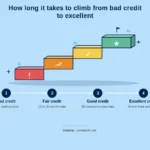
If you are currently ineligible for a solo refinance, you can follow a strategic timeline to reach that goal.
Phase 1: Assessment (Months 1–3)
Begin by auditing your financial health. Request your free credit reports via AnnualCreditReport.com. Look for errors—such as accounts that aren’t yours or incorrect payment history—and dispute them immediately through the Consumer Financial Protection Bureau (CFPB) portal.
Phase 2: Credit Optimization (Months 3–9)
If your score is below the threshold, focus on "credit hygiene." This involves maintaining low credit utilization (keeping balances below 30% of your limits) and ensuring every payment is made on time. Avoid opening new, unnecessary credit lines during this period, as hard inquiries can temporarily suppress your score.
Phase 3: Financial Strengthening (Months 6–12)
If your DTI is too high, prioritize paying down high-interest credit card debt or personal loans before applying for a student loan refinance. If your income is the bottleneck, consider side-hustle income that can be verified through tax documents, as lenders often require a two-year history for non-traditional or self-employed earnings.
Supporting Data and Financial Metrics
To understand why lenders set these requirements, one must look at the math of risk assessment.
The Debt-to-Income (DTI) Calculation
Lenders use the DTI ratio as a proxy for your ability to absorb a new loan payment.
- Calculation: Total Monthly Debt Payments ÷ Gross Monthly Income = DTI.
- Example: A borrower earning $4,000 gross per month with $800 in total monthly debt obligations has a 20% DTI. This is considered very healthy by most lending institutions.
The Role of Employment History
Lenders prioritize W-2 employees because their income is easily verified and typically consistent. For the self-employed, the process is more rigorous. Lenders usually require two full years of federal tax returns to account for the "volatility of income." Without this documentation, even a high-earning freelancer may be denied.
Official Perspectives: The Federal vs. Private Divide
It is imperative to address the "Official Response" regarding the difference between federal and private loans. The U.S. Department of Education maintains that federal loans come with inherent "social safety nets" that are stripped away during the refinancing process.
The Trade-off
When you refinance a federal loan into a private loan, you lose:
- Income-Driven Repayment (IDR) Plans: These adjust your payments based on your discretionary income.
- Public Service Loan Forgiveness (PSLF): If you work for a non-profit or government entity, refinancing makes you ineligible for this program.
- Deferment and Forbearance: Private lenders rarely offer the same flexibility as the federal government during periods of economic hardship or unemployment.
Official Guidance: Financial experts and government representatives consistently urge borrowers to ensure they do not need these federal protections before opting to refinance into the private sector.
Implications of Removing a Cosigner
If you currently have a loan with a cosigner and wish to release them, you are effectively seeking a "cosigner release." This is distinct from refinancing.
The Release Process
Many private lenders have a formal policy for cosigner release, typically triggered after a set number of on-time payments (e.g., 24 or 36 months). However, you must still meet the lender’s credit and income criteria as an individual.
If your original lender does not offer a release program, refinancing with a new lender is your primary path to removing the cosigner. By taking out a new loan in your name alone to pay off the old one, you legally sever the cosigner’s liability.
Strategic Considerations for the Applicant
Before signing any new loan agreement, you must conduct a thorough due diligence process.
1. Variable vs. Fixed Interest Rates
- Fixed: Your interest rate remains the same for the life of the loan. This offers predictability but often starts at a higher rate.
- Variable: Often starts lower but can fluctuate based on market conditions (like the SOFR rate). Only choose this if you are confident you can pay off the loan quickly.
2. The "Hidden" Costs
Always scan the fine print for origination fees. Some lenders charge 1% to 5% of the total loan amount just to process the application. While they may advertise a low interest rate, the origination fee can negate those savings.
3. Grace Periods
Check the grace period offered upon graduation or after the refinance. Standard industry practice is six months, but some lenders vary. A shorter grace period could catch you off guard if you are in a transitional career phase.
Conclusion: Making the Right Move
Refinancing without a cosigner is not just about having a high credit score; it is about demonstrating a sustainable financial lifestyle. By lowering your DTI, maintaining a consistent employment record, and curating a long, clean credit history, you can position yourself as an ideal candidate for private lenders.
However, the decision to refinance should never be made in a vacuum. It is a calculated move that weighs the benefit of a lower interest rate against the security of federal loan protections.
Pro-Tip: If you are unsure whether you qualify or if refinancing is the right move for your specific financial situation, utilize professional resources. Many organizations offer diagnostic tools—such as 11-question financial quizzes—that analyze your income, debt levels, and career trajectory to provide a personalized recommendation. Whether you pursue PSLF, an IDR plan, or a private refinance, ensure that your strategy aligns with your long-term goals rather than just your short-term desire for a lower monthly payment.
By taking the time to prepare, you can move from a state of financial dependency to a position of control, effectively managing your debt on your own terms.