





By Financial Policy Desk
Updated for 2026
Thousands of public service workers across the United States find themselves caught in a frustrating administrative limbo. The Public Service Loan Forgiveness (PSLF) Buyback program—designed as a lifeline for borrowers seeking to retroactively claim months spent in past deferment or forbearance—is currently buckling under severe processing delays.
With tens of thousands of applications trapped in an opaque backlog, public servants ranging from teachers and nurses to government attorneys and first responders face difficult decisions. Without automated administrative relief, borrowers must weigh the costs of continuing regular monthly loan payments against the risks of utilizing limited general forbearance options while waiting indefinitely for a decision from the U.S. Department of Education.
Main Facts: What Is the PSLF Buyback Program?
The Public Service Loan Forgiveness program promises total federal student loan discharge for eligible public sector and non-profit employees after they make 120 qualifying monthly payments while working in qualifying employment. However, historically, periods spent in certain deferments or forbearances did not count toward those crucial 120 payments because the borrower was not technically in a formal repayment status.
To bridge this gap, the Department of Education introduced the PSLF Buyback initiative.
Core Eligibility Criteria
To successfully utilize the PSLF Buyback pathway, borrowers must meet specific conditions set by federal guidelines:
- Employment Milestones: The applicant must have accumulated at least 10 years (120 months) of approved, qualifying public service employment.
- The Threshold Months: The months targeted for "buyback" must be the final pieces needed to push the borrower across the finish line to their 120th qualifying payment.
- Status Restrictions: Borrowers cannot buy back months during which they were enrolled in either the Repayment Assistance Plan or the Tiered Standard Plan.
- Active Balance & Approval: The targeted loans must still carry an outstanding balance, and the borrower must have official employment certification approved for those exact historical months.
If the Department of Education approves a buyback request, the borrower receives a formal settlement offer. They are then given a strict 90-day window to submit a lump-sum payment equivalent to what they would have owed under an income-driven repayment (IDR) plan during those specific historical months—calculated using their income and family size at that past time, rather than their current financial standing.
Chronology and Data: The Evolution of the 2026 Backlog
The PSLF Buyback program was introduced as an administrative fix to rectify gaps in student loan histories. Yet, the mechanism designed to provide relief has quickly generated a secondary crisis: overwhelming processing backlogs.
- Inception and Initial Rollout: Initially heralded as an innovative fix for borrowers who missed out on credit due to administrative errors or mandatory pauses, the buyback option saw an immediate surge in demand.
- Spring 2026 Reports: Data released by the Education Department revealed that approximately 88,000 PSLF Buyback applications were stuck in a massive, unmoving backlog.
- The Information Blackout: Compounding borrower anxiety, the federal government has not released updated processing data since May 2026. This lack of transparent metrics leaves independent experts, consumer advocates, and borrowers entirely in the dark regarding whether processing speeds have accelerated or if the backlog is expanding.
- Current Realities: Today, applicants routinely report waiting anywhere from 12 to 24 months—and occasionally longer—simply to receive an initial review or a formal response regarding their buyback eligibility.
Supporting Data and Financial Realities
The math surrounding a buyback application can be complex, and the lengthy delays introduce hidden financial traps for unsuspecting borrowers.
The Cost Equation
When a borrower applies for PSLF Buyback, federal rules dictate that payments continue to be due on their student loans. Borrowers are not entitled to an automatic administrative forbearance while their buyback request sits in the queue.
This creates two distinct financial paths, each carrying unique risks:
-
Continuing Regular Payments:
- Pros: Keeps the loan in good standing, avoids delinquency and default, and ensures continued progress toward the 120-payment mark. In some cases, a borrower might even hit their 120th qualifying payment through standard repayment before the Education Department ever reviews their buyback application.
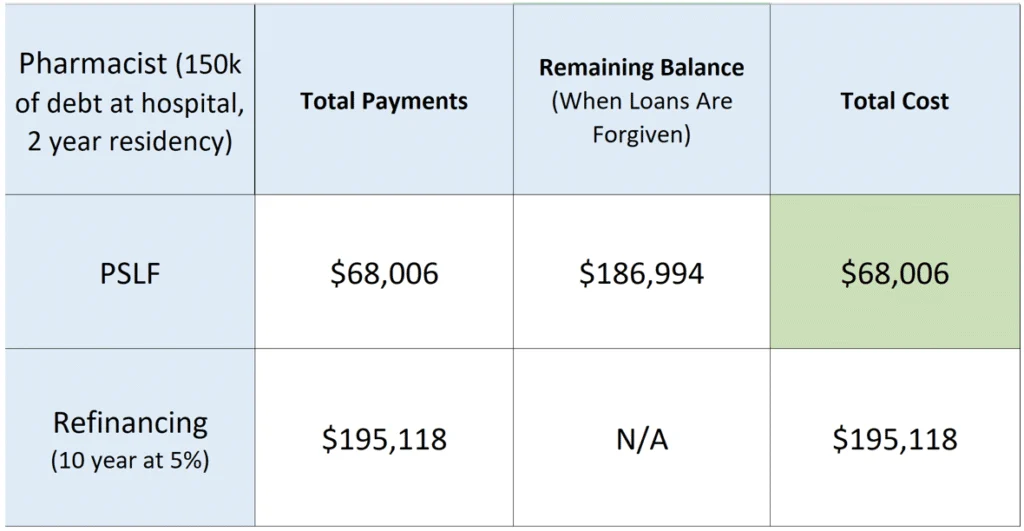
- Cons: If a borrower’s income has grown substantially since the historical deferment period, continuing on an IDR plan or standard track might cost significantly more overall than the calculated buyback amount would have. While federal guidelines permit refunds for payments made in excess of 120 qualifying payments, the government does not refund the difference between higher ongoing payments and a cheaper projected buyback settlement.
- Department Policy Note: As federal guidance states, "You can’t receive a refund unless your payment exceeds the amount identified in the PSLF Buyback Agreement and you have no other additional outstanding loans."
-
Opting for General Forbearance:
- Pros: Immediately pauses monthly financial obligations, easing cash flow strains while preserving loan standing for PSLF eligibility.
- Cons: General forbearances are strictly limited. Most federal student loan borrowers have a lifetime maximum of 36 months of general or hardship forbearance available. Because buyback wait times can stretch past a year, borrowers risk exhausting their allotted forbearance months before receiving a decision. Furthermore, interest continues to accrue throughout the forbearance period, inflating the total loan balance. If the buyback application is ultimately denied, those months spent in forbearance do not count toward PSLF, setting the borrower back further.
Official Responses and Regulatory Guidance
Federal authorities maintain that while they are working to process applications efficiently, borrowers must adhere strictly to existing repayment regulations.
The official stance from the Department of Education’s Federal Student Aid (FSA) office emphasizes personal responsibility during the interim review period:
"You must continue to make student loan payments until review is complete and buyback is approved," guidance on the official PSLF Buyback portal states. "You are still responsible for your current student loan payment."
Legal experts and consumer advocacy organizations have criticized the absence of a safety-net forbearance for pending buyback applicants. Prominent student loan legal authority Adam S. Minsky, JD, notes that borrowers are routinely forced into suboptimal financial choices due to administrative gridlock. Without a dedicated "buyback pending" administrative forbearance category—similar to those deployed during major servicing transitions—borrowers are left gambling with their own financial liquidity.
Loan servicers, operating under strict Department of Education contracts, also hold discretionary power over general forbearance requests. If a borrower needs to extend a forbearance period due to prolonged government delays, they face the risk of servicer denial, which can abruptly force them back into active repayment.
Broader Implications for Public Service Workers
The ongoing paralysis of the PSLF Buyback program carries profound implications for the American public workforce.
- Retention in Public Service: One of the primary goals of PSLF is to attract and retain talent in critical, often underpaid public sector jobs. When administrative backlogs stall promised debt relief for years, disillusioned workers may choose to leave public service entirely, accelerating staffing shortages in education, healthcare, and public safety.
- Credit Health and Default Risks: Borrowers who mistakenly assume that applying for a buyback pauses their bills can easily slip into delinquency. Defaulted federal loans are permanently ineligible for PSLF Buyback, meaning a simple administrative misunderstanding can entirely ruin a borrower’s path to forgiveness.
- Strategic Career Lock-in: Workers nearing the end of their 120 qualifying payments may feel trapped in their current public service roles, unable to pivot to higher-paying private sector jobs because they are tethered to an uncertain bureaucratic review process.
How Borrowers Are Deciding
Ultimately, deciding whether to pay through the backlog or utilize a general forbearance requires a granular, individualized assessment. Borrowers must weigh their current debt-to-income ratio, remaining forbearance availability, proximity to the 120-payment finish line, and career stability.
For those uncertain of their next steps, financial advisors recommend utilizing official federal estimators, consulting qualified student loan legal professionals, and carefully tracking every month of qualifying employment to protect against lost paperwork in the ongoing federal backlog.