








The European Union has reached a landmark agreement that promises to fundamentally reshape the digital storefronts of the continent’s aviation industry. Following months of intense debate between regulators, airline lobbyists, and consumer advocacy groups, the European Parliament and the Council of the EU have finalized a new regulatory framework regarding the marketing of airfares. While the industry is bracing for a significant shift in how tickets are sold, the final rules reflect a compromise that balances consumer protection with the operational realities of the modern low-cost carrier (LCC) model.
The core of the new mandate centers on price transparency. Moving forward, airlines operating within the EU will be required to display ticket prices that include, by default, the allowance for a full-sized carry-on bag. This represents a significant departure from the current industry standard, where "base fares" often exclude all but the most restrictive personal items, leading to a "drip-pricing" model that many regulators argue obscures the true cost of travel.
The Chronology of the Legislative Push
The journey toward this regulation began in earnest during the first half of 2025, fueled by growing public frustration over the lack of standardization in baggage policies.
- Early 2025: Members of the European Parliament (MEPs) introduced a legislative proposal to harmonize hand luggage dimensions across all airlines flying into or out of the EU. The initial proposal was ambitious, aiming to grant passengers a statutory right to bring one personal item (40x30x15 cm) and one carry-on bag (weighing up to 7 kg) at no additional cost.
- June 2025: The European Parliament’s transport committee formally voted in favor of the proposal, signaling a major victory for consumer rights groups who argued that the current "baggage anarchy" was confusing and anti-competitive.
- Late 2025 – Early 2026: Negotiations between the European Commission, the Council of the EU, and Parliament ensued. It became clear that a blanket ban on baggage fees would face insurmountable legal and economic hurdles, as it would effectively dictate the pricing structures of private companies.
- June 2026: A final agreement was reached. The legislation shifted focus from banning fees to standardizing how those fees are presented.
- 2027 Implementation: While the law is now settled, the technical and operational rollout is scheduled for 2027, giving airlines time to adjust their booking engines and marketing algorithms.
Decoding the New Rules: Transparency vs. Pricing Control
It is vital to distinguish between what the EU has not done and what it has done. The EU is not outlawing baggage fees, nor is it forcing airlines to provide free luggage. Instead, the regulation mandates that when a customer lands on an airline’s booking page, the advertised "default" price must include the cost of a full-sized carry-on.
If a passenger wishes to travel light, they may opt out of the carry-on allowance during the booking flow, at which point the price will be discounted. This is a subtle but profound change in the user experience (UX) design of airline websites. Currently, the industry relies on "upselling" baggage as an add-on; the new regulation forces a "down-selling" approach, where the price starts high and is reduced based on the passenger’s needs.
The Industry Backlash: Ryanair’s "Gobbledygook" Critique
Few entities are as vocal in their opposition to these changes as Ryanair. The ultra-low-cost carrier, known for its aggressive marketing of ultra-cheap base fares, has slammed the legislation as "bureaucratic bunkum."
Ryanair CEO Michael O’Leary has been particularly scathing in his assessment. In a formal statement following the decision, O’Leary argued that the mandate forces airlines to engage in "false advertising." By compelling carriers to display a higher "all-in" fare, the airline claims it will be unable to highlight the entry-level price points that currently attract over 50% of their customer base—passengers who choose to travel with only a personal item.
O’Leary’s critique extends beyond baggage. He argues that the EU is focusing on "rubbish regulations" while ignoring systemic issues that truly harm airline competitiveness, such as the inefficiencies of Europe’s Air Traffic Control (ATC) system and the continued enforcement of the Emissions Trading System (ETS). "Europe’s ATC system accounts for over 90% of airline delays," O’Leary noted, "yet the airlines are not allowed to recover our passenger rights compensation costs from these failing government monopolies."
Supporting Data: The Passenger Perspective
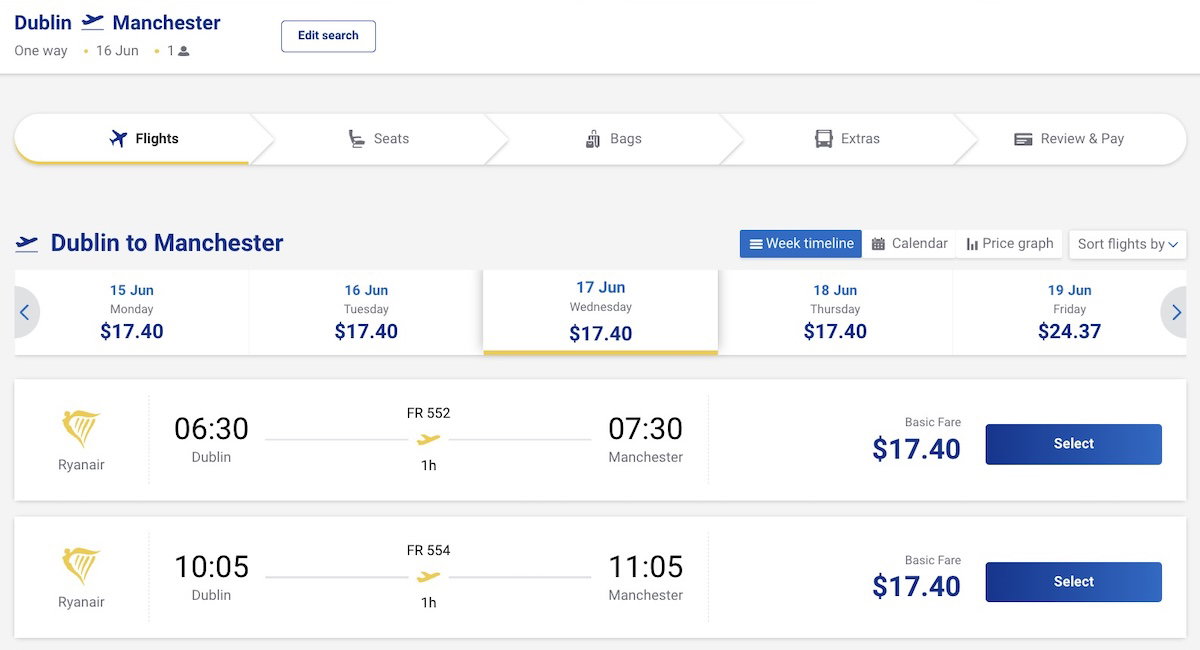
The debate highlights a deep divide in consumer behavior. Proponents of the legislation argue that the current market is opaque. When a user searches for flights on a third-party aggregator, they often see a "starting from" price that is technically impossible to achieve if the traveler intends to bring a standard cabin bag. This leads to a "bait-and-switch" sensation, where the final price at checkout is significantly higher than the initial search result.
However, data from LCCs suggests that a large segment of the market—specifically backpackers, business commuters on day trips, and budget-conscious travelers—actively prefers the lower, no-baggage fare. By forcing the inclusion of a carry-on, regulators may inadvertently be inflating the perceived cost of air travel, potentially deterring price-sensitive consumers.
Economic and Operational Implications
The ripple effects of this regulation will be felt across several domains:
1. Website Infrastructure and UX
Airlines will be required to re-engineer their booking engines. The current architecture of most low-cost carriers is built around the "add-on" model. Moving to a "discount for exclusion" model requires a significant overhaul of database logic and front-end interface design to ensure the "base" fare is accurately displayed alongside the "discounted" fare.
2. Market Comparison
The primary goal of the EU is to facilitate "apples-to-apples" comparisons. If every airline is forced to show a fare including a carry-on, a consumer looking at Ryanair, EasyJet, and Lufthansa will see a standardized price point. While this theoretically aids transparency, critics argue it removes the granular choice that has defined the low-cost revolution of the last two decades.
3. Competitiveness and Regional Growth
There is a valid concern regarding the competitive standing of European carriers. In a globalized market, EU airlines are already subject to some of the strictest labor, environmental, and consumer protection laws in the world. Industry leaders argue that adding another layer of marketing regulation makes EU carriers less nimble than their international counterparts, particularly those operating in regions with fewer restrictions on ancillary revenue.
Conclusion: A New Era of Airline Transparency
The European Union’s move to mandate the inclusion of carry-on bags in advertised fares is a definitive statement that regulators prioritize transparency over the absolute pricing flexibility of carriers. While the "all-in" approach will undoubtedly make it easier for the average traveler to avoid "sticker shock" at the final stage of booking, it comes at the cost of the ultra-low-price marketing that defined the last generation of air travel.
As the 2027 implementation date approaches, the industry will need to navigate a complex transition. For consumers, the change promises a more predictable shopping experience. For airlines, it marks the end of an era where the base fare could be stripped down to the bare essentials. Whether this results in a fairer market or merely a more expensive one remains to be seen, but one thing is certain: the way we shop for European flights is about to undergo its most significant transformation in years.