








By PYMNTS | June 24, 2026
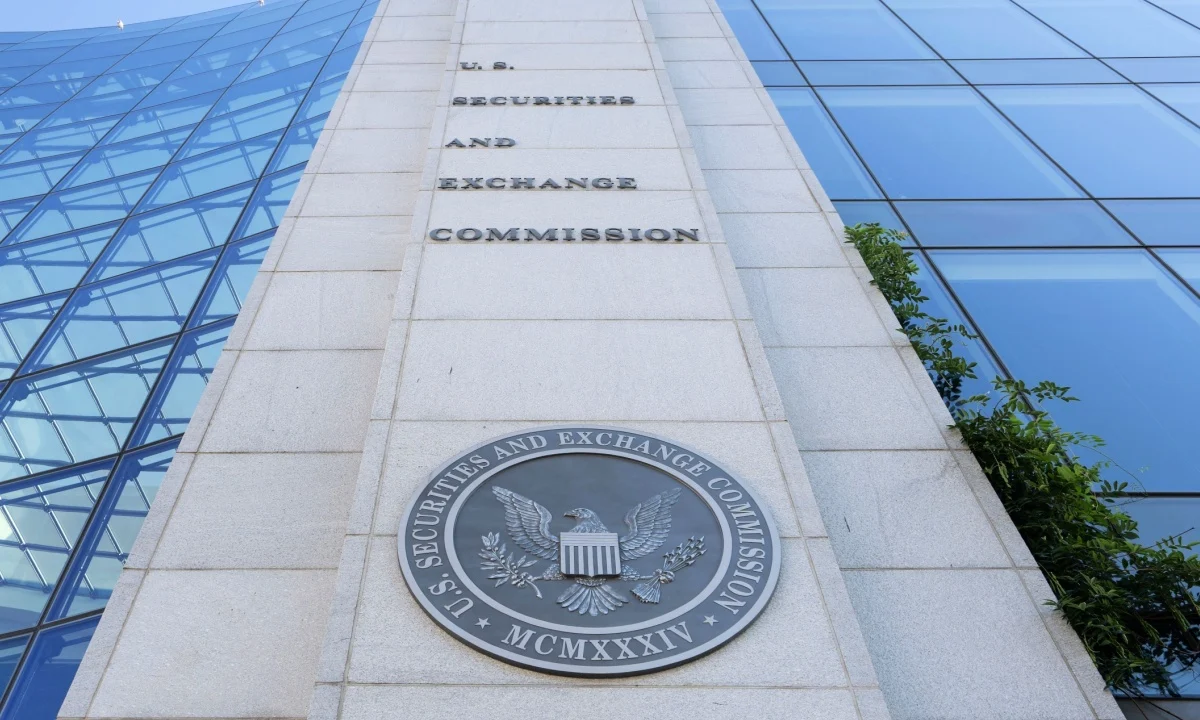
The U.S. Securities and Exchange Commission (SEC) has officially escalated its oversight of the private equity industry, launching a targeted investigation into the use of "continuation vehicles" (CVs). As the private markets continue to expand, regulators are increasingly concerned that these financial structures, once used as niche tools for liquidity, are now being leveraged in ways that may mask valuation discrepancies and create significant conflicts of interest between fund managers and their investors.
The Core Investigation: Unpacking Continuation Vehicles
At its most fundamental level, a continuation vehicle is a strategic financial tool employed by private equity firms to extend the life of an investment. Typically, a private equity fund operates on a ten-year cycle. As the clock runs down, managers are usually obligated to sell the assets within the portfolio and return capital to their limited partners (LPs).
However, when a manager believes a specific asset—or a basket of assets—still has significant growth potential, or when market conditions make a public exit or trade sale unfavorable, they turn to a continuation vehicle. In this scenario, the manager creates a new, separate fund. The assets are transferred from the aging fund into this new vehicle. Existing investors are given a choice: they can either take their cash and exit the investment, or they can "roll over" their stake into the new fund. Simultaneously, the manager courts new institutional investors to provide additional capital to sustain the growth of the assets.
While these structures are technically legal and designed to provide flexibility, the SEC’s enforcement division is now scrutinizing whether the process is being abused. The investigation, as confirmed by sources familiar with the matter, is probing three primary areas:
- Valuation Integrity: How are managers determining the price at which assets are transferred? If an asset is undervalued during the transfer, existing investors may be shortchanged; if overvalued, new investors are being misled.
- Conflicts of Interest: The manager sits on both sides of the transaction—representing both the buyer and the seller. Regulators are concerned that this dual role allows firms to prioritize their own management fees and performance incentives over the best interests of their original investors.
- Transparency and Disclosure: Are investors being provided with sufficient information to make an informed decision about whether to cash out or stay in the new vehicle? The SEC is investigating whether the disclosures provided by firms are adequate or if they obfuscate the true risks associated with these long-term holdings.
A Chronology of Regulatory Escalation
The transition of CVs from a "business-as-usual" practice to an enforcement priority has not happened overnight. It represents a steady climb in regulatory pressure that has been building since early 2025.
- Early 2025: SEC examiners begin conducting routine thematic reviews of private fund advisers, focusing heavily on how secondary transactions are executed.
- Late 2025: Industry data indicates a massive surge in "manager-led" secondary transactions. The SEC notes that these deals often bypass traditional competitive bidding processes, leading to an increase in internal "referrals" to the enforcement division.
- May 2026: SEC Chairman Paul S. Atkins signals a broader interest in private market health, specifically mentioning the need for transparency in private credit and secondary markets.
- June 2026: The investigation officially moves from the examination stage to a formal inquiry by the SEC’s enforcement division, signaling a higher likelihood of future litigation or administrative action against non-compliant firms.
The Explosion of Private Market Secondary Transactions
The sheer scale of the market is what has likely drawn the attention of Washington. According to data from Evercore, the market for manager-led secondary transactions—which relies heavily on continuation vehicles—reached a staggering $106 billion in 2025.
This is not merely a niche corner of Wall Street; it is a systemic component of the modern financial ecosystem. Private equity has become the primary vehicle for capital formation for many of America’s small- to medium-sized businesses. As traditional banks have pulled back from riskier lending and equity financing, private funds have stepped in to fill the void.
However, this reliance comes with a price. When $100 billion-plus of assets are trapped in vehicles that do not have a hard expiration date, the "liquidity" promised to investors becomes theoretical rather than actual. If the SEC finds that these valuations are artificially inflated, it could trigger a "repricing event" across the private equity landscape, leading to a sudden loss of confidence among the pension funds and endowments that act as the primary LPs for these vehicles.
Perspectives from the Top: The View from the SEC and the Fed
The regulatory climate is currently defined by a delicate balance: a desire to encourage economic growth while preventing systemic financial contagion.
SEC Chairman Paul S. Atkins, speaking at the Milken Institute’s Global Conference 2026, highlighted the essential nature of private markets. "Luckily, the private markets are there to step in and provide the capital," Atkins stated. "Our economy would not be anywhere near what it is now, especially for small and medium-sized businesses which provide most of the job creation in our economy. So, thank goodness for that."
Yet, this acknowledgment of the sector’s importance does not equate to a "hands-off" approach. On the contrary, the SEC’s strategy appears to be a "regulate to preserve" model. By targeting bad actors and ensuring that valuation and disclosure practices are standardized, the Commission hopes to prevent a catastrophic failure that could jeopardize the entire private capital ecosystem.
The concern extends beyond the SEC. Federal Reserve Governor Michael Barr has expressed broader anxieties regarding the interconnectedness of private markets and the traditional banking system. In a recent discussion with Bloomberg News, Barr warned of "psychological contagion." While he noted that the direct links between commercial banks and private credit providers are currently manageable, he pointed to the insurance industry as a potential pressure point.
If private equity funds, via continuation vehicles, become overly reliant on insurance company capital to fund their long-term assets, any downturn in the value of those assets could ripple through the insurance sector, potentially impacting policyholders and financial stability at large.
The Implications for the Future of Private Equity
The current SEC probe is likely to result in a new set of "best practices" or formal rules regarding the disclosure of secondary transactions. For private equity firms, the era of "self-regulated valuation" is coming to a close.
Increased Compliance Costs: Firms should expect to spend significantly more on third-party fairness opinions and legal compliance to prove that their continuation vehicles are priced fairly and that investors are not being coerced into staying in funds that no longer align with their original risk profiles.
Investor Relations Shifts: Limited partners are becoming more sophisticated. They are no longer accepting the "take it or leave it" approach that defined early CV deals. We are likely to see a trend toward more robust negotiation periods, where LPs demand more granular data on why an asset is being moved to a CV rather than sold in the open market.
Potential for Market Cooling: If the SEC enforcement actions lead to heavy fines or forced restructuring of existing deals, some managers may scale back their use of continuation vehicles. This could lead to an increase in "fire sales" of assets as funds reach their natural end-of-life, potentially depressing valuations in the short term but ultimately creating a more "honest" market price discovery mechanism.
Conclusion
The SEC’s investigation into continuation vehicles is a watershed moment for the private equity industry. It marks the end of a period of rapid, relatively unchecked expansion and the beginning of a more rigorous regulatory oversight regime.
While proponents of private equity argue that these vehicles are vital for economic stability—allowing businesses to scale without the pressure of a forced sale—the regulators are rightly asking if the current iteration of these vehicles is built on a foundation of transparency or a facade of valuation engineering. As the probe continues, the industry must prepare for a future where every valuation, every conflict, and every investor disclosure will be under the microscope. For now, the message from the SEC is clear: private markets are essential to the economy, but they are not exempt from the standards of fairness that define the broader financial system.