









Introduction
In a move that has captivated global financial markets, SpaceX, the revolutionary aerospace manufacturer and space exploration company, officially entered the public sphere today with its colossal Initial Public Offering (IPO). The company, a dominant force in orbital launches and a key player in satellite internet, artificial intelligence, and social media, has redefined the trajectory of public offerings with an unprecedented scale. This landmark event not only marks a new chapter for SpaceX but also presents a complex landscape for investors seeking to participate in the burgeoning space economy.
The Dawn of a Public Giant: SpaceX’s Monumental IPO
SpaceX’s debut on the Nasdaq exchange, under the ticker symbol "SPCX," has shattered records, immediately establishing it as a titan in the publicly traded universe. The company priced its shares at an impressive $135 each, a valuation that translated into a staggering $75 billion raised and an initial market capitalization of $1.75 trillion. By the close of its inaugural trading day, the stock had already seen a significant uptick, settling just above $160 per share, underscoring the immense investor appetite for this high-profile offering.
This IPO signifies a pivotal moment, not just for SpaceX and its visionary CEO, Elon Musk, but for the broader aerospace and technology sectors. For years, SpaceX has operated as a privately held entity, fueling its ambitious projects through private funding rounds and its own revenue streams. Its success in revolutionizing space launch services, pioneering global satellite internet with Starlink, and venturing into the rapidly evolving AI landscape with xAI (and its Grok chatbot), coupled with its ownership of the social media platform X (formerly Twitter), has created a multifaceted enterprise with a reach that extends far beyond its initial mission.
Navigating the Investment Galaxy: How to Invest in SpaceX
For eager investors, the opportunity to own a piece of SpaceX is now a tangible reality. The IPO has opened the floodgates, allowing individuals to purchase shares through their brokerage accounts. While the initial offering price of $135 is no longer accessible, the post-IPO performance indicates a strong demand that will likely necessitate paying a premium for current acquisitions.
For those who managed to secure shares during the IPO, a crucial reminder comes from brokerage platforms’ "anti-flipping" policies. These stipulations, designed to prevent immediate resale for quick profits, can result in suspension or even bans from future IPOs if shares are sold within a specified period (typically 15 to 30 days). This is particularly relevant given the potential for future high-profile IPOs in the AI sector, such as those from OpenAI or Anthropic. Furthermore, some brokers, like SoFi, have implemented additional fees on the sale of IPO shares within the initial months of trading, adding another layer of consideration for early investors.
Beyond direct share purchases, the investment landscape is poised to broaden significantly. As regulatory approvals and index adjustments are made, SpaceX is expected to become a component of various Exchange Traded Funds (ETFs) and mutual funds, including certain index funds. This will offer a more diversified approach for investors who prefer a basket of assets rather than individual stock picking.
The Shifting Sands of Index Inclusion: ETFs and Mutual Funds
The inclusion of SpaceX in index funds and ETFs is a dynamic and evolving process, driven by significant rule changes from major index providers. Nasdaq, for instance, has announced a dramatic acceleration in its eligibility criteria for newly public companies. Previously, a company needed to trade for a "seasoning period" of three months before being considered for index inclusion. However, Nasdaq is now shortening this waiting period to as little as 15 days for companies that rank among the top 40 largest on the Nasdaq exchange and demonstrate substantial average daily trading volume. This means that ETFs and mutual funds tracking the Nasdaq 100 and the broader Nasdaq Composite indices could see SpaceX allocations within a fortnight of its IPO.
Similarly, FTSE Russell, the administrator of the Russell series of indexes, has also expedited its rules. Their Russell 500 large-cap index will now incorporate newly public companies meeting minimum market cap requirements within a mere five trading days of their IPOs, a significant departure from the previous three-month waiting period. Consequently, ETFs and mutual funds tied to the Russell 500, Russell 1000, and Russell 3000 indexes may feature SpaceX as early as the end of next week.
Adding to the complexity and opportunity, several ETFs already possessed pre-IPO exposure to SpaceX. These include the Tema Space Innovators ETF (NASA), the Baron First Principles ETF (RONB), and the ERShares Private-Public Crossover ETF (XOVR). Furthermore, the launch day saw the emergence of single-stock ETFs designed to offer leveraged exposure to SpaceX’s daily returns. However, financial advisors strongly caution that these instruments are highly speculative and intended for short-term trading strategies. The anticipation is that SpaceX will also be integrated into thematic ETFs focused on space or AI, as well as actively managed funds, in the coming weeks.
The Art of Evasion: How Not to Invest in SpaceX
For investors who wish to deliberately steer clear of SpaceX, the process might be more intricate than a simple avoidance of direct share purchases. The imminent inclusion of SpaceX in various index funds means that simply holding a broad market index ETF could inadvertently expose a portfolio to the company.
S&P 500 and DJIA: A Slower Pace of Inclusion
Fortunately for those seeking to avoid SpaceX, S&P Dow Jones Indices, the custodian of the S&P 500 and Dow Jones Industrial Average (DJIA), has opted against fast-tracking the inclusion of mega-cap IPOs. This means that S&P 500 ETFs and mutual funds will adhere to the traditional one-year waiting period for new companies, effectively excluding SpaceX for the foreseeable future. The DJIA’s selection methodology, which involves a committee, makes its inclusion uncertain, but no rule changes have been announced to expedite SpaceX’s entry into this index. However, S&P Dow Jones Indices’ "total stock market" indices, which are designed to be broadly representative of the investment universe, may see quicker SpaceX integration due to their inherent breadth, though their inclusion rules have also been somewhat relaxed.
Direct Indexing: A Sophisticated Approach to Exclusion
For investors who desire exposure to Nasdaq or broad-market Russell indices but wish to exclude SpaceX, a more sophisticated strategy known as direct indexing offers a potential solution. This method involves reconstructing an index fund by purchasing fractional shares of its constituent stocks in the exact proportions as the index. While originally developed for tax optimization, direct indexing empowers investors to exclude specific stocks, such as SpaceX, from their portfolio while maintaining the overall characteristics of the desired index. This approach, however, can be complex and may require meeting certain minimum balance thresholds.
The Verdict on SpaceX: A Deep Dive into its Prospects and Perils
SpaceX’s ascent to public trading is undeniably a testament to its groundbreaking achievements. It stands as the world’s largest space launch provider by a significant margin, and its Starlink subsidiary is the leading global satellite internet provider. The investor enthusiasm was palpable, with reports of over $250 billion in demand for the $75 billion worth of IPO shares, and the stock’s first-day surge exceeding 19% further attests to this fervor.
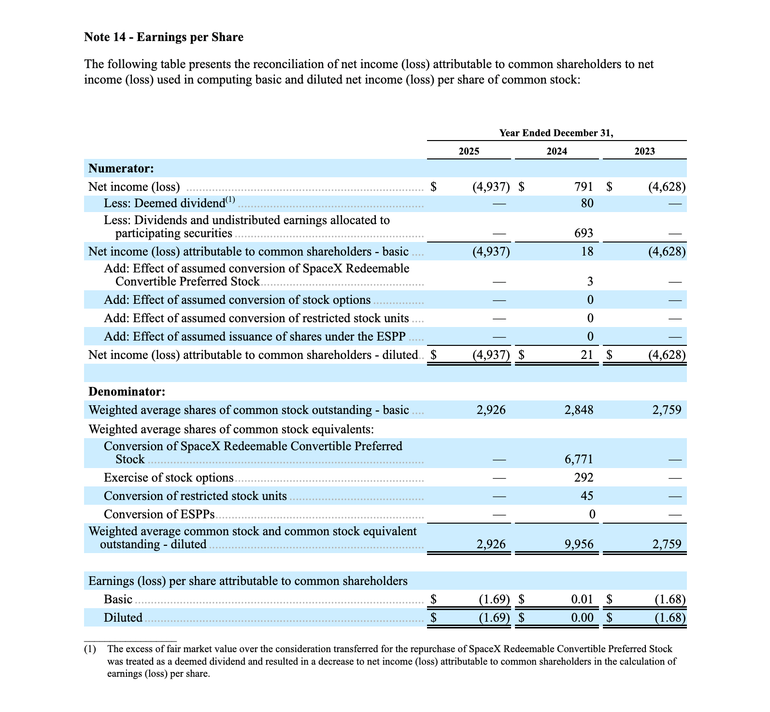
However, a closer examination of SpaceX’s financial disclosures reveals several points that warrant investor caution. The company’s profitability remains a concern, with its prospectus indicating losses per share in previous years and a break-even performance in the current year. The projected revenue streams also present a nuanced picture. While the total addressable market for SpaceX’s offerings is vast, the prospectus highlights that the majority of its projected earnings are expected to stem from artificial intelligence, not its core space ventures. This strategic pivot, with its AI subsidiary, xAI, facing stiff competition from established players like ChatGPT and Google Gemini, introduces a layer of risk.
Expert Opinions: A Balanced Perspective
Financial advisors offer a range of perspectives on SpaceX’s public debut, emphasizing both its potential and its inherent risks. Frank Paré, a certified financial planner, draws parallels with Tesla, Elon Musk’s other publicly traded entity, noting that despite a long period before profitability, Tesla’s stock delivered exceptional returns.
Douglas Boneparth, another certified financial planner, provides a concise pro-con analysis. The primary advantage lies in SpaceX’s robust space business, with Starlink generating substantial revenue and the launch sector enjoying a near-monopoly. The cons, however, are significant: a potentially shaky AI venture, the unpredictable nature of its CEO, and the historical tendency for highly anticipated IPOs to underperform in the years following their debut. Boneparth highlights the hefty valuation, the integration of a cash-burning AI bet, and the substantial "key-man risk" concentrated in Musk.
Data from Nasdaq’s analysis of IPOs between 2010 and 2020 reveals that a significant majority underperformed their respective market indices within three years. John Owens, a New York-based certified financial planner, echoes this sentiment, pointing out that some IPOs experience much more severe declines. He advises clients to prepare for potential price drops, citing examples like Figma, which has seen substantial long-term depreciation.
A consensus among these advisors is to limit SpaceX’s allocation to no more than 5% of an investor’s overall portfolio to mitigate risk. This recommendation becomes particularly pertinent given SpaceX’s substantial market cap growth and its potential to constitute a significant portion of indices like the Nasdaq 100, especially if its valuation continues to climb. Investors with heavily weighted Nasdaq index funds might need to explore direct indexing or alternative index funds to maintain their desired risk profile.
Exploring the Wider Universe: Other Investment Avenues in the Space Industry
While SpaceX has captured the spotlight, it is not the sole publicly traded entity in the dynamic space sector. A diverse array of established companies are making significant strides. For investors seeking to diversify within the space industry, several top-performing stocks have demonstrated impressive year-over-year returns.
| Ticker | Company | Performance (Year) |
|---|---|---|
| VSAT | Viasat Inc | 507.46% |
| SATS | EchoStar Corp | 493% |
| PL | Planet Labs PBC | 468.13% |
| RKLB | Rocket Lab Corp | 304.62% |
| GSAT | Globalstar Inc | 264.13% |
| BKSY | BlackSky Technology Inc | 181.57% |
| LUNR | Intuitive Machines | 152.53% |
Source: Finviz. Data is current as of 12:30 p.m. Eastern time on June 12, 2026, and is intended for informational purposes only.
These companies represent various facets of the space industry, from satellite communications and Earth observation to launch services and lunar exploration, offering alternative pathways for investors to participate in the ongoing expansion of humanity’s reach beyond Earth.
Conclusion
SpaceX’s IPO is more than just a financial event; it’s a watershed moment in the democratization of access to cutting-edge aerospace and technology. The company’s ambition, technological prowess, and visionary leadership have propelled it to an unprecedented valuation. However, as with any high-stakes investment, a thorough understanding of the risks, a balanced approach to portfolio allocation, and a keen awareness of market dynamics are paramount. Whether investors choose to embrace SpaceX directly, indirectly through funds, or explore other avenues within the vibrant space industry, the era of public participation in space exploration has officially, and spectacularly, begun.