






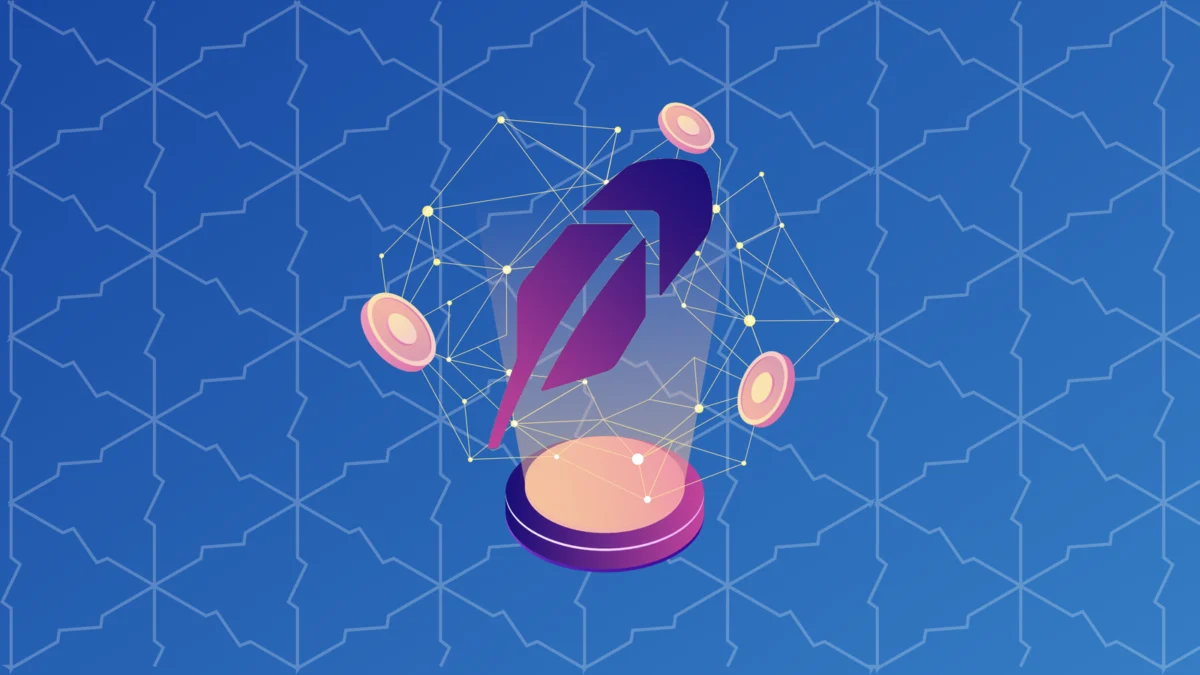
On July 1, 2026, the financial landscape underwent a significant transformation as Robinhood, the brokerage giant that democratized stock trading for the retail masses, officially launched the mainnet for Robinhood Chain. This custom-built blockchain network represents a bold strategic pivot, merging the stability and regulatory familiarity of traditional finance (TradFi) with the high-speed, programmable efficiency of decentralized finance (DeFi).
By leveraging Ethereum’s robust architecture, Robinhood is not merely launching a product; it is creating an ecosystem designed to bridge the gap between global equity markets and the burgeoning world of on-chain assets.
The Core Fundamentals: What is Robinhood Chain?
Robinhood Chain is a layer-2 blockchain network built upon Ethereum technology, specifically utilizing the Arbitrum Dedicated Blockchains framework developed by Offchain Labs. In the complex geography of modern crypto, a layer-2 network acts as a secondary layer that settles transactions off the Ethereum mainnet to ensure greater speed and lower costs, before finalizing the state of those transactions on Ethereum’s secure, decentralized foundation.
For developers and institutional players, the network is fully compatible with the Ethereum Virtual Machine (EVM). This is a critical feature, as it allows developers to migrate existing smart contracts, decentralized applications (dApps), and programming tools directly to the Robinhood ecosystem without the friction of learning proprietary languages or rebuilding infrastructure from scratch.
Key Technical Pillars:
- Arbitrum Integration: By using Arbitrum’s Orbit stack, Robinhood ensures its network is customizable, scalable, and capable of handling the high-frequency demands of financial markets.
- Native Gas Token: The network utilizes ETH as its gas token, maintaining alignment with the broader Ethereum ecosystem.
- Standardized Interoperability: Through JSON-RPC, the network seamlessly integrates with existing Ethereum-compatible wallets and infrastructure, lowering the barrier to entry for users accustomed to Web3.
Chronology of a Financial Evolution
The path to Robinhood Chain was not an overnight endeavor. It represents the culmination of years of internal development and strategic alignment with the shifting regulatory and technological tides.
- Pre-2025: The Research Phase. Robinhood began signaling its intent to move beyond a simple trading interface, investing heavily in infrastructure to support non-custodial wallets and direct crypto-asset custody.
- Early 2026: The Testing Period. The company engaged in rigorous stress-testing and private beta phases to ensure the network could handle the volatility and volume expected of a major financial platform.
- July 1, 2026: Mainnet Launch. The official public activation of the Robinhood Chain mainnet. Within hours of going live, the network saw an immediate influx of capital, liquidity providers, and opportunistic traders.
- Post-Launch (July 2026): The Meme Coin Mania. The network’s debut was met with a rapid surge in speculative interest, characterized most notably by the meteoric rise of the meme coin "Cash Cat" (CASHCAT). This highlighted both the network’s capacity for viral growth and the inherent volatility of new blockchain environments.
Supporting Data: By the Numbers
The immediate reception to Robinhood Chain was nothing short of explosive, defying the skeptics who questioned whether a traditional brokerage could successfully pivot to a permissionless-style environment.
First-Week Performance Metrics:
- Transaction Volume: In its first seven days, the network processed over 17 million transactions, a testament to the efficiency of the Arbitrum-based sequencer.
- User Adoption: Nearly 350,000 unique wallet addresses were created on the network within the first week of operation.
- Liquidity and TVL: While the company’s internal metrics estimated the Total Value Locked (TVL) at approximately $250 million, independent blockchain analytics firm DefiLlama verified a core protocol TVL of $94 million. Furthermore, stablecoin balances on the network quickly exceeded $260 million, signaling that users were onboarding significant amounts of "dry powder" to participate in the ecosystem.
- DEX Activity: Decentralized exchanges (DEXs) like Uniswap saw over $1 billion in volume on the chain in the first week alone, reflecting a high velocity of capital movement.
The Mechanics of Transparency: Stock Tokens
One of the most disruptive aspects of Robinhood Chain is the introduction of Stock Tokens. These are blockchain-based assets designed to provide exposure to real-world assets (RWAs)—such as blue-chip stocks, government bonds, and ETFs—directly on-chain.
The RWA Advantage
Real-world assets are tokens that represent ownership or value of an asset existing outside of the crypto space. By bringing these onto a blockchain, Robinhood allows these assets to interact with smart contracts, lending protocols, and automated market makers (AMMs). This effectively turns traditional financial instruments into "programmable money."
Important Regulatory Disclaimers
It is essential to note that Robinhood Stock Tokens are not equivalent to holding shares in a company. They do not grant legal ownership, voting rights, or dividends in the traditional sense. Furthermore, the company has been clear regarding geographic restrictions: Stock Tokens are not available to U.S. users.
"Stock Tokens are not registered under U.S. securities laws," the company stated in its official disclosure. "They may not be offered, sold, or delivered in the United States." This underlines the complex, fragmented regulatory environment that blockchain firms must navigate when attempting to globalize tokenized finance.
Official Responses and Strategic Vision
Johann Kerbrat, the Senior Vice President and General Manager of Crypto and International at Robinhood, framed the launch as a mission of accessibility.
"Decentralized finance unlocks possibilities beyond what traditional finance can offer, but historically, it has required technical expertise to navigate," Kerbrat stated during the launch announcement. "We’re bringing the best of traditional finance and DeFi together, and in doing so, expanding financial ownership to every corner of the globe."
By integrating with industry-standard providers, Robinhood has built a "walled garden" that feels like the open internet:
- Chainlink: Providing the critical oracle infrastructure required to pull accurate, real-time price feeds for Stock Tokens.
- Morpho: Facilitating decentralized lending and borrowing, allowing users to leverage their assets without a traditional bank intermediary.
- Alchemy & BitGo: Providing the developer tools and institutional-grade custody solutions that give professional investors the confidence to enter the space.
Implications: The Future of Global Finance
The launch of Robinhood Chain has profound implications for the future of the global financial system.
1. The Democratization of Financial Infrastructure
By building a network that prioritizes ease of use and integrates with familiar tools, Robinhood is effectively lowering the barrier to entry for retail investors. The "first-come, first-served" sequencing model ensures a degree of fairness in transaction processing, preventing the "front-running" of trades that often plagues other high-frequency environments.
2. The Institutionalization of DeFi
With giants like Robinhood entering the DeFi space, the sector is moving away from its "Wild West" reputation. The inclusion of institutional-grade custody (BitGo) and regulated RWA integration suggests that we are entering a phase of professionalization where the efficiency of DeFi is harnessed by the reliability of TradFi.
3. Regulatory Challenges
Despite the technical success, the regulatory path forward remains treacherous. The strict prohibition of U.S. users from accessing Stock Tokens highlights the ongoing friction between borderless blockchain technology and nation-state securities laws. How Robinhood manages these compliance hurdles while expanding its global footprint will likely serve as a blueprint—or a cautionary tale—for other fintech companies.
4. The Role of Speculation
The initial surge of interest driven by meme coins like CASHCAT illustrates a fundamental truth of crypto: liquidity follows attention. While Robinhood’s goal is to build a robust financial ecosystem, the network is currently functioning as a high-octane playground for traders. Transitioning from a hub of speculative meme-coin trading to a platform for sustainable, real-world financial activity will be the next major hurdle for the Robinhood Chain team.
Final Thoughts
Robinhood Chain is a bold, high-stakes experiment. By synthesizing the ease of a user-friendly trading app with the raw power of an Ethereum-based layer-2, the company is attempting to rewrite the rules of asset ownership. Whether it succeeds in becoming the primary bridge between the legacy financial system and the future of decentralized capital remains to be seen, but one thing is certain: the financial world is watching.