







The landscape of American monetary policy has undergone a seismic shift in the second quarter of 2026. After a period characterized by cautious optimism and the widespread anticipation of interest rate cuts, the Federal Reserve has signaled a pivot that has caught both Wall Street and the real estate sector off guard. As inflationary pressures prove more persistent than previously modeled, the "higher for longer" narrative has evolved into a conversation about potential rate hikes.
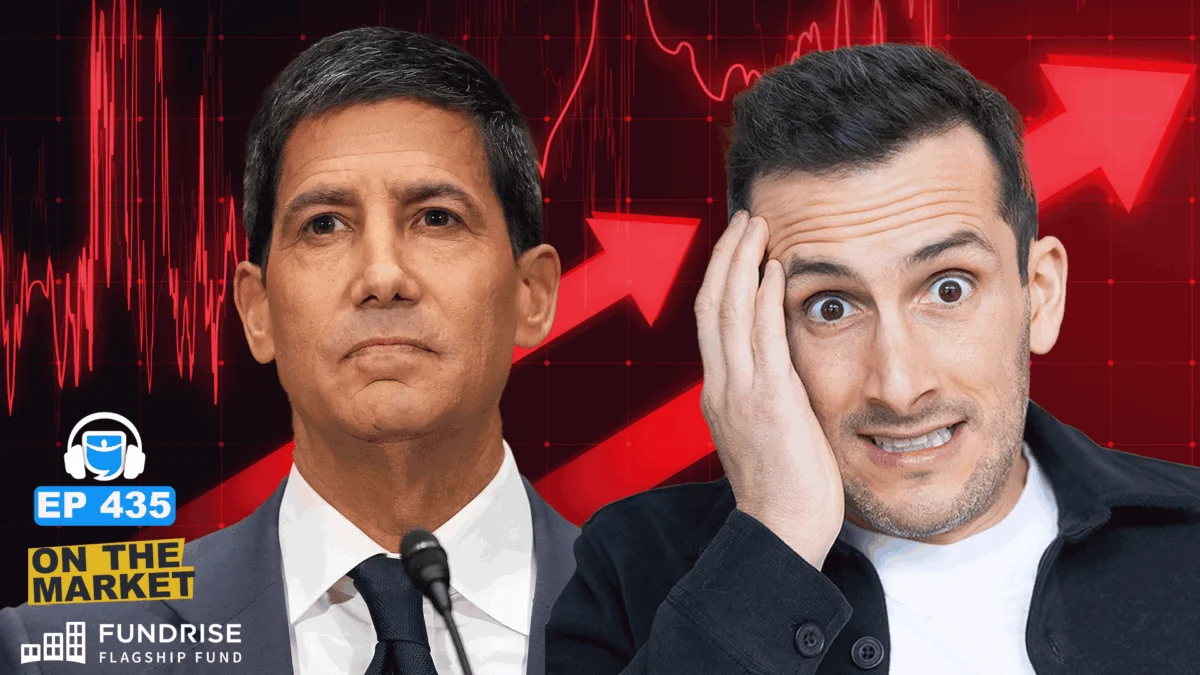
On a recent episode of the On the Market podcast, host Dave Meyer, joined by industry experts James Dainard and Kathy Fettke, unpacked these developments, exploring how the intersection of AI-driven office growth, shifting HELOC (Home Equity Line of Credit) utilization, and persistent inflation is redefining the rules of engagement for property investors.
The Shift: From Anticipated Cuts to Potential Hikes
Main Facts
The primary headline dominating financial discourse is the rapid adjustment in trader sentiment regarding the Federal Reserve’s trajectory. Earlier this year, the consensus was clear: the Fed would likely hold rates steady before initiating one to two cuts by mid-year. This outlook was underpinned by job market strength and a headline inflation rate hovering in the low 2% range during January and February.
However, the reality has diverged sharply from those projections. By May 2026, year-over-year inflation had surged to 4.2%. This increase is not isolated; it is reflected across all major metrics, including the Consumer Price Index (CPI), Producer Price Index (PPI), and Personal Consumption Expenditures (PCE).
Chronology of the Policy Pivot
- Q1 2026: Markets anticipated stability followed by gradual rate cuts as inflation appeared to be nearing the 2% target.
- March/April 2026: Geopolitical instability, specifically the escalation of conflict in Iran, disrupted global supply chains and energy markets, sending oil prices soaring and fueling domestic inflation.
- June 2026: The Federal Reserve held rates steady during their scheduled meeting. However, the accompanying commentary signaled a departure from previous easing rhetoric, with many Fed officials now indicating that a rate hike may be necessary to anchor inflation expectations.
Supporting Data and Economic Indicators
The shift in monetary policy is not occurring in a vacuum. The panelists highlighted several critical indicators that suggest the economy is entering a more complex, inflationary phase.
The Energy and Supply Chain Nexus
James Dainard, an active real estate investor, pointed to the volatility of energy prices as a primary driver of current inflation. "Shipping is a nightmare," Dainard noted, citing delays in appliance and material deliveries that inflate costs for developers and consumers alike. While oil prices have recently shown signs of cooling—dropping from highs near $110 per barrel—the structural damage to the supply chain remains a significant concern.
Labor Market Paradoxes
While national data suggests a robust labor market, localized conditions present a different story. In markets like Seattle, builders and developers are reporting a surplus of qualified labor—subcontractors and project managers actively seeking work—a phenomenon reminiscent of the post-2009 economic environment. Dave Meyer noted that this discrepancy suggests the official unemployment rate may be masking a rise in underemployment and reduced working hours, which could eventually manifest in broader economic data.
Official Responses and the "Warsch Effect"
A major point of discussion among the panel was the role of Kevin Warsch, the Federal Reserve official recently appointed under the current administration.
Kathy Fettke noted that the Fed’s communication style has become intentionally more vague. "There was no talk about hitting 2% inflation," she observed, noting that the focus has shifted toward "price stability." This lack of specificity is interpreted by many as a signal that the Fed may be preparing to accept a higher, long-term inflation target—potentially in the 3% range—rather than forcing the economy into a deep recession to hit an arbitrary 2% mark.
Furthermore, Warsch’s performance has surprised some observers. While some speculated he would act as a political instrument to lower rates, his recent actions have been characterized by professional caution. He notably refrained from providing projections on the Fed’s "dot plot," a move that suggests a preference for data-driven agility over speculative forward guidance.
Implications for Real Estate Investors
For the average investor, this environment presents both a challenge and a unique window of opportunity. The panel offered several strategies for navigating the current volatility.
1. Real Estate as an Inflation Hedge
Kathy Fettke emphasized that despite the headlines, real estate remains the premier hedge against inflation. "Houses and buildings are made of things that inflate," she explained. As the cost of labor and materials rises, the replacement value of existing structures climbs, inherently buoying property values. For investors, owning hard assets during an inflationary period remains a time-tested strategy for wealth preservation.
2. The "Lock-in" Effect and HELOC Strategy
A significant portion of the conversation focused on the "lock-in effect," where homeowners with sub-4% interest rates are choosing to stay in their homes rather than sell and re-enter a high-rate mortgage market. This has led to a surge in HELOC usage, as homeowners tap into their equity to renovate existing properties rather than purchase new ones.
However, this trend warrants caution. As James Dainard warned, while using HELOCs to improve properties can create value, it also increases the debt burden on the American consumer. Investors should be wary of the rising delinquencies in FHA and other consumer debt sectors, as these are often the "canaries in the coal mine" for broader economic distress.
3. The AI Office Boom
One of the most intriguing developments discussed was the resurgence of office demand driven by the Artificial Intelligence sector. Unlike the dot-com bubble of 2000, where companies were fueled by speculative capital, today’s AI-driven office leasing is often backed by firms with strong income fundamentals. Cities like Austin, San Francisco, and Seattle are seeing significant absorption of office space.
"The fundamentals are there," Fettke noted, suggesting that even in markets where cash flow might be tight initially, the long-term equity growth potential in AI-hub cities is significant.
Strategic Recommendations: How to Survive and Thrive
The panel concluded with actionable advice for investors looking to balance caution with opportunity:
- Audit Expenses: James Dainard emphasized the need for a rigorous "fat-cutting" phase. Whether personal or business, auditing subscriptions and operational expenses is critical to maintaining margins in a high-inflation environment.
- Update the "Buy Box": When the market is in a state of confusion or "analysis paralysis," investors who are disciplined can find incredible deals. The key is to avoid chasing average deals and instead focus on assets that meet stringent criteria.
- Watch the Distressed Notes: As interest rates remain high and consumer debt pressure mounts, opportunities may arise in secondary debt markets. Buying discounted notes—a strategy that proved lucrative for savvy investors in 2008—could be a viable path for those with the capital and the stomach for distressed assets.
- The Power of Patience: Dave Meyer summarized the sentiment well: "If you can find good deals, a low-competition environment is a good place to buy." By focusing on cash-flowing assets and maintaining a long-term horizon, investors can weather the cycle of inflation and potential recession.
As the Federal Reserve continues its delicate balancing act, the message to investors is clear: ignore the noise of daily market fluctuations and focus on the fundamentals. The current economic cycle is one of change, and for those who remain disciplined, it offers as much opportunity as it does risk.