









The United States is on the precipice of an unprecedented financial phenomenon. Economists, wealth managers, and estate planners have spent years discussing the "Great Wealth Transfer"—the projected transition of roughly $124 trillion in assets from older generations to their heirs over the next two decades. However, a closer look at the data suggests that for many families, this massive shift of capital will not be a direct line from parent to child. Instead, it will be a two-stage journey, with a significant "horizontal" stop along the way.
According to a 2024 report from Cerulli Associates, of the $124 trillion expected to change hands by 2048, approximately $54 trillion—nearly half—is destined to move horizontally from one spouse to the surviving partner. Because women statistically outlive their husbands by an average of five years, they are the primary beneficiaries of this intermediate transfer. For Gen Xers and millennials waiting for a financial windfall, this reality check is vital: the "inheritance" is often tied up in the financial security of the surviving parent.
The Expectation Gap: Reality vs. Anticipation
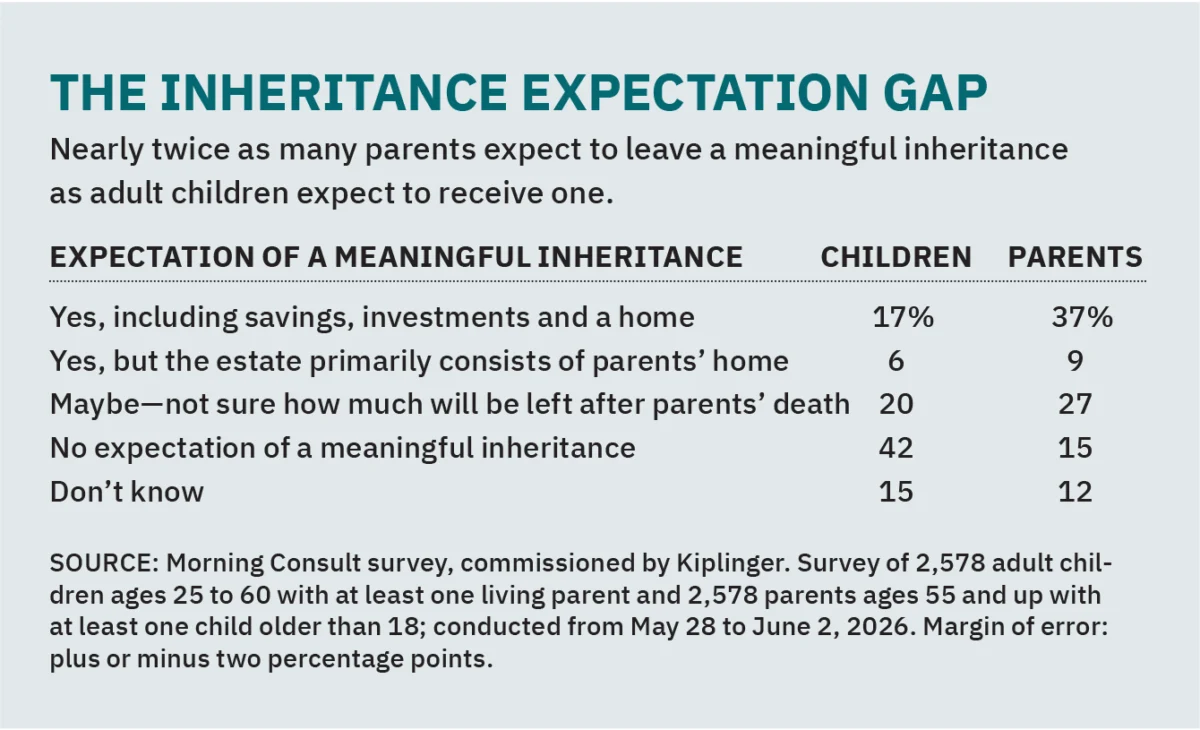
The anticipation surrounding this transfer has created a complex psychological and financial landscape. A recent survey conducted by Morning Consult on behalf of Kiplinger highlights a stark disconnect between generations. While 47% of parents express an intention to leave a "meaningful" inheritance to their children, a significant portion of Gen Xers and millennials report that they do not expect a windfall at all.
This gap is not merely a result of family dynamics or miscommunication; it is a structural reality of aging. The "horizontal" transfer—the movement of assets to the surviving spouse—acts as a protective buffer. Before any wealth reaches the next generation, it must often support the surviving spouse’s healthcare, housing, travel, and day-to-day living expenses for years or even decades. The inheritance that eventually flows to children is essentially the "leftover" capital, the size of which is dictated by the efficiency of the initial estate plan.
The Mechanics of the Horizontal Transfer
The horizontal transfer is a critical juncture in estate management. Because the legal and tax structures surrounding marriage are designed to facilitate the continuity of wealth, the transfer between spouses is generally the most tax-efficient phase of the cycle.
The cornerstone of this process is the "Unlimited Marital Deduction." Under current U.S. tax law, an individual can transfer an unlimited amount of assets to a surviving spouse without incurring federal estate or gift taxes. This provides a massive advantage, as it allows a family to preserve the entirety of their estate during the transition period. If that same wealth were to bypass the spouse and go directly to children upon the first death, it could immediately trigger federal estate taxes if the amount exceeds the current lifetime exemption.

"The typical process is you leave your money to your spouse, and after that it goes to the kids," notes Derrick Longo, a wealth adviser at Exencial Wealth Advisors. "But there’s no default right answer. It’s very specific for every family and situation."
Navigating the Widow’s Tax Penalty
While the law favors spousal transfers, the years following the death of a spouse are fraught with potential financial pitfalls, most notably the "widow’s tax penalty."
In the year following a spouse’s passing, the surviving partner must transition from filing as "Married Filing Jointly" to "Single." This shift can be jarring. Tax brackets are effectively reduced by 50%, and the standard deduction is similarly cut in half. Without proactive tax planning, a surviving spouse may find their income pushed into a higher marginal tax bracket, causing a significant erosion of the estate’s value through increased annual tax liability.
However, there are distinct advantages to this transition. Surviving spouses benefit from a "step-up in cost basis" on inherited assets like real estate, stocks, and taxable investment accounts. When a spouse dies, the tax basis of these assets is "reset" to their current market value. If the surviving spouse chooses to sell these assets, they may owe little to no capital gains tax, as the appreciation occurring during the deceased spouse’s lifetime is effectively wiped from the IRS’s ledger.
Furthermore, retirement accounts like IRAs and 401(k)s offer unique flexibility. A surviving spouse can roll these accounts into their own name, which allows them to delay Required Minimum Distributions (RMDs) until they reach age 73 or 75, depending on their birth year. Conversely, if a child were to inherit those same accounts, they would likely be subject to the "10-year rule," which mandates that the entire account must be emptied—and the corresponding income taxes paid—within a decade.
The Rising Cost of Longevity
Perhaps the greatest threat to the "Great Wealth Transfer" is the escalating cost of healthcare and long-term care. In the Kiplinger survey, 24% of parents cited these costs as their primary fear regarding the erosion of their legacy.

The numbers are sobering. Fidelity Investments estimates that the average 65-year-old couple will spend approximately $185,000 on healthcare throughout their retirement—and that figure excludes long-term care entirely. According to 2025 data from the CareScout Cost of Care survey, the national median cost for a private room in a nursing home has climbed to $129,575 annually, while the cost of a full-time in-home health aide averages $80,080 per year.
For many, these expenses act as a "wealth vacuum." Without a specialized strategy to fund long-term care, the assets intended for the next generation are quickly diverted to medical providers. Surviving spouses have several strategic levers they can pull:
- Long-Term Care Insurance: For those with sufficient assets but a desire to protect the principal, insurance can be a hedge against catastrophic medical bills.
- Health Savings Accounts (HSAs): By utilizing an HSA as a "stealth" retirement account, spouses can cover out-of-pocket medical expenses with tax-free dollars.
- Self-Funding: High-net-worth individuals may choose to designate a specific "liquidity bucket" of their portfolio to handle potential care costs, effectively insulating the rest of their investment growth from the volatility of healthcare inflation.
Strategies for Preserving the Estate
To ensure the estate remains intact for the next generation, surviving spouses must shift from an "accumulation" mindset to a "strategic distribution" mindset. Relying on simple, static withdrawal strategies is no longer sufficient in an era of market volatility and longer life expectancies.
Wealth advisers often recommend a "bucket approach," where assets are segmented based on their intended use. Short-term cash needs are held in high-yield, liquid accounts, while long-term growth assets remain invested in equities to hedge against inflation. This prevents the need to sell stocks during a market downturn, a common mistake that can permanently damage the longevity of an estate.
Other strategies, such as the "flooring method"—which uses annuities or Social Security to cover essential living expenses—provide a psychological safety net. By delaying Social Security collection, a surviving spouse can maximize their monthly benefit, creating a guaranteed "floor" of income that allows for more flexible (and potentially aggressive) management of the remaining investment portfolio.
Implications for the Future
The Great Wealth Transfer is not merely a transfer of money; it is a transfer of responsibility. The $54 trillion moving horizontally between spouses represents the financial stability of the most vulnerable stage of life.

For the younger generations—millennials and Gen Xers—the lesson is clear: do not count your chickens before they hatch. The preservation of family wealth depends heavily on the planning decisions made by the older generation today.
Families that engage in open, transparent discussions about these costs—healthcare, taxes, and income strategies—are significantly more likely to see a successful transfer of assets to the heirs. Conversely, those that leave their financial house in disarray often find that by the time the final transfer occurs, the inheritance has been whittled away by taxes, market timing, and the soaring costs of medical care.
As the next two decades unfold, the "horizontal" transfer will serve as the ultimate test of financial literacy and estate planning. It is a period where the goal is twofold: ensuring the dignity and security of the surviving spouse, and maintaining the structural integrity of the wealth that will eventually sustain the next generation. For those who prepare, it is an opportunity to leave a lasting legacy; for those who do not, it is a risk of seeing a lifetime of accumulation vanish into the rising costs of aging.