







In an era where convenience is the primary currency of the digital age, consumers have become increasingly accustomed to frictionless, one-tap services. From food delivery to on-demand transportation, the "default" choice has become a hallmark of modern urban living. However, a groundbreaking new campaign from Lyft is challenging this reflexive behavior, urging riders to pause, compare, and reconsider the financial implications of their loyalty to a single app.
The initiative, titled "Save the Money," arrives at a time when inflation and the rising cost of living have made every dollar a critical asset for both individuals and small business owners. By highlighting a significant pricing gap between the two dominant market players, Lyft is not just marketing a service—it is advocating for a shift in consumer consciousness.
The Data Behind the Disparity: Understanding the 14% Gap
The backbone of this campaign rests on rigorous economic research. Data compiled by economists from Harvard and Johns Hopkins universities has unveiled a startling reality: for equivalent trips, there is an average price difference of 14% between Lyft and its primary competitor, Uber.
While 14% might sound like a negligible fraction in the context of a single five-dollar coffee, the cumulative effect of these discrepancies is profound. For the average frequent rider, failing to compare prices before confirming a trip could result in an annual loss of approximately $177. When scaled to the population of a single major metropolitan hub like New York City, the figures become staggering. In 2024 alone, New Yorkers collectively left an estimated $300 million on the table by relying on a single app rather than shopping around.
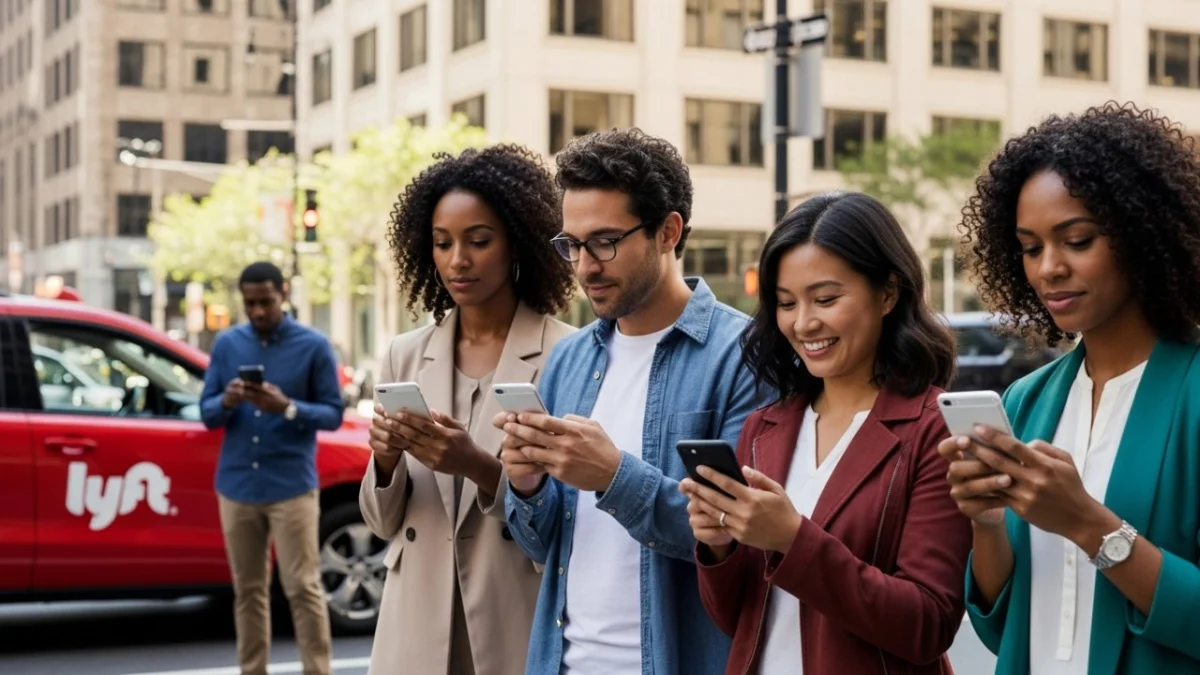
This "loyalty tax" is often paid unconsciously. Much like a consumer who habitually orders from the same takeout spot without checking the price of a competitor’s menu, rideshare users have fallen into a pattern of reflexive decision-making. Lyft’s research suggests that this is not a calculated choice to spend more, but a psychological shortcut. In the fast-paced environment of city life, where users are often hailing a ride while juggling a briefcase or rushing to an appointment, the friction of opening a second app is often perceived as an inconvenience that isn’t worth the effort.
Introducing "Bill": A Character for Financial Accountability
To combat this inertia, Lyft has launched a multimedia campaign that personifies the lost capital. Enter "Bill," an animated, anthropomorphic dollar bill who serves as the face—and the cautionary tale—of the campaign.
Through a series of short, engaging video clips and outdoor advertisements, "Bill" is depicted experiencing various misfortunes in the urban jungle, symbolizing the money that users literally leave behind when they skip the comparison step. The creative strategy is designed to be visceral and relatable. By giving the lost money a personality, the campaign transforms an abstract economic concept into an emotional one.
"This campaign is a statement about the brand Lyft is becoming," explains Cass Zawadowski, Executive Creative Director at Lyft. "We aren’t just a transport service; we are a partner in our riders’ daily lives. By personifying the money lost, we hope to create a ‘moment of pause’—a brief window of time where the user thinks, ‘Wait, could I be saving money here?’"
The campaign is strategically deployed in high-traffic, high-decision environments, including airports, transit hubs, and nightlife districts, where the impulse to "just book it" is strongest. By targeting riders at the exact point of decision, Lyft hopes to turn a bad habit into a conscious, money-saving ritual.
A Financial Strategy for Small Business Owners
For the small business entrepreneur, the stakes are significantly higher than for the casual leisure traveler. Small business owners often rely on ridesharing as a primary mode of transport to client meetings, networking events, and supply runs. In this context, transportation is not just a personal convenience; it is a business expense that directly impacts the bottom line.
When considering that the annual cost of private car ownership—covering vehicle payments, insurance premiums, maintenance, fuel, and parking—now ranges between $11,000 and $20,000 per year, ridesharing has emerged as a much more cost-effective alternative for the agile entrepreneur. However, the efficacy of this strategy depends on the user’s ability to manage those rideshare expenses.
"If you are using rideshare as a primary business tool, you owe it to your bottom line to be as efficient as possible," the campaign suggests. By adopting a "check both" policy, a business owner who spends $5,000 a year on transportation could potentially reclaim over $700 annually. In the world of small business, where margins are often razor-thin, such savings can be reallocated toward marketing, inventory, or operational improvements.
The Friction of Change: Challenges and Considerations
While the "Save the Money" campaign offers a clear path to financial efficiency, it is not without its complexities. Critics and logistical experts point out that the habit of comparing prices is inherently at odds with the "on-demand" promise of the gig economy.
The Time-Value Tradeoff
For a busy professional, the time required to switch between apps, wait for the GPS to load, and compare dynamic pricing might be perceived as a cost in itself. If the process takes an extra minute of high-intensity focus, some users may conclude that their time is worth more than the potential savings.
Dynamic Pricing Variability
The rideshare market is governed by complex algorithms that dictate surge pricing based on real-time demand, weather conditions, and local events. This volatility means that the "cheaper" app is not a constant; it is a moving target. A rider might find that Lyft is cheaper at 9:00 AM, only to find the competitor is lower at 9:15 AM due to a sudden surge. This lack of predictability makes the comparison process a constant necessity rather than a one-time learning experience.
The Behavioral Hurdle
Psychologically, breaking a habit requires intentionality. The "Save the Money" campaign is, at its core, a battle for the consumer’s mental real estate. Lyft is attempting to re-wire a learned behavior—a difficult task in an age of shortened attention spans.
The Bigger Picture: Moving Toward Financial Awareness
The implications of this campaign extend beyond the narrow scope of transportation. It serves as a broader commentary on the "frictionless economy." When services are designed to be as easy as possible to use, they often obscure the underlying costs, leading consumers to pay a premium for ease.
Lyft’s initiative is part of a growing movement toward "financial literacy in action." By providing the tools and the messaging to help users make smarter, more data-driven choices, the company is aligning itself with the needs of the modern consumer. Whether or not this campaign successfully shifts market behavior remains to be seen, but it has certainly ignited a conversation about the costs of convenience.
As the campaign rolls out across major U.S. markets, it will be supported by a robust infrastructure of digital media, outdoor billboards, and social media content. For the observant rider, it represents a challenge: Will you continue to pay for the "luxury" of not checking, or will you take the extra few seconds to ensure your money stays in your pocket?
Conclusion: A Simple Habit for a Smarter Future
The takeaway from the "Save the Money" campaign is deceptively simple: small, incremental changes in daily habits can lead to substantial financial benefits over time. For the small business owner, the freelance professional, and the daily commuter alike, the message is one of empowerment.
By breaking the cycle of reflexive spending, consumers can take control of their finances in ways that compound over time. As Lyft continues to roll out its campaign, the hope is that riders will stop viewing price comparison as a chore and start seeing it as an essential financial practice. In a world where every dollar counts, the act of checking both apps before you ride is more than just a smart way to save—it is a reclamation of your own capital.
For those interested in learning more about the specific data, tips on how to optimize your rideshare spending, or to view the latest "Bill" advertisements, visit the official Lyft Blog. The road to financial efficiency, it seems, starts with a single tap—but only after checking the other one first.