







Introduction
The intersection of presidential prestige, aviation security, and constitutional press freedom has reached a boiling point. In a move that has sparked intense debate regarding the balance between national security and the public’s right to know, the U.S. Justice Department has issued subpoenas to four journalists from The New York Times. The core of the controversy involves the security integrity of the new Boeing 747-8 presidential aircraft, a “flying palace” gifted to the United States by Qatar, which President Trump has begun utilizing for official travel. While the administration frames the legal action as a necessary pursuit of those leaking classified information, critics argue that the underlying facts regarding the aircraft’s security limitations are not only public knowledge but logically unavoidable.
The Genesis of the “Gifted” Presidential Aircraft
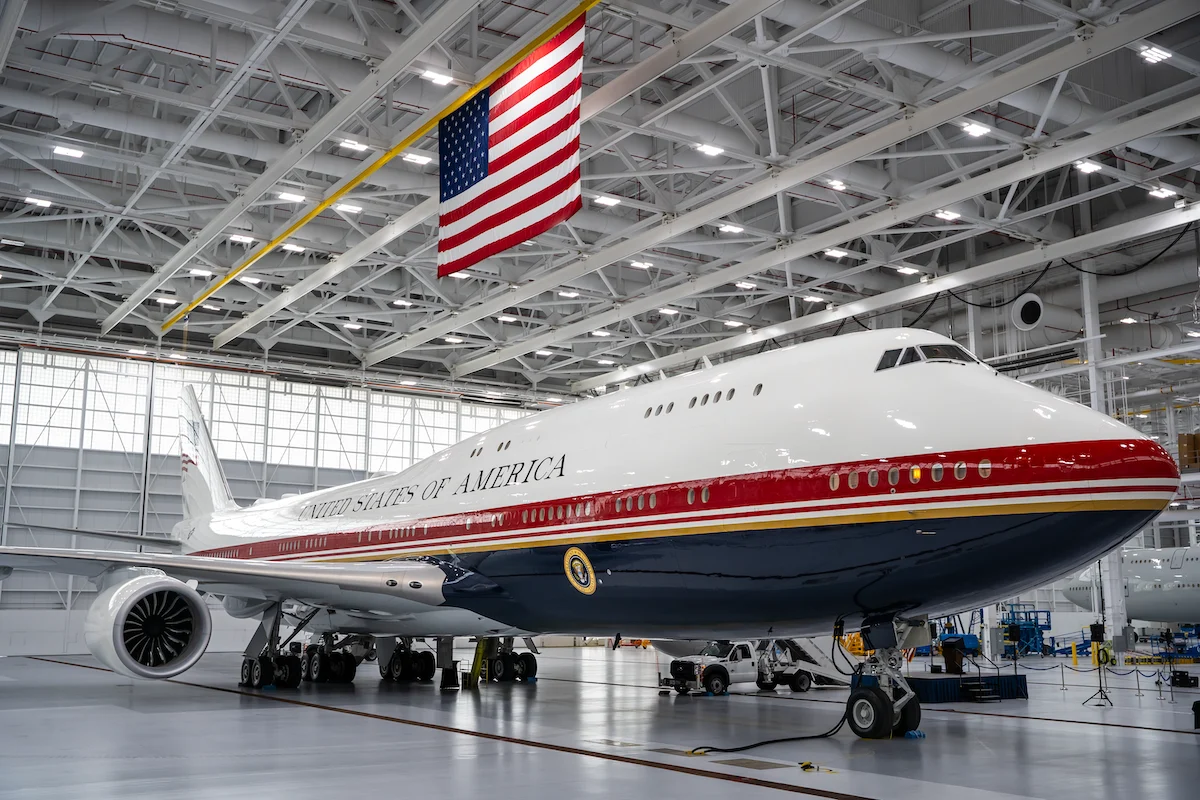
In mid-June 2026, the United States Air Force took delivery of a Boeing 747-8 aircraft, a luxurious, custom-fitted jet donated by the State of Qatar. The aircraft was immediately designated as a primary transport for the President, carrying the historic callsign “Air Force One.” Unlike standard government-procured aircraft, which undergo a rigorous, multi-year process of hardening and outfitting with defensive systems, this particular jet was integrated into service in less than a year.
The procurement of this aircraft occurred against the backdrop of significant delays in the government’s own replacement program. For years, the Air Force has been working on two dedicated, highly modified Boeing 747-8s intended to replace the aging VC-25A fleet (the traditional “Air Force One”). These government-commissioned jets are currently mired in a four-year development delay, primarily due to the extraordinary complexity of installing classified defensive countermeasures, encrypted communication arrays, and ballistic shielding required to protect the Commander-in-Chief.
Chronology of Events: From Turkey to the Grand Jury
The friction between the White House and the press began in earnest following a recent diplomatic trip to Turkey for a NATO summit.
- The Outbound Leg: President Trump utilized the new, Qatar-gifted Boeing 747-8 to fly to Turkey, showcasing the prestige of the new asset.
- The Return Flight: Following the collapse of a ceasefire agreement with Iran, the President bypassed the new aircraft, choosing instead to return to the United States aboard the legacy Boeing 747-200.
- The Reporting: While the administration officially characterized the switch as an attempt to “honor the military” by flying the older, battle-tested aircraft, The New York Times published a report citing security officials familiar with the matter. The article indicated that intelligence regarding the new 747-8’s lack of robust defensive systems—specifically tailored to deter modern threats—forced the tactical decision to revert to the older, more secure plane.
- The Legal Fallout: Within days of the publication, the Justice Department initiated a leak investigation. On July 11, 2026, it was confirmed that four New York Times reporters were subpoenaed to testify before a Manhattan grand jury, seeking to identify the sources who confirmed the security deficiencies of the new aircraft.
Analytical Discrepancies: The Logic of Security
The tension here rests on a fundamental question: Is the status of the new aircraft’s security a state secret, or is it a matter of basic technical deduction?
Aviation experts note that the time required to turn a commercial Boeing 747-8 into a secure presidential command-and-control center is measured in years, not months. The official government-ordered replacements, which have been in development for years, remain incomplete precisely because the installation of military-grade defensive suites is a monumental engineering feat.
If the Qatar-gifted aircraft were truly equipped to the same standard as the government-contracted 747-8s, the government would logically have to explain why the other two planes are four years behind schedule. The "secret" that the new aircraft lacks the full suite of specialized equipment is essentially a statement of reality: one cannot skip the multi-year integration process of sensitive hardware without sacrificing the very security features that define the current Air Force One fleet.
Official Responses and the Stance of the DOJ
The Justice Department has defended its actions as a standard procedure to protect national security. In a formal statement, a spokesperson for the Department stated:

"To the extent that we have to investigate breaches of national security, that’s something that we will continue to do. To be clear, reporters are not the targets, those leaking classified information are. We recognize there may always be natural tension there. But we are not going to ignore the law and stop investigating the people who work in the administration and think it’s okay to leak classified information impacting national security."
The President himself has been characteristically combative regarding the scrutiny of his security arrangements. During a press engagement, when asked about potential threats from Iran against his new aircraft, the President remarked, “I have a threat all the time. I’m number one on their list… but if I go, you go, right? So perhaps some of you want to change professions.”
Implications: Press Freedom and Executive Accountability
The subpoenaing of journalists creates a precarious precedent for the relationship between the Executive Branch and the Fourth Estate.
1. The Chilling Effect on Whistleblowers
By aggressively pursuing the sources of stories regarding government assets, the administration effectively discourages civil servants and military personnel from reporting concerns about safety or mismanagement. If government officials fear prison time for confirming that a presidential aircraft is under-equipped, the government loses an internal check-and-balance mechanism.
2. Public Safety vs. Security Secrecy
There is an inherent irony in the government’s position. By classifying the security limitations of the President’s plane, the administration is essentially preventing the public from knowing that the President may be traveling on a less-than-optimal aircraft. If a security failure were to occur, the lack of transparency regarding the plane’s capabilities would likely become a much larger political scandal than the leak itself.
3. The Future of Presidential Transport
The reliance on a gifted aircraft for diplomatic travel raises questions about conflicts of interest and foreign influence. Even if the aircraft is "gifted," the maintenance, fuel, and security protocols required for a head-of-state jet are astronomical. The fact that this specific aircraft is now the subject of a federal criminal investigation underscores the logistical and political baggage that comes with deviating from established procurement protocols.
Conclusion
As the July 15th court date approaches for the subpoenaed reporters, the case serves as a microcosm of the current era of governance. The administration’s focus remains fixed on the containment of information, while the broader public remains concerned with the efficacy of the infrastructure protecting the highest office in the land.
Whether the new Air Force One is a symbol of American strength or a vulnerability hidden behind a veneer of luxury remains to be seen. What is clear, however, is that the government’s attempt to silence reporting on the matter has only served to amplify the questions surrounding the aircraft’s readiness. In the coming weeks, the legal proceedings in Manhattan will not only test the resolve of the journalists involved but will also force a confrontation with the limits of executive power in managing information that is—for all intents and purposes—plain to see.