








The global artificial intelligence sector faced a reckoning on Friday as the release of Moonshot AI’s latest large language model, Kimi K3, sent shockwaves through international financial markets. The sudden, unannounced launch—executed in the middle of the night—caught traders off guard, triggering a massive sell-off in semiconductor and AI-related equities that erased billions in market capitalization by the closing bell.
This event, which market participants are already labeling the "Kimi Effect," underscores a shifting reality in the geopolitical and technological landscape: the narrative that frontier AI performance is strictly gated by massive, Western-centric capital expenditure is rapidly unraveling.
The Chronology of the Crash: From Midnight Launch to Market Rout
The sequence of events began under the cover of darkness. Moonshot AI quietly pushed Kimi K3 into the wild, providing immediate access to the model’s capabilities. By the time Western markets opened on Friday, the implications of the release had been digested by analysts and institutional algorithms, leading to a swift, aggressive reaction.
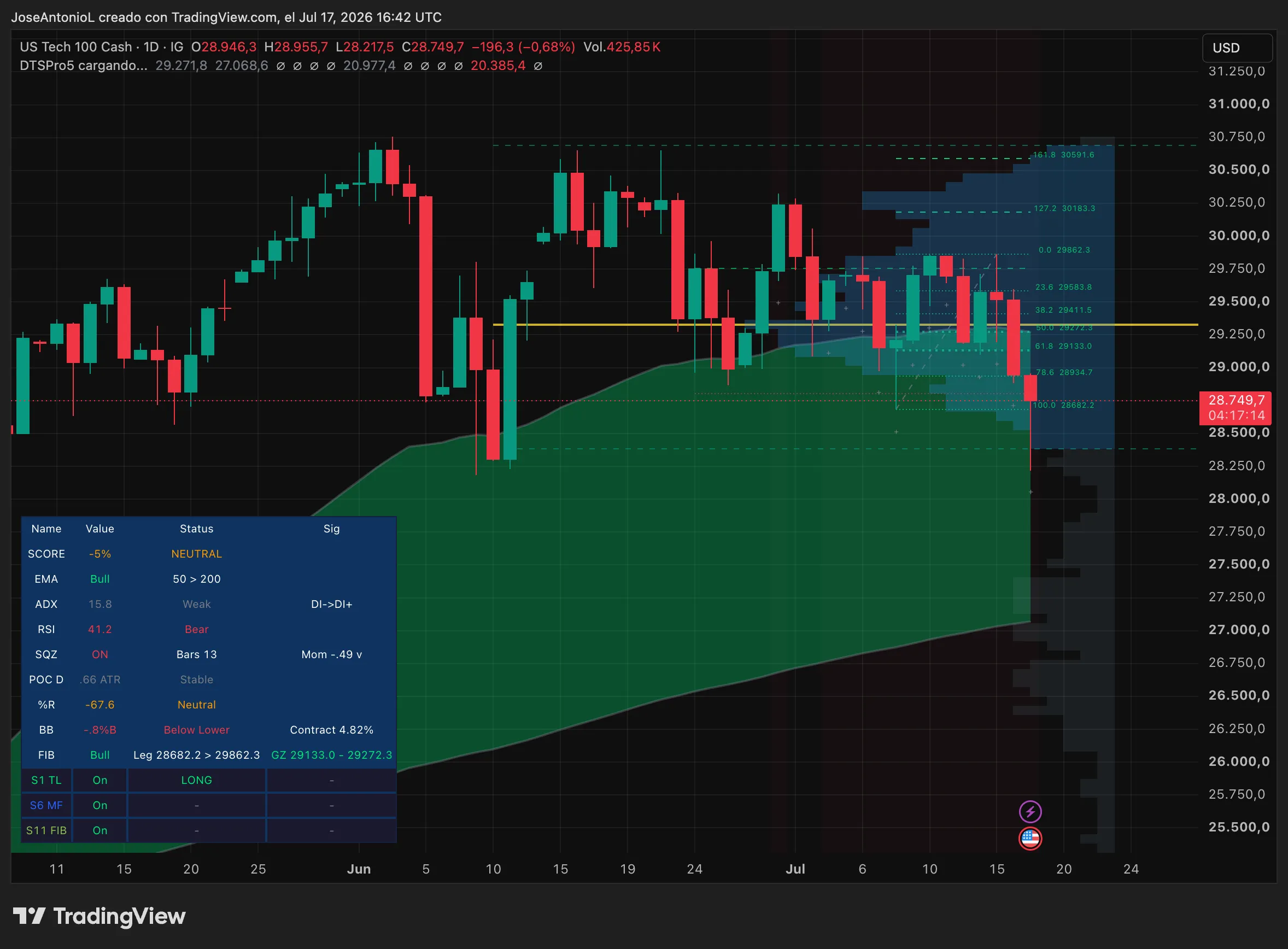
The fallout was immediate and widespread. Taiwan’s benchmark index, a critical bellwether for the global semiconductor supply chain, plummeted by more than 6% as investors weighed the prospect of a more competitive, less hardware-dependent AI landscape. Japan’s markets mirrored this pessimism, closing down 4%. In the United States, the tech-heavy Nasdaq Composite index slid 1.5%—marking its most difficult trading session of the week—as the "AI trade" faced its most significant credibility test in months.
The VanEck Semiconductor ETF (SMH), which serves as a primary vehicle for institutional exposure to chipmakers, fell below its Exponential Moving Average (EMA) support band. This technical breach, the first of its kind since April, suggests a fundamental shift in sentiment. The sector is now trading more than 20% below its late-June record highs, signaling that the "buy the dip" mentality that defined the first half of 2026 is being replaced by a more cautious, risk-averse stance.
Supporting Data: K3’s Performance and the Economics of Efficiency
The panic in the markets is not merely reactionary; it is rooted in the objective performance data of Kimi K3. According to the independent Artificial Analysis Intelligence Index—a composite benchmark tracking reasoning, mathematics, coding, and knowledge—Kimi K3 has achieved a score of 57.
This performance level places it firmly above industry staples like Claude Opus 4.8 and OpenAI’s GPT-5.5. Perhaps more alarmingly for incumbent firms, the model is performing on par with the cutting-edge Claude Fable 5 and OpenAI’s GPT-5.6 Sol, yet it manages to outperform these models in specific, highly technical benchmarks at a fraction of the computational cost.
The economic model underpinning Kimi K3 is perhaps more disruptive than the model itself. Moonshot AI has confirmed that full weights for the model will be released on July 27 under a Modified MIT license. By granting small labs and independent developers free access to high-tier weights, Moonshot is effectively democratizing the "frontier" capability that once required a multi-billion-dollar entry fee. This is a direct challenge to the high-margin, proprietary software models currently favored by U.S.-based AI giants.
Official Responses and Analyst Perspectives
The response from Wall Street has been a mixture of analytical rigor and cautious acknowledgment of the new status quo. Bernstein analyst Robin Zhu described the launch as "confirmatory," arguing that it validates the trend of rapid, iterative improvement that has characterized the 2026 AI cycle.
"At a high level, K3 feels confirmatory of our views that AI state-of-the-art continues to evolve rapidly, and that China’s AI ecosystem can continue to keep pace with global leaders while taking market share over time," Zhu noted in a briefing to clients.
Morgan Stanley analyst Gary Yu offered a similarly measured, yet stark, assessment. Yu framed the release not as a sudden "black swan" shock, but as the inevitable byproduct of steady, compounded progress. "K3 has received positive feedback globally," Yu wrote. "It signals an all-round catch-up of Chinese LLMs with U.S. leaders in model size, performance, and pricing."
The contrast between this development and the market’s reaction to DeepSeek’s R1 in January 2025 is striking. When DeepSeek debuted, it shattered the assumption that frontier performance required frontier spending, leading to a $590 billion wipeout in Nvidia’s market cap in a single session. The reaction to Kimi K3 suggests that investors have learned the hard way: the "moat" around AI innovation is becoming increasingly shallow.
Moonshot AI: A Startup on the Rise
The architect of this disruption, Moonshot AI, has undergone a meteoric ascent. Backed by a substantial $1 billion investment from Alibaba in 2024—a deal that valued the company at $2.5 billion at the time—the startup is now estimated to be worth approximately $31.5 billion.
Moonshot’s influence extends further into the Western tech ecosystem than many realize. As previously reported, the popular development tool Cursor’s "Composer 2" was found to be operating on Kimi K2.5 long before the team behind Cursor acknowledged the open-source base. This suggests that Moonshot is already deeply embedded in the supply chain of Western AI tooling, potentially complicating the narrative of a bifurcated, East-vs-West AI arms race.
Implications for the Future of Global AI
The success of Kimi K3 poses three existential questions for the AI industry:
- The End of the Hardware Supercycle? If models like K3 can achieve top-tier performance with significantly lower compute requirements, the immense capital expenditure currently directed toward data centers and high-end GPUs may face a long-term correction. If software efficiency continues to outpace hardware scaling, the "arms race" for H100s and their successors may reach a plateau.
- The Democratization of Frontier AI: By releasing weights under a permissive license, Moonshot is creating a "bottom-up" pressure on incumbents. When smaller players can build applications on top of models that rival those of OpenAI or Anthropic for free, the pricing power of the current market leaders will inevitably be diluted.
- Geopolitical Tech Autonomy: Kimi K3 is proof that China’s AI sector has successfully circumvented the bottlenecks imposed by international trade restrictions on high-end silicon. By innovating on the algorithmic level, Chinese labs are ensuring they remain competitive, regardless of the availability of the latest hardware from abroad.
As the dust settles from Friday’s volatility, the tech industry finds itself at a crossroads. The era of assuming that Western firms possess a permanent, unassailable lead in AI is effectively over. The "Kimi Effect" is not just about a new model; it is about a new set of rules for the AI economy—one where performance is accessible, efficiency is the primary metric of success, and the dominance of current incumbents is no longer a foregone conclusion.
For investors, developers, and policymakers alike, the message from the K3 launch is clear: the pace of innovation is accelerating, and the barriers to entry are falling faster than the market is prepared to handle. Whether this leads to a broader, more distributed AI ecosystem or a period of prolonged market instability remains to be seen, but one thing is certain: the global AI landscape has changed overnight.