








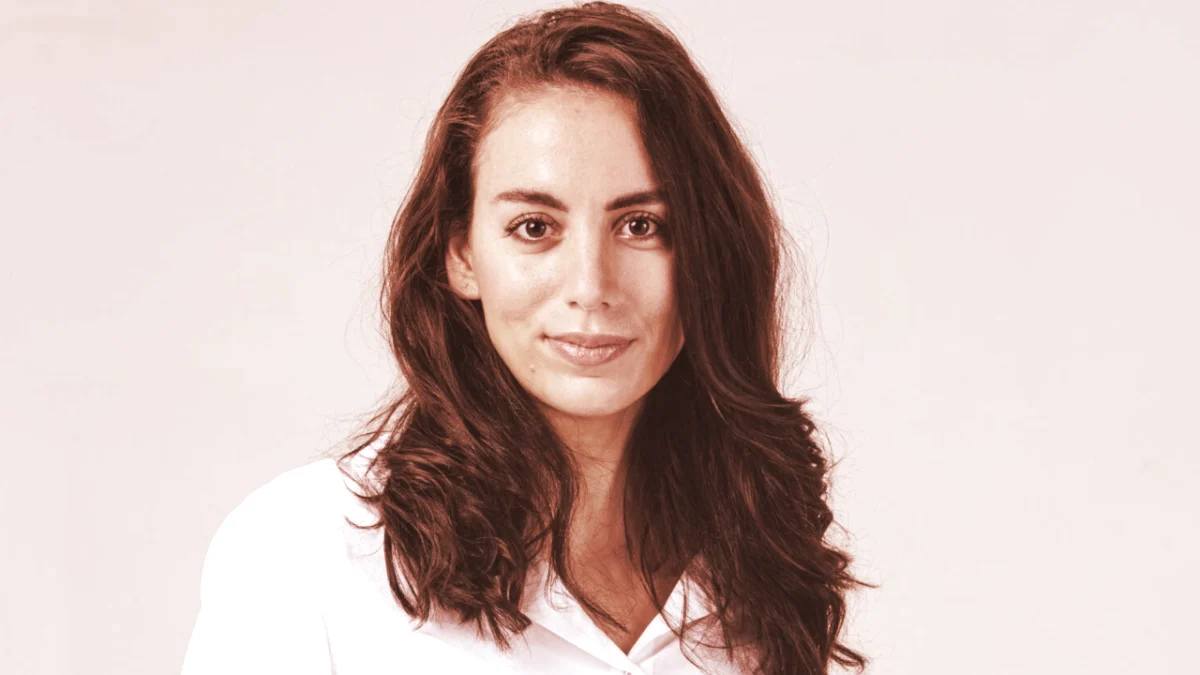
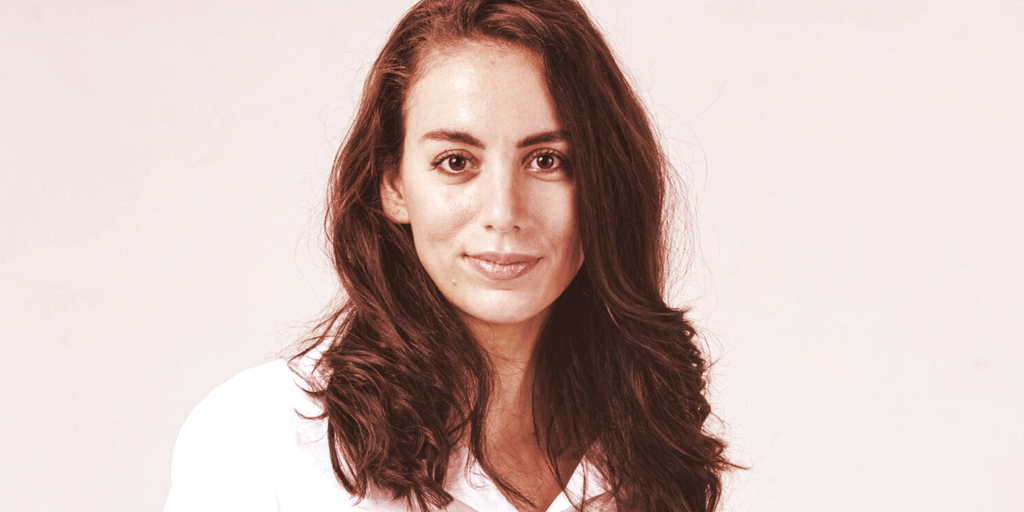
Nearly two years after her high-profile departure from OpenAI, Mira Murati has re-emerged from the relative silence of her startup, Thinking Machines Lab, to launch a direct challenge to the industry’s status quo. The product of this long-gestating effort is "Inkling," a massive, multimodal AI model that is being positioned not just as a competitor to existing proprietary giants, but as a standard-bearer for the open-weights movement in the West.
With every model weight available for free download, Murati is attempting to bridge the gap between the high-performance closed-source models currently dominating the sector and the growing demand for transparent, sovereign, and customizable AI infrastructure.
The Chronology of a Silicon Valley Powerhouse
To understand the significance of Inkling, one must first look at the meteoric rise and subsequent pivot of its founder. Mira Murati was the public face and operational backbone of OpenAI during its most turbulent and transformative years. Following the dramatic, short-lived firing of Sam Altman in November 2023, Murati was thrust into the role of interim CEO. While Altman was reinstated within 120 hours, Murati returned to her role as CTO, only to depart permanently ten months later to "do her own thing."
In February 2025, she founded Thinking Machines Lab. The company quickly became a focal point of intense financial speculation. By July 2025, the startup had secured $2 billion in seed funding at a $12 billion valuation—a staggering sum for a company that had yet to release a public-facing product. The round was backed by an "all-star" syndicate of investors, including Andreessen Horowitz, Nvidia, Accel, ServiceNow, Cisco, AMD, and Jane Street.
However, the road was not without its hurdles. Reports surfaced in November 2025 suggesting the company was seeking a massive secondary round at a $50 billion valuation. By January 2026, those talks had collapsed, forcing the company to pivot away from high-stakes financial signaling and back toward product development. The release of Inkling represents the culmination of that pivot, signaling a shift from "hype-based" growth to tangible utility.
Anatomy of Inkling: The Technical Architecture
Inkling is a testament to the "mixture-of-experts" (MoE) architecture, a design philosophy that optimizes computational efficiency without sacrificing raw intelligence. By ensuring that only a fraction of the neural network activates for any given input, Inkling manages to maintain rapid inference speeds even as the model scales to immense proportions.
The model is gargantuan by any metric. It boasts 975 billion total parameters, with 41 billion active parameters per task. For context, this size puts it firmly in the category of "frontier-scale" models, making it far too large for standard consumer-grade local hardware, yet perfectly suited for enterprise-grade clusters.
Inkling is natively multimodal, designed to process text, images, and audio seamlessly. Perhaps most impressive is its massive context window of 1 million tokens—roughly equivalent to 750,000 words. This allows the model to ingest entire books, massive codebases, or hours of audio logs, maintaining coherence across long-form interactions. Pre-trained on a staggering 45 trillion tokens of text, images, audio, and video, the model is built to be a true generalist.
Supporting Data: Where Inkling Stands
The AI industry is currently obsessed with benchmarks, and Thinking Machines Lab has been transparent about where Inkling leads and where it lags.
Performance in Agentic Tasks
Inkling’s primary strength lies in its agentic capabilities—the ability for an AI to act as a worker, not just a chatbot.
- MCP Atlas Benchmark: Scoring 74.1% in task completion, Inkling outperforms Nvidia’s Nemotron 3 Ultra by nearly 30 percentage points. This test evaluates how well an AI agent utilizes the Model Context Protocol (MCP) to interact with external tools and services.
- SWE-Bench Verified: In the critical area of software engineering, where agents must autonomously fix GitHub bugs, Inkling achieved a 77.6% success rate, comfortably ahead of Nemotron’s 70.7%.
The Reality Check: The "Asian Model" Gap
Thinking Machines Lab has been refreshingly honest about the current limitations of its technology. The company acknowledges that the most advanced models in existence today remain those developed in China. For example, Z.ai’s GLM 5.2 continues to dominate the "Terminal Bench 2.1" with a score of 82.7%, significantly outperforming Inkling’s 63.8%. Similarly, in scientific reasoning, Kimi K2.6 remains the gold standard.
Despite this, Inkling is being framed as the most capable "Western-born" open-weights model. For corporations and developers who are legally or ethically restricted from using models developed under different regulatory regimes, Inkling offers a critical, compliant alternative.
Implications for the AI Ecosystem
The release of Inkling under an Apache 2.0 license—free of restrictive "research-only" clauses—carries profound implications for the open-source community.
1. Sovereign AI and Compliance
Many Western organizations are currently trapped in a "compliance dilemma." They need the power of frontier-scale AI, but the most powerful models are either proprietary (and thus opaque) or originate from jurisdictions that raise data-privacy concerns. By providing full, unrestricted access to the weights, Murati is enabling companies to host their own instances of a near-frontier model within their own infrastructure, ensuring data never leaves their secure perimeter.
2. The Rise of "Tinker"
Alongside the model, the company launched "Tinker," a dedicated cloud platform optimized for fine-tuning Inkling. Fine-tuning—the act of training a model on specialized, proprietary datasets—is where the real value is created for businesses. Thinking Machines Lab is betting that the combination of a high-quality base model and a streamlined training platform will make Inkling the default choice for specialized AI agents in medicine, law, and engineering.
3. The "Well-Rounded" Philosophy
In an era where many models are "siloed" (becoming masters of coding but failing at creative writing), Thinking Machines Lab is prioritizing a generalist approach. The goal is to provide a stable, predictable foundation that does not compromise on quality across different domains. This consistency is vital for large-scale enterprise deployments where a model must be able to handle diverse workflows without "drifting" in performance.
Looking Ahead: The Future of the Thinking Machines Roadmap
Thinking Machines Lab has already teased a smaller version of its flagship model, dubbed "Inkling-Small." With 276 billion total parameters and 12 billion active parameters, this model is designed to offer similar reasoning capabilities in a more efficient package. While no official release timeline has been provided, the existence of a smaller, more accessible model suggests that the company intends to dominate both the high-end enterprise market and the more resource-constrained developer market.
Perhaps most importantly, Inkling has set a new high-water mark for safety and ethics among open-weights models. In the "FORTRESS Adversarial" benchmark—a test designed to measure how well a model avoids harmful content without "over-blocking" legitimate requests—Inkling achieved the highest score in its class.
As the industry moves toward 2027, the success of Inkling will likely hinge on the developer community’s ability to fine-tune the model to bridge the gap with its Asian counterparts. If the history of the open-source movement is any indication, the collective innovation of thousands of developers will likely see Inkling evolve far beyond its initial release state.
Mira Murati’s gamble is clear: she is betting that by providing the tools of the trade to everyone, she can foster a more competitive, transparent, and resilient AI future that doesn’t rely solely on the walled gardens of Big Tech. For now, the weights are live on Hugging Face, and the development community is watching closely to see if Inkling can truly live up to its ambitious promise.