









Introduction: The Annual Opportunity for Financial Realignment
Every year, as the tax filing season reaches its crescendo, millions of Americans await a significant financial event: the arrival of the federal tax refund. While many consumers view this lump sum as a "bonus" or "found money" to be spent on discretionary luxury items or vacations, financial experts and credit analysts view it through a different lens. For the millions of households currently navigating the complexities of credit repair, the tax refund represents a rare, high-impact opportunity to fundamentally alter their financial trajectory.
With the average Internal Revenue Service (IRS) refund hovering around $3,000, this seasonal windfall provides the necessary liquidity to address systemic issues within a credit profile that cannot be resolved through standard monthly budgeting. In an era of high interest rates and tightening lending standards, leveraging a tax refund to bolster one’s credit score is not merely a suggestion—it is a critical strategy for long-term economic mobility.
Main Facts: The Intersection of Tax Refunds and Credit Health
The relationship between a tax refund and a credit score is indirect but profound. A credit score is a mathematical representation of a consumer’s perceived risk to a lender, primarily calculated using models developed by FICO or VantageScore. These models rely on several key pillars: payment history, credit utilization, length of credit history, types of credit used, and new credit inquiries.
A tax refund acts as a "capital injection" that can be strategically deployed to influence the two most significant factors of the FICO score: payment history (35%) and amounts owed, also known as credit utilization (30%). By applying a $3,000 refund toward high-interest debt or past-due accounts, a consumer can theoretically trigger a score increase of dozens, or even hundreds, of points over a several-month period.
Furthermore, the timing of these refunds—typically arriving between February and May—aligns with the "post-holiday" debt slump, where many consumers are struggling to manage credit card balances accrued during the fourth quarter of the previous year. This makes the refund a vital tool for preventing a temporary debt spike from becoming a permanent mark on a credit report.
Chronology: The Lifecycle of a Strategic Refund
The path from filing a tax return to seeing a credit score improvement follows a specific chronological sequence that requires discipline and planning.
1. The Pre-Refund Assessment (January – February)
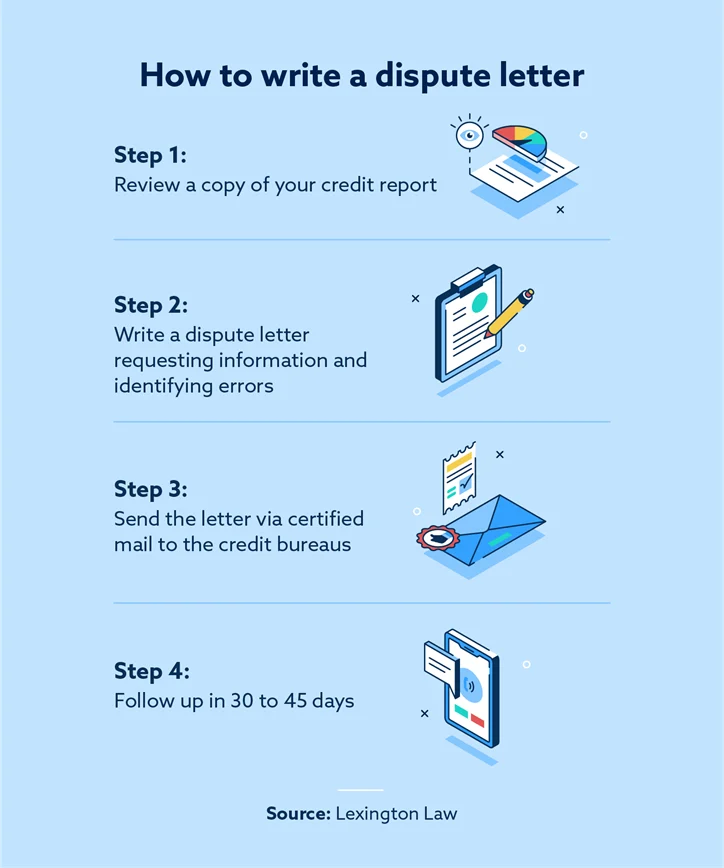
Before the refund hits the bank account, savvy consumers perform a "credit audit." This involves pulling a free credit report from the three major bureaus (Equifax, Experian, and TransUnion) to identify the specific pain points—which accounts are past due, which cards are near their limits, and whether any inaccuracies exist that could be challenged.

2. The Receipt of Funds (March – April)
Once the IRS processes the return, the funds are typically deposited via direct deposit. This is the "danger zone" where retail marketing is most aggressive, targeting refund recipients with sales on electronics, furniture, and automobiles. The strategic consumer ignores these distractions and moves to the execution phase.
3. The Deployment Phase (Immediate)
Financial advisors recommend a "waterfall" approach to fund deployment. First, address accounts that are currently delinquent to stop further damage. Second, pay down revolving balances to lower utilization. Third, set aside a portion for an emergency fund to prevent future reliance on high-interest credit.
4. The Reporting Lag (30–60 Days Post-Payment)
Credit scores do not update the moment a payment is made. Lenders typically report to credit bureaus once a month. Therefore, a consumer who pays off a balance in April may not see the resulting score increase until late May or June.
5. The Long-Term Maintenance (6 Months+)
The final stage of the chronology is the transition from "repair" to "maintenance." The higher score achieved through the refund deployment allows for refinancing high-interest loans, which further improves cash flow and reinforces the positive cycle.
Supporting Data: The Mathematics of Credit Improvement
To understand why the tax refund is such a powerful tool, one must examine the data behind credit scoring models.
The Credit Utilization Ratio
The "Amounts Owed" category accounts for 30% of a FICO score. The most critical metric here is the credit utilization ratio—the total of your revolving balances divided by your total credit limits.
- High Risk: Utilization above 50% significantly depresses scores.
- Optimal: Utilization below 10% is common among "high achievers" (scores 800+).
- The Impact: For a consumer with a $5,000 total credit limit and a $4,000 balance (80% utilization), applying a $2,500 refund to that debt drops the utilization to 30%. This single move can result in an immediate and substantial score jump.
The Cost of Delinquency
Payment history is the most weighted factor at 35%. A single 30-day late payment can drop a "good" credit score by as much as 100 points. Using a refund to bring a "90-day late" account to "current" status does not erase the history, but it stops the "bleeding" and prevents the account from moving into collections or charge-off status, which are much harder to recover from.

Average Refund Statistics
According to IRS data, the average refund for the 2023 filing season was approximately $3,167. For many households, this represents more than a month’s worth of take-home pay, providing a unique opportunity to clear debts that are otherwise insurmountable through incremental payments.
Official Responses and Expert Insights
Financial institutions and credit advocacy groups have long monitored how consumers handle seasonal windfalls.
Lexington Law, a leader in the credit repair industry, emphasizes that a tax refund should be viewed as a tool for "financial defense." Their experts suggest that while challenging inaccuracies on a credit report is vital, those efforts must be paired with proactive debt management. "Your tax refund is a financial boost," the firm notes. "It’s a lump sum that can help you make moves you might not be able to afford month-to-month."
Consumer Financial Protection Bureau (CFPB) reports have frequently highlighted that lack of liquidity is the primary driver of credit score degradation. When consumers lack an emergency fund, they turn to high-interest credit cards for car repairs or medical bills, leading to a cycle of debt. Experts at the CFPB often advocate for using a portion of tax refunds to establish "starter" emergency funds of $500 to $1,000, which acts as a buffer for the consumer’s credit score.
Economic Analysts point out that the psychological "windfall effect" often leads to poor decision-making. "Because people view a refund as a gift from the government rather than their own hard-earned wages being returned, they are more likely to spend it impulsively," says one behavioral economist. "The key to credit repair is reclassifying that money as an investment in one’s own financial future."
Common Pitfalls: The "Refund Trap"
Despite the potential benefits, many consumers inadvertently harm their credit during tax season. Journalists and financial advisors identify three recurring mistakes:
1. The Utilization Spike
A consumer might use their refund to pay off a credit card, only to immediately use that newly available credit to buy a large item. This "ping-pong" effect results in no net gain for the credit score and can sometimes lead to a lower score if the new balance exceeds the previous one.

2. The Account Closure Error
Upon paying off a credit card with a refund, some consumers close the account out of a desire to "be done with debt." However, closing a paid-off account reduces the total available credit and shortens the average age of accounts—both of which can cause the credit score to drop. Experts recommend keeping the account open but inactive, or using it only for small, manageable purchases.
3. Ignoring Liquidity
Draining a refund entirely to pay off old debts without saving anything for the future is a common error. If an emergency occurs the following month, the consumer is forced to borrow again, often at worse terms, undoing the progress made with the refund.
Implications: The Long-Term Value of a Higher Score
The implications of using a tax refund for credit repair extend far beyond the immediate satisfaction of a higher number on a screen. The long-term financial benefits are quantifiable and life-changing.
Lower Cost of Borrowing
A consumer who improves their score from "Fair" (620) to "Very Good" (740) can save tens of thousands of dollars over the life of a mortgage or auto loan. For example, on a $30,000 car loan, the difference in interest rates between those two tiers could amount to over $5,000 in savings—nearly double the original tax refund used to fix the credit.
Increased Housing and Employment Opportunities
In many states, landlords and even potential employers perform credit checks. A repaired credit profile via a strategic tax refund can be the difference between securing a rental home or being denied, and in some sectors, it can even impact job eligibility.
Breaking the Cycle of Poverty
For many, credit repair is the first step toward breaking a multi-generational cycle of debt. By using a tax refund to build an emergency fund and lower debt-to-income ratios, consumers move from a "reactive" financial state to a "proactive" one, where they can begin to build wealth rather than simply servicing interest.
Conclusion: A Strategic Mandate
The arrival of a tax refund is a pivotal moment in the financial year. While the temptation to spend it on immediate gratification is high, the professional consensus is clear: for those with damaged credit, the refund is the most effective tool available for rapid restoration. By focusing on credit utilization, addressing delinquencies, and establishing an emergency buffer, consumers can transform a one-time payment from the IRS into a permanent improvement in their financial standing. In the world of personal finance, there is perhaps no greater return on investment than the one gained by investing in your own creditworthiness.