









In the complex landscape of American personal finance, many consumers operate under a persistent myth: that the absence of "bad" credit is synonymous with the presence of "good" credit. For years, the narrative surrounding credit health has focused almost exclusively on the defensive—removing inaccuracies, disputing late payments, and purging the "trash" from one’s financial history. However, a growing body of data and expert analysis from industry leaders like Lexington Law Firm suggests that a clean slate is merely the foundation, not the finished structure.
For millions of Americans, the journey to a high credit score hits a frustrating plateau once their reports are cleared of negative items. They find themselves in a state of "credit stagnation," where their scores refuse to budge despite a pristine record. This phenomenon, often referred to as the "Thin File" problem, highlights a critical reality of the modern lending environment: Lenders do not just want to see that you have avoided mistakes; they want to see that you can actively manage debt.
Main Facts: The Reality of the "Thin" Credit File
The credit score, primarily governed by models like FICO® and VantageScore, is a predictive algorithm designed to measure the likelihood that a borrower will default on a loan. When a consumer successfully disputes and removes negative items—such as collections, bankruptcies, or tax liens—they eliminate the "evidence of risk." However, if those removals leave the report nearly empty, the algorithm lacks the "evidence of reliability" necessary to generate a high score.
According to the Consumer Financial Protection Bureau (CFPB), approximately 26 million Americans are "credit invisible," meaning they have no credit history at all with the three major bureaus (Equifax, Experian, and TransUnion). Another 19 million are "unscorable" due to thin or stale files.
The "Empty House" metaphor remains the most apt description of this dilemma. If credit repair is the act of cleaning out the trash and fixing broken windows, credit building is the act of furnishing the home. A clean, empty house may look better than a cluttered one, but it is not yet a functional residence. Similarly, a report with no data provides no "predictive power" to a lender, often resulting in a score that sits in the mid-600s—a "fair" rating that still prevents access to the best interest rates.
Chronology: The Lifecycle of Credit Management
Understanding how to navigate this plateau requires a look at the typical chronology of credit health, from establishment to optimization.
Phase 1: The Entry Phase
Most consumers begin their journey by opening a student card or a small retail account. During this phase, the file is "thin" by definition. The goal is to establish the "Length of Credit History," which accounts for approximately 15% of a FICO® score.
Phase 2: The Maintenance and Risk Phase
As life progresses, consumers often take on more debt—auto loans, mortgages, and multiple credit cards. This is where "negative items" typically appear due to financial hardship or clerical errors. This phase is characterized by a reactive approach to credit: managing payments and hoping to avoid dings.

Phase 3: The Repair and Restoration Phase
For those who have suffered credit damage, this phase involves identifying inaccuracies and leveraging consumer protection laws (like the Fair Credit Reporting Act) to ensure their report is 100% accurate. This is where firms like Lexington Law provide the most value, acting as a "custodian" of the consumer’s rights.
Phase 4: The Enrichment and Optimization Phase
This is the current frontier of credit health. Once the report is accurate and "clean," the consumer must pivot from a defensive posture to an offensive one. This involves the strategic addition of positive data points to "thicken" the file and prove ongoing financial responsibility.
Supporting Data: The Five Pillars of the FICO® Score
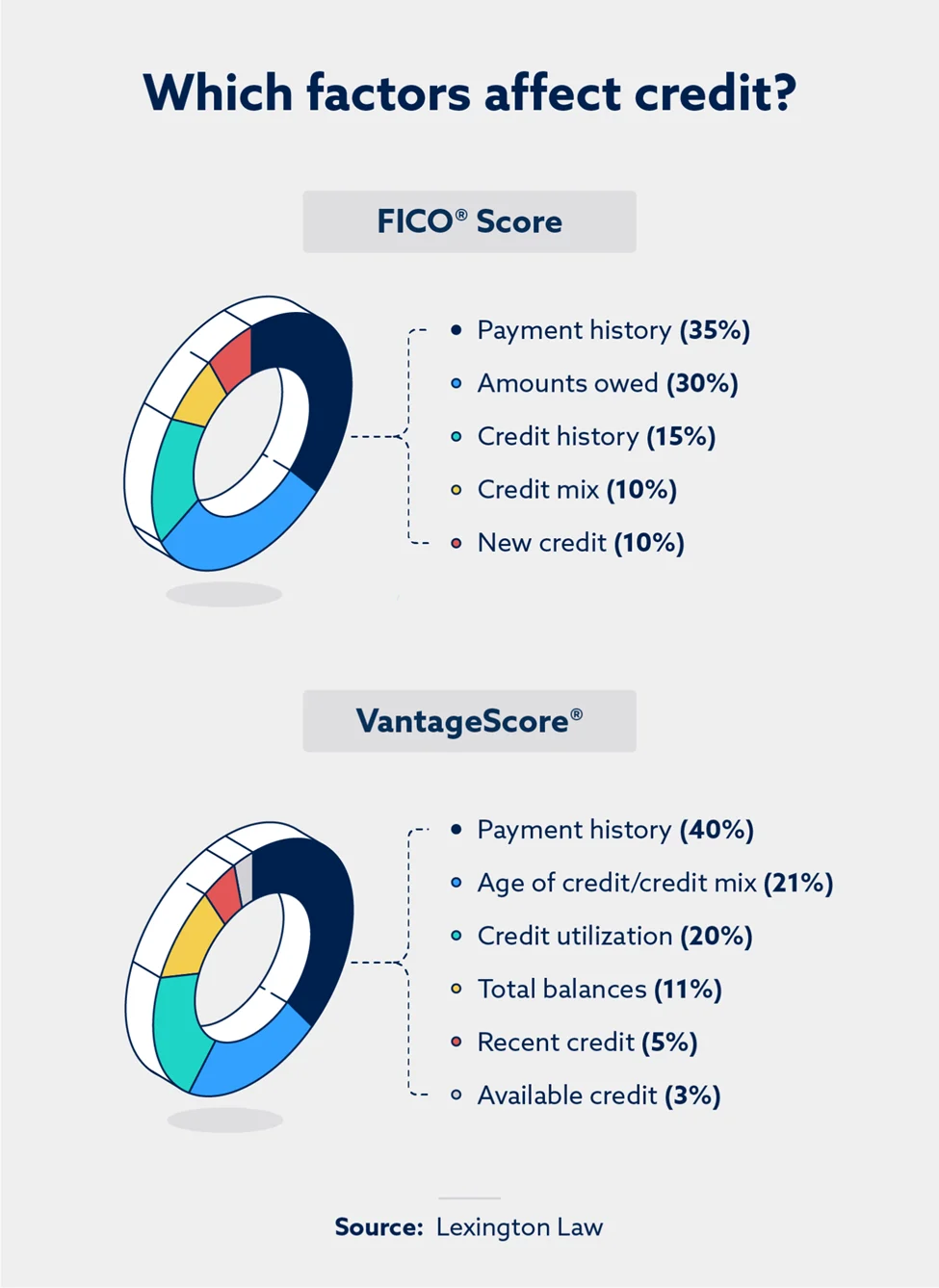
To understand why a clean report can still result in a low score, one must look at the data-driven weightings of the FICO® model:
- Payment History (35%): This is the most significant factor. While a clean report means no negative history, it doesn’t necessarily mean there is a robust positive history.
- Amounts Owed (30%): Also known as credit utilization. If you have no active accounts, your utilization cannot be measured, depriving you of nearly a third of your potential score.
- Length of Credit History (15%): Removing an old, negative account that was also your oldest account can ironically lower the average age of your credit, hurting your score.
- Credit Mix (10%): Lenders want to see diversity. Having only one type of debt (e.g., just one credit card) limits your score’s ceiling.
- New Credit (10%): Frequent applications can lower your score, but a total lack of new activity suggests a stagnant financial life.
Official Responses and Expert Perspectives
Financial educators and legal experts emphasize that credit is a "living record." At Lexington Law Firm, the philosophy has shifted toward a holistic view of credit health. Their experts note that while removing inaccuracies is a vital first step, the journey does not end when the disputes do.
"Credit is not a static number you ‘fix’ and then forget," says a representative for the firm. "It is a dynamic reflection of your current financial habits. If you stop engaging with your credit because there is nothing left to dispute, you are effectively telling lenders that you have no current relationship with money."
Lenders echo this sentiment. Mortgage underwriters, for instance, often require a "thick" file—usually defined as at least three trade lines that have been active for 12 to 24 months. A "clean" report with only one active account may still trigger a "manual underwrite," a more rigorous and difficult process for the borrower.
Strategies for Building Credit Without Disputes
To move past the "clean slate" plateau, experts recommend three primary proactive strategies:
1. Diversifying the Credit Mix
Lenders reward consumers who can juggle different types of financial obligations. If a consumer only has revolving credit (credit cards), adding an installment loan (such as a small personal loan or a credit-builder loan) can provide a significant boost. This demonstrates the ability to manage fixed monthly payments over a set term, which is viewed differently by algorithms than the fluctuating nature of credit cards.

2. Leveraging "Alternative Data"
One of the most significant shifts in the industry is the inclusion of "non-traditional" credit data. Traditionally, rent, utility, and cell phone payments were never reported to bureaus unless they went to collections. Now, services allow consumers to opt-in to reporting these monthly expenses. Since most people pay their rent and phone bills on time, this adds a layer of consistent, positive payment history that was previously "invisible" to the bureaus.
3. The "Authorized User" Strategy
Often called "credit piggybacking," this involves being added to the credit card account of a trusted family member or friend. If that individual has a long history of on-time payments and low utilization on that specific card, that history is often reflected on the authorized user’s report. This is one of the fastest ways to "age" a thin file, though it carries the risk that if the primary cardholder misses a payment, the authorized user’s score will also suffer.
Implications: The High Cost of Stagnation
The implications of a stagnant, "thin" credit score are far-reaching. In an era of high interest rates, the difference between a 660 score (Fair) and a 740 score (Very Good) can translate into hundreds of dollars a month in additional mortgage or auto loan interest.
Furthermore, credit scores are increasingly used by entities beyond banks. Insurance companies use "credit-based insurance scores" to determine premiums, and landlords use them to vet potential tenants. Even some employers in the financial or security sectors review credit reports as a proxy for reliability and character.
The "doing nothing" approach is, in itself, a risk. As older accounts age out and the lack of new activity persists, a consumer’s credit file can become "stale." Without active accounts, the bureaus may eventually stop generating a score altogether, returning the consumer to the state of being "credit invisible."
Conclusion: A Holistic Approach to Financial Identity
The modern credit system is a dual-track journey. Track one is the removal of the past—the correction of errors and the purging of unfair negative data. Track two is the construction of the future—the deliberate, strategic addition of positive activity.
For those who have reached the end of their dispute process only to find their scores lower than expected, the message from the industry is clear: the "clean" report is just the canvas. The real work of painting a picture of financial reliability starts now. By focusing on credit mix, leveraging monthly expenses, and maintaining active, low-balance accounts, consumers can move from "clean" to "competitive," ensuring that when they are ready for life’s major milestones, their credit is ready for them.